In a nutshell
- 🧪 Tea tree oil tackles shower mould fast by penetrating grout, disrupting biofilm, and damaging fungal cell membranes via compounds like terpinen‑4‑ol.
- 🧴 Safe usage hinges on proper dilution, shake-before-use, and adequate contact time; wear gloves, ventilate, and never mix with bleach or ammonia.
- ⚖️ Compared with bleach, vinegar, and hydrogen peroxide, tea tree oil delivers quick visible results, better penetration, and a gentler finish on tiles and grout.
- 🛡️ Sensible practices—light rinse on slick floors, leave a faint residue on vertical tiles, store mixes briefly—balance efficacy with surface care and safety.
- 🌬️ Lasting control requires moisture management: improve ventilation, squeegee after showers, use a weekly prevention spray, and seal sound grout.
Across the UK, bathrooms fight a constant battle with mould. Warm showers and poor ventilation are a perfect storm, leaving grout lines spotted and tiles dull. Harsh bleaches blast the colour from spores but can sting eyes and damage silicone. There is another way. Tea tree oil, distilled from Melaleuca alternifolia, is a botanical heavy-hitter whose natural antifungals act quickly on shower grime. Its vapours reach into nooks, while the oil itself clings to porous grout. Results can be startlingly swift. Used correctly, this plant extract sanitises tiles with impressive speed and far less drama than chlorine-based sprays. Here’s how and why it works, and how to use it safely.
Why Tea Tree Oil Stops Mould Fast
Mould thrives in damp micro-habitats on tile and grout, protected by a biofilm that blunts many cleaners. Tea tree oil slices through that shield. Its principal components — notably terpinen‑4‑ol and α‑terpineol — disrupt fungal cell membranes, causing leakage and collapse. Because the oil is lipophilic, it wicks into grout pores and silicone seams where spores hide, rather than sitting on the surface like water-based sprays. That means contact where it matters, fast.
Speed isn’t just chemistry; it’s behaviour. The volatile fraction spreads across tile faces and into corners, ensuring even light coverage from a modest spray. Users typically notice the musty odour dissipate within minutes as aromatic compounds neutralise the smell of microbial metabolism. Unlike bleach, which often bleaches the stain without killing roots in porous joints, tea tree oil can leave behind a micro-thin film that keeps working as the area dries. Results vary with infestation, of course. Severe black mould behind failed silicone or soggy plaster still demands proper repairs and, at times, professional remediation. But for topical growth on shower tiles, it’s a nimble, targeted option.
There’s a safety dividend too. When appropriately diluted, tea tree oil is less caustic than many chlorine-based products, helping protect tile finishes and nose and throat. That’s not a free pass; it is a potent essential oil. Ventilation is vital, and contact with skin and eyes must be avoided. Still, in normal bathroom maintenance, its combination of antifungal potency and material gentleness wins time and again.
How to Mix and Apply Safely
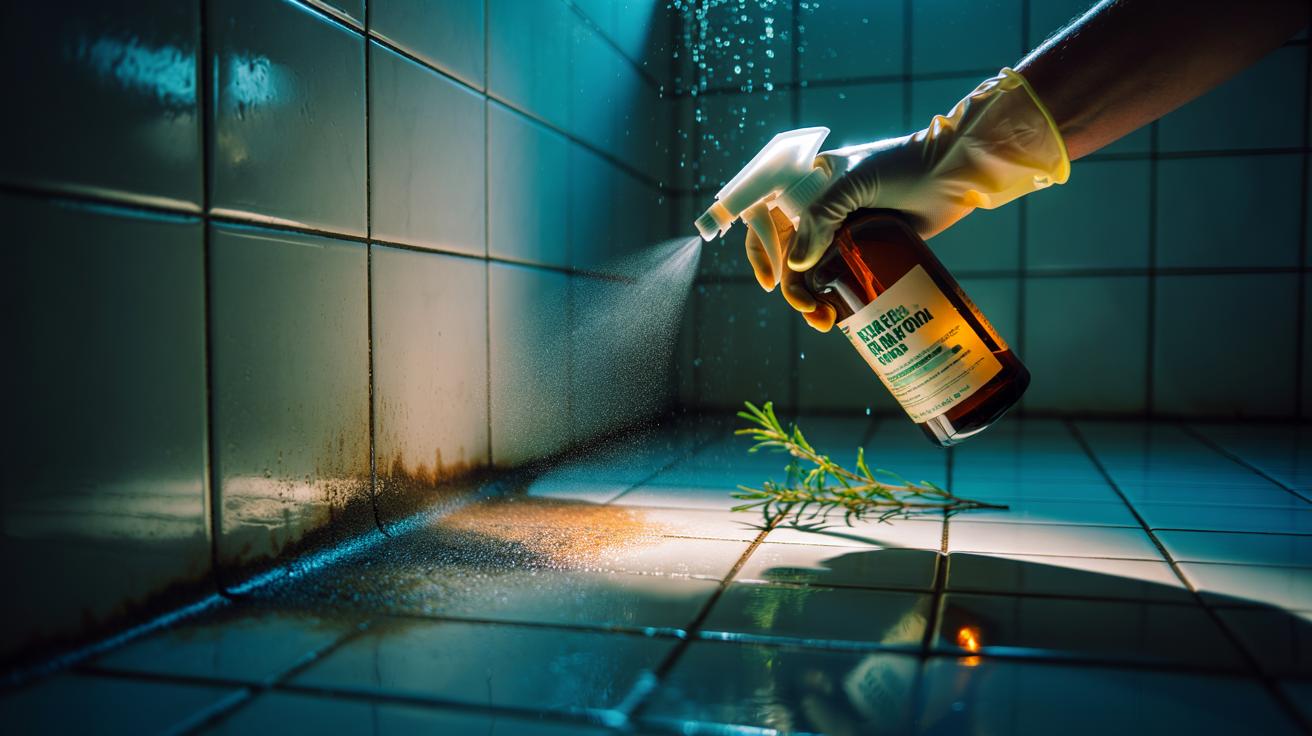
Preparation is simple, and the right dilution is the difference between a pleasant clean and a pungent mistake. Use a dark, trigger-spray bottle, as light degrades the oil. For routine mould on shower tiles, blend cool, boiled water with tea tree oil and a drop of mild washing-up liquid to help dispersion. Never mix essential oils with bleach or ammonia — that’s a hard rule. Shake before each use, because natural separation is inevitable. Work with gloves on, window open, extractor whirring.
| Situation | Tea Tree per 250 ml Water | Contact Time | Notes |
|---|---|---|---|
| Light mildew on tiles | 10–15 drops (0.5–0.75 ml) | 5–10 minutes | Wipe with microfibre; no rinse needed if not slippery |
| Stubborn grout mould | 1 tsp (5 ml) | 15–20 minutes | Scrub with a grout brush; rinse lightly |
| Silicone sealant staining | 1–2 tsp (5–10 ml) | 20–30 minutes | Repeat over several days; replace failed sealant |
| Weekly prevention spray | 5–8 drops | Air-dry | Spritz after final shower; squeegee first |
Application is easy. Degrease the area with warm water, then spray from top to bottom until surfaces glisten, not drip. Allow the stated dwell time. Dwell time is key: that’s when the antifungal chemistry works, not during the scrub. Agitate grout lines with a nylon brush and buff tiles with a microfibre cloth. If the floor feels slick, rinse lightly and towel-dry. Leave a faint residue on vertical tiles for lasting protection, but prioritise safety on floors. Store your mix for up to a fortnight; remake if the scent fades. Keep away from children and pets, especially cats.
Speed Versus Bleach and Other Choices
Bleach is the headline act in many homes because it whitens instantly. Yet speed isn’t the same as success. Sodium hypochlorite often decolourises mould without penetrating porous grout; the stain fades, spores linger, regrowth follows. Tea tree oil works differently. It infiltrates, lingers, and keeps acting as tiles dry, buying you time between cleans and reducing the need for aggressive scrubbing. Vinegar is cheap and decent on soap scum, but it’s less potent against established mould, especially in cold bathrooms. Hydrogen peroxide is a good all-rounder — brightens, sanitises — but may need longer contact and can lighten some coloured grouts.
For many households, tea tree oil hits the sweet spot of quick visible improvement, effective sanitising, and gentler handling of surfaces. It also smells pleasantly medicinal rather than chemical, a small touch that makes weekly maintenance more likely. That said, essential oils can irritate sensitive skin, and poorly ventilated rooms can feel heady after a heavy application. Use extraction, open a window, and keep mixtures moderate. In cases of recurring mould, ask the hard question: is moisture control missing? Fix the fan, shorten showers, squeegee glass and tile, and consider sealing grout once clean. The fastest clean is the one you don’t need to repeat.
Tea tree oil won’t replace good ventilation, but in the battle against shower mould it’s a fast, precise ally. A small bottle delivers big results thanks to powerful terpenes that reach deep into grout and leave tiles looking and smelling fresher. With sensible dilutions, proper dwell time, and a weekly maintenance spritz, most bathrooms can stay ahead of the damp. Think of it as smart cleaning: targeted, swift, and kinder to the materials you paid for. Ready to try the natural route — and what tweaks to your routine could keep your shower sparkling for longer?
Did you like it?4.4/5 (30)