In a nutshell
- 🧪 The science: sodium bicarbonate adsorbs volatile compounds and neutralises acids, delivering true odour reduction (not masking) with noticeable results in around 10 minutes.
- 🧹 The 10‑minute method: start with a dry, pre‑vacuumed carpet, sprinkle lightly (about 1–2 tsp/m²), don’t wet it, wait ten minutes, then vacuum slowly with overlapping passes—technique beats quantity.
- 🐾 When to extend: for pets, smoke, and strong cooking odours, increase dwell to 30–60 minutes or overnight; treat urine first and avoid acidic mixes on wool.
- 🧼 Safety and kit: use a vacuum with a HEPA filter, keep filters/bags clean, empty canisters outdoors, and keep children and pets out during dwell; fine powders mean light, even application.
- 📊 Quick guidance: light mustiness (10 min), cooking (20–30 min), dry pet odours (30–60 min), smoke (overnight); fix moisture issues before deodorising—dry rooms accelerate results.
Short on time, long on smells? A box of baking soda is the quiet hero your carpet needs. Sprinkle, wait, vacuum. That’s the gist, but the science is smarter than the simplicity. In just ten minutes, baking soda can neutralise musty odours from everyday life—pets, cooking, damp trainers—without perfume or residue. It treats the cause rather than masking the scent, delivering a fresher room rapidly and on a budget. Used well, it’s safe, dry, and effortless. Used badly, it can clog a vacuum or miss deeper smells. Here’s how to make the ten-minute method count, and when to push beyond it.
The Chemistry Behind Baking Soda’s Quick Odour Fix
The magic sits in the powder’s structure and nature. Baking soda—sodium bicarbonate—has a mildly alkaline pH and a crystalline, porous form. Those particles adsorb volatile compounds, the tiny molecules responsible for sharp, sour, or stale smells. At the same time, bicarbonate’s buffering action neutralises acids (think vinegar-like tangs) and tempers sulphur notes from foods and pets. It doesn’t perfume the carpet; it reduces the odour load. That distinction explains why rooms smell genuinely cleaner, not artificially scented, after a quick application.
Speed matters. In ten minutes, the powder captures a meaningful share of light, surface-level odours—the kind that sit on the tips of fibres or in dust. Warm rooms help because molecules move faster; dry rooms help because moisture can slow adsorption. For deep, oily contaminants, time is the limiting factor. Oils trap odour molecules in a sticky grip that needs a longer dwell. Still, the ten-minute pass creates an immediate improvement many households notice on first breath. For everyday refreshes, ten minutes is a sweet spot of effect and convenience.
There’s also a safety angle. Unlike sprays, bicarbonate releases no propellants and carries no heavy fragrance load. It is, however, a fine powder. That means smart technique matters to avoid over-application and to protect vacuums. Used judiciously, it’s a low-risk, high-reward refresher. Used by the handful, it can overwhelm filters and create more cleaning than it saves.
Step-by-Step: A 10-Minute Deodorising Routine
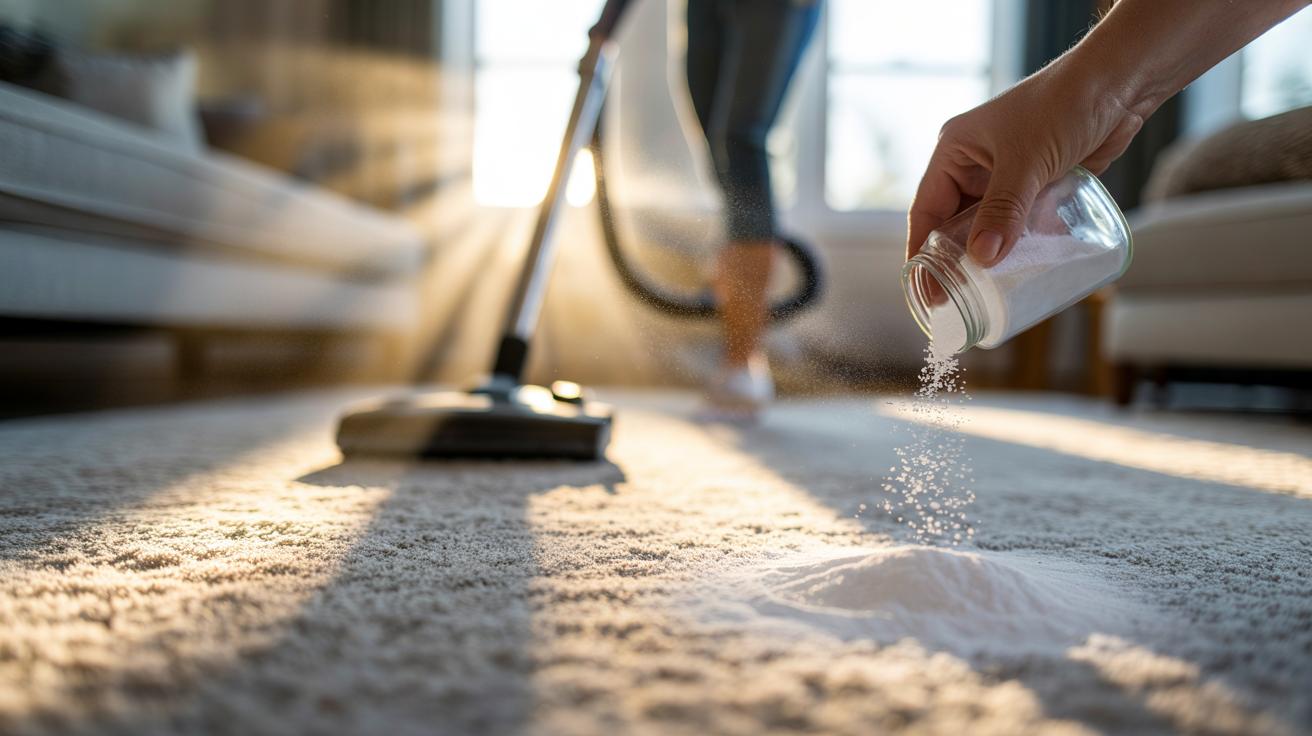
Start with a quick check. The carpet should be dry, free of wet spills, and recently vacuumed to remove grit. Do a tiny patch test in a corner if the pile is unusually delicate, especially on wool blends. Now dose: aim for a light, even snow—not a blizzard. About 1–2 teaspoons per square metre is typically enough for a routine refresh. Less powder, more coverage, better results. Optional: use a soft brush or clean hand to feather it across the fibres without grinding it in.
Set a timer for ten minutes. That’s your dwell time for surface odours when you need results before school run or guests. While you wait, keep pets and children out of the room. Never wet the powder; moisture turns bicarbonate into a paste that’s harder to remove. When the timer pings, vacuum slowly, two passes per lane, overlapping by half the head’s width. Fresh bag or a clean filter helps—fine powders challenge airflow. If your machine clouds visibly, stop, clear the filter, and resume at a calmer pace.
What you should smell now is absence. No fake citrus. No powdery perfume. Just the background scent of your home. If a faint note lingers, repeat with a lighter sprinkle rather than dumping more at once. Technique beats quantity. And remember: keep the powder away from damp, wool underlay edges, and robot vacuums with small dust bins, which clog faster. A careful ten minutes delivers a crisp reset most weekday mornings can accommodate.
When to Go Beyond Ten Minutes: Stains, Pets, and Wool
Not all odours are equal. Pet accidents, curry nights, and old smoke sink deeper and bond tighter. For these, extend the dwell time to 30–60 minutes, or even overnight for stubborn patches. Cover lightly with a tea towel to keep foot traffic off. If the odour source is still present—like a urine crystal—no deodoriser alone will fix it; the area may need targeted cleaning once dry, then another round of bicarbonate. Avoid mixing baking soda with acidic liquids on wool: fibre damage and colour shifts are possible.
Consider your vacuum. For persistent issues, a machine with a HEPA filter and sealed body keeps fine dust from re-entering the room. Empty cannisters outdoors. Change bags sooner than usual when using powders. In humid flats, run ventilation or a dehumidifier; dry air accelerates odour removal. Still stuck? Professional hot-water extraction (on compatible carpets) can reset the baseline, after which bicarbonate works brilliantly for maintenance. Escalate thoughtfully, and you’ll protect both fibres and lungs.
| Odour Type | Suggested Dwell | Notes |
|---|---|---|
| Light mustiness, dust | 10 minutes | Routine refresh; thin sprinkle |
| Cooking aromas | 20–30 minutes | Improve ventilation; repeat if needed |
| Pet odours (dry) | 30–60 minutes | Treat accidents first; HEPA vacuum |
| Smoke residue | 60 minutes–overnight | Multiple passes; clean filters |
| Damp/mildew | After drying only | Fix moisture source before deodorising |
Ten minutes, one cupboard staple, and your carpet stops announcing yesterday’s life. Baking soda excels because it neutralises, not disguises, and it respects the textile when used dry and light. The secret is restraint: thin coverage, measured dwell, patient vacuuming. For bigger battles—pets, smoke, ingrained spills—stretch the time, improve ventilation, and support your vacuum with clean filters. Budget-friendly, family-safe, and fast, this is a habit that keeps rooms guest-ready between deep cleans. What’s the toughest odour haunting your carpet today, and which part of the ten-minute routine will you tweak first to tackle it?
Did you like it?4.4/5 (23)