In a nutshell
- 🧼 Soap bars act as passive diffusers, releasing volatile compounds into the drawer’s headspace; they rebalance odours rather than clean, and temperature strongly affects release.
- 🔬 The science: textiles and wood are porous, trapping smells via adsorption and absorption; soaps outcompete stale molecules, but they won’t fix damp or mould—solve moisture first.
- 🧴 Choose wisely: triple‑milled for steady longevity, glycerin for quick punch, castile for gentle notes; pick lavender, citrus, or cedar, and use paper or muslin wrapping to tune strength and protect fabrics.
- 📦 Placement matters: position near airflow, use two small bars for deep drawers, never place a damp bar, bag in muslin, and boost diffusion by lightly scoring the surface or tucking shavings into corners.
- ⚠️ Stay safe and sustainable: check allergens like limonene and linalool, keep away from babies and pets, reuse hotel minis, buy British‑made bars with low packaging, and refresh by scraping the outer layer.
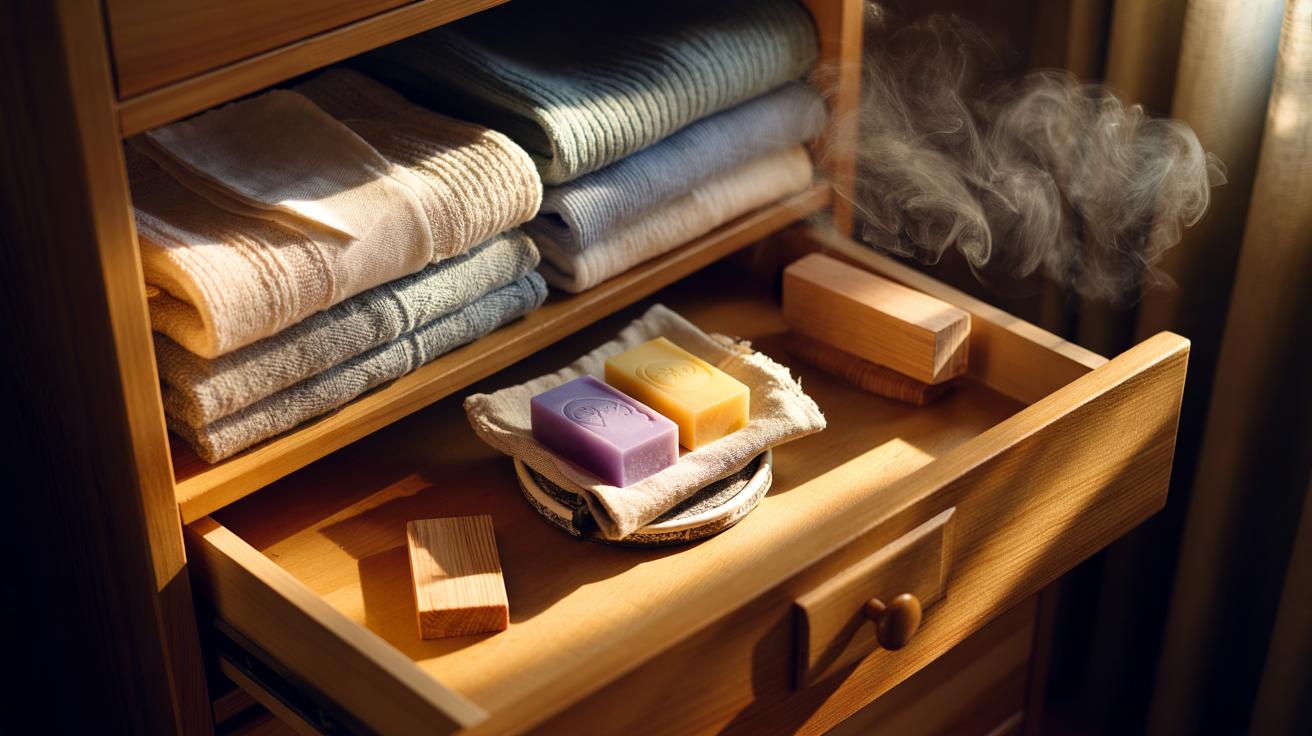
Open a long-neglected drawer and you’ll know at once: air goes stale in closed spaces. A simple bar of soap can change that mood, turning a fug of must into a reassuring whisper of lavender, citrus, or cedar. It’s cheap, unfussy, and quietly effective. In British homes where damp days are common, a dry soap bar can serve as a compact, passive diffuser, steadily releasing fragrance molecules that lift odours from knitwear and linens. Place the bar dry and unwrapped for a brighter hit, or partially wrapped for a slower, subtle bloom. Either way, the trick is understanding how scent travels—and how storage materials respond.
The Science of Scent Seepage in Small Spaces
Soap isn’t magic; it’s chemistry you can smell. Fragrance molecules, often termed volatile compounds, naturally evaporate due to their vapour pressure, forming a scented halo in the confined “headspace” of a drawer. In tight volumes, diffusion is efficient. The scent collides with fibres, wood, and paper, creating a gentle gradient from bar to corner. If you can smell it before opening the drawer, the bar is overworking or the space is too warm. Temperature matters. Warmer rooms turbocharge release; cooler cupboards slow it down. Soaps act like low-tech diffusers, dispensing aroma at a pace set by formulation, airflow, and contact with soft surfaces.
Odours cling because textiles and unfinished wood are porous. They trap molecules through adsorption and absorption, the way a sponge drinks up a spill but also holds a film on its surface. Soaps counter this by outcompeting stale compounds in the air and nudging equilibrium towards freshness. They don’t clean; they rebalance the scent profile. If a drawer harbours true damp or mould, the soap will only mask, not mend. Fix moisture first, then let a bar establish a pleasant baseline that builds with each opening and closing of the drawer.
Choosing the Right Soap Bar for Drawers
Not all bars behave alike. A glycerin-rich soap releases scent quickly but fades sooner; a hard-milled bar whispers longer. Look for essential oil blends if you prefer botanical clarity, or select fragrance oil formulas for strength and consistency. Keep dye-heavy soaps away from pale silks and heirloom cottons. Classic profiles work best in storage: lavender for linens, lemon or bergamot near gym kit, cedar for knitwear that needs a woodsy guard against mustiness. Strong doesn’t mean better; aim for balanced diffusion rather than a punch in the nose each time you open a drawer.
| Soap Type | Scent Strength | Longevity | Best For | Notes |
|---|---|---|---|---|
| Triple-milled | Medium | Long | Bed linen, towels | Hard bar; slow, steady release |
| Glycerin | High | Short–Medium | Workout gear | Quick impact; replace more often |
| Castile (olive) | Gentle | Medium–Long | Delicates | Low dye; soft herbal notes |
| Cedar/Herbal blends | Medium–High | Medium | Knitwear | Woodsy; pairs with cedar blocks |
Consider form factor. Mini hotel soaps tuck neatly into sock drawers; larger bars suit wardrobes and airing cupboards. Wrapping tweaks performance: paper wrapping tempers strength, muslin allows air to dance around the bar, plastic suffocates it. Choose unsleeved or paper-wrapped for best results. If you’re scent-sensitive, pick milder notes and trial one drawer first. Those who love a bolder wake-up can pair a bar with a matching sachet, but keep intensity practical; garments should smell fresh, not perfumed.
Placement, Packaging, and Practical Tricks
Where you place the bar affects everything. Put it near vents, gaps, or the natural airflow created when you open the drawer. For deeper chests, use two small bars at opposite ends rather than one big lump in the middle. Never place a damp bar in any closed drawer. Moisture invites softening and residue. Slip the bar inside a muslin bag, a clean sock, or a paper envelope with pinholes to stop direct contact with cashmere or silk. You’ll still get diffusion, but fabrics are shielded from oils or dyes. Keep the bar on a coaster if you’re worried about unfinished wood.
Want a faster uplift? Lightly score the surface with a knife to increase area. For a gentle top-up, shave a few curls and tuck them into corners, then compost or bin them when they dull. Rotate scents by season: zesty notes in summer, resinous woods in winter. Open the drawer daily to refresh the headspace and move air. Airflow is the silent partner here; scent works harder when the space isn’t completely stagnant. If odours persist, empty the drawer, wipe with a vinegar-water solution, dry thoroughly, then reintroduce the soap.
Hygiene, Safety, and Sustainability Notes
Fragrance is personal. Those with allergies should check labels for known triggers such as limonene, linalool, or strong balsams. Test any new bar with spare fabric before parking it against prized garments. Keep soaps away from baby clothing unless unscented and simple. Avoid heavily coloured bars if your drawers house white linens. Essential oil soaps feel “natural”, but they are still potent; treat them with the same respect you would a diffuser. Pet households should store bars out of reach—some oils can be problematic if chewed. If a bar softens or sweats in humid spells, remove it, dry it in open air, and return it when firm.
Sustainability can be practical. Use up hotel minis, give old slivers a second life in storage, or buy British-made bars with minimal packaging and no microplastics. Soap won’t cure damp or mould; it only masks their scent. Fix leaks, improve ventilation, and then let a bar maintain the pleasant afters. When a fragrance fades, don’t bin it immediately: scrape off the outer layer to “reveal” fresh oils beneath, or repurpose it for handwashing. A small habit, repeated across a home, keeps cupboards poised between clean and comfortable without resorting to synthetic sprays.
The quiet charm of a soap-scented drawer lies in balance: enough aroma to signal cleanliness, not so much that your clothes declare it on the street. With the right bar, smart placement, and a touch of care, you can turn storage into a subtle scent stage that greets you every morning. It’s affordable, adaptable, and surprisingly elegant. Ready to try it? Which fragrance would you choose for your trickiest drawer, and how might you tweak placement to match the season and the fabrics you store?
Did you like it?4.5/5 (27)