In a nutshell
- 🌧️ Warmer, wetter winters raise relative humidity, and the 2026 push for airtightness without good ventilation traps moisture—driving household mould risk.
- 🧱 Building physics matters: cold surfaces and thermal bridges reach dew point; blocked sub-floor vents, leaky gutters, and saturated cavity insulation create hidden damp pathways.
- 🏠 Indoor behaviours amplify moisture: WFH routines, drying clothes, closed trickle vents, gas hobs, and on–off heating spur condensation behind furniture and around window reveals.
- 📊 Detect early: monitor relative humidity with a hygrometer, track misted windows and musty odours, and confirm sources via thermal imaging and blower-door tests.
- 🔧 Prevent smartly: pair insulation with continuous ventilation (ducted hoods, humidistat fans, MVHR/PIV), maintain exteriors, warm surfaces steadily; use dehumidifiers as support, not a cure.
This year’s headlines will be filled with energy bills, smart homes, and yet another wet winter. Lurking behind all three is a quiet intruder: house mould (or mold). It thrives where warm air meets cold surfaces and moisture has nowhere to go. In 2026, UK homes face a perfect storm of airtight retrofits, shifting weather patterns, and lifestyle changes that load the air with water vapour. The causes are rarely obvious. They’re tucked behind wardrobes, under floors, or inside wall cavities. What looks like a cosmetic issue is a building physics problem. Spot it early, fix the source, and you protect both the fabric of your home and the people living in it.
The Silent Role of Climate and Energy Policy in 2026
Britain’s climate is warming, but homes are getting wetter. That paradox matters. Warmer air holds more moisture, and milder, wetter winters now keep relative humidity stubbornly high for longer. When storms drive rain into brickwork and temperatures then dip overnight, moisture lingers within walls. Inside, cooler corners and thermal bridges—around lintels and window reveals—become dew-point magnets. Persistent damp plus still air equals mould growth. You may never see the leak; you’ll see the speckles.
Policy adds a twist. In 2026, the push for airtightness and improved Energy Performance Certificates accelerates. Great for heat bills. Risky without ventilation. Sealed homes trap everyday moisture from cooking, showers, and breathing. Where retrofit is rushed—cavity insulation, new windows, loft top-ups—moisture can be displaced into surprising places. Airtight without right-sized ventilation is a recipe for condensation. The Future Homes trajectory promises efficiency, but the winners will be those who pair insulation with effective, quiet, always-on ventilation.
Hidden Indoor Behaviours That Feed Mold Growth
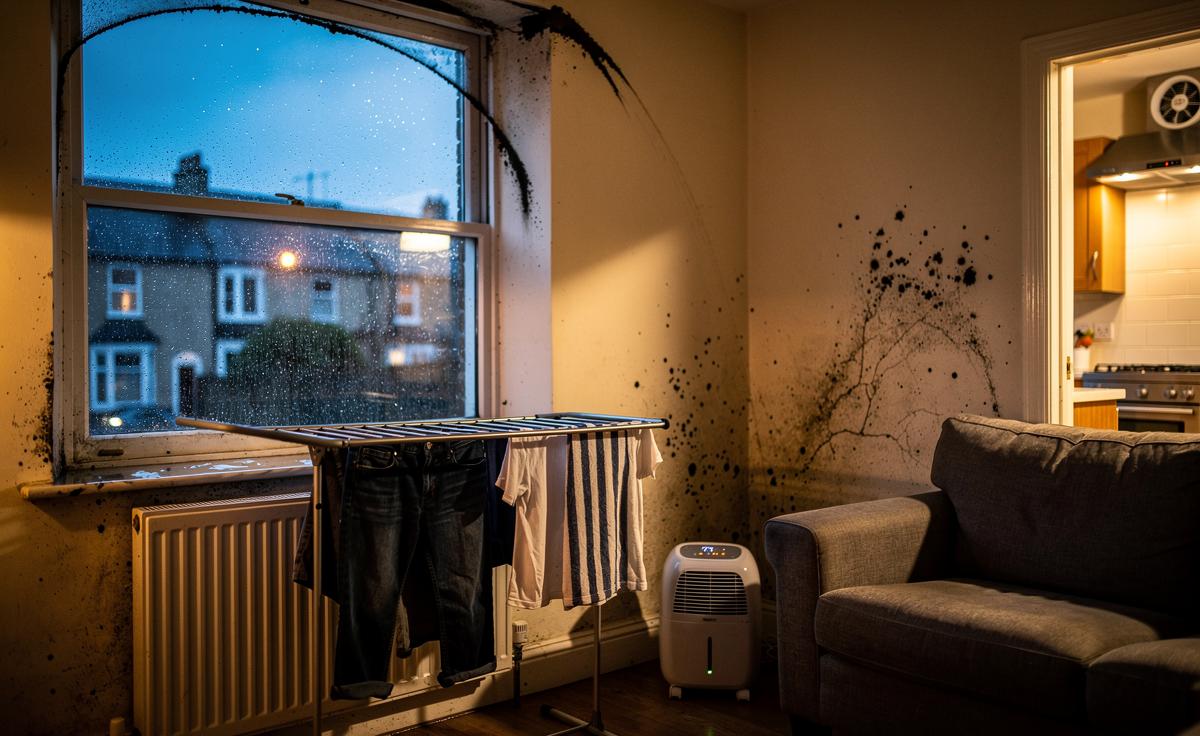
Our routines set the stage. Work-from-home means more hours indoors, more tea kettles boiling, more pans sizzling, more showers at off-peak times. One load of laundry dried on radiators can dump a litre or more of water into the air. Close the trickle vents because of draughts, switch off the clattery fan, and that vapour lingers. High humidity is mould’s best friend. It will first colonise the coolest spots: behind sofas pushed tight to external walls, the back panel of wardrobes, the strip around window frames.
Smart thermostats help with bills, yet frequent setback temperatures create cold surfaces. Short heating bursts warm the air quickly but not the walls, lifting relative humidity right next to paint and plaster. Gas hobs without extraction, aquariums, even generous houseplant displays raise vapour loads. Pets add respiration and wet towels add more. The pattern is cumulative. If you see misted morning windows, if bedrooms smell faintly earthy, if the wardrobe backboard shows grey freckles, your home’s moisture budget is already blown. Ventilate at source, heat steadily, and give air a path to escape.
Building Fabric Traps: Where Moisture Hides in Plain Sight
The biggest surprises sit in the structure. Blocked sub-floor vents allow damp air to pool under suspended timber floors, pushing moisture up through gaps. Leaking gutters or a failing downpipe can soak a patch of brickwork behind render without leaving a neat stain indoors. Cavity wall insulation in exposed locations may bridge with wind-driven rain, creating cold, wet stripes that mirror as mould inside. In lofts, extra insulation without roof ventilation cools the underside of the felt; winter breath condenses and drips back. New heat pumps and boilers add condensate pipes; if untrapped or poorly terminated, they can re-wet foundations.
| Hidden Cause | Tell-tale Sign | Quick Mitigation | 2026 Relevance |
|---|---|---|---|
| Thermal bridge at lintel | Black mould arc above window | Improve insulation, reduce cold air leaks | Deeper retrofits reveal cold spots |
| Blocked sub-floor vents | Musty ground-floor skirting | Clear vents, add mesh, consider PIV | Landscaping and insulation changes block airflow |
| Cavity insulation saturation | Vertical damp bands inside | Check exposure, remedial extraction | Stormier winters increase risk |
| Poor bathroom extraction | Peeling paint, ceiling spots | Fit 15–30 l/s humidistat fan | More occupancy, longer showers |
Moisture chooses the easiest path. If you fix a symptom without giving vapour an exit, it will bloom elsewhere. Hunt for the coldest surfaces, the stillest air, and the stealthy water sources. Then you can prioritise fixes that change physics, not just appearances.
Detection And Prevention: What To Fix First In 2026
Start with measurement. A low-cost hygrometer in each bedroom and living space tells you if relative humidity stays under 60% most of the day. If it doesn’t, create a moisture plan. Ventilate wet rooms at the moment of moisture production: cook with lids and a ducted hood to outside; run bathroom fans during and 20 minutes after showers. Specify quiet, continuous fans or MVHR where airtightness is high. For trickle vents, keep them open in sleeping spaces; close only if crosswinds howl.
Stabilise temperatures. Favour steady, moderate heating over sharp peaks. Pull furniture 50–100 mm off external walls. Add insulating lining paper or insulated plasterboard at notorious cold bridges. In basements and underfloor voids, ensure clear cross-ventilation; install a PIV unit if background fresh air is poor. Maintain the exterior envelope: clear gutters, re-point lime mortar where needed, and check flashing. If problems persist, bring in diagnostics—thermal imaging, blower-door tests, and moisture meters—to find the real source. Prevention is cheaper than redecorating after every winter. A small dehumidifier (10–20 L/day) can buy time, but it should support, not replace, proper ventilation and insulation.
Mould is not inevitable in a damp climate; it’s a signal your home’s moisture balance is off. In 2026 the risks rise because our buildings are tighter, our weather is wetter, and our lives produce more indoor humidity. The fixes aren’t glamorous, but they’re effective: move air, warm surfaces, stop water at the source. Treat mould as a systems problem, not a stain. If you had to pick one change this month, would you upgrade extraction, track humidity, or tackle a suspected cold bridge—and what would convince you it’s the right first step?
Did you like it?4.6/5 (27)