In a nutshell
- 🧼 Fast formula: Mix 1 cup baking soda with 10–15 drops essential oil, sprinkle lightly, let sit 15–30 minutes, then vacuum slowly for quick odour removal.
- 🌿 Smart scent choices: Use blends like lemon + lavender or peppermint + eucalyptus; tailor to bedrooms, halls, or kitchens and keep doses light to avoid residue.
- ⚠️ Safety first: Patch test, keep pets/children out until vacuumed, go gentler on wool, consider plain baking soda for allergy-prone homes, and use a HEPA-filter vacuum.
- ⏱️ Speed hacks: Pre-mix in a shaker, use a tea strainer for even coverage, ventilate during dwell, and do two overlapping passes; real-world test cut odour from 7/10 to 3/10 in under 25 minutes.
- 🔄 Limits and alternatives: Not for wet spills or urine; use enzymatic cleaners or professional extraction when needed, and remember more oil isn’t better—less leaves a cleaner finish.
If your sitting room smells faintly of last night’s curry or wet dog, you can revive the carpet in under half an hour with two pantry-friendly heroes: baking soda and essential oils. This quick, dry method is ideal between deep cleans, especially in UK homes where radiators and closed windows can trap odours. Mix a small batch, shake it on, let it work while you put the kettle on, and vacuum away both scent and stale air. Always patch test on an inconspicuous area before a full application, and choose oils that complement—not overpower—your space for a result that’s fresh, subtle, and genuinely clean-smelling.
The Fast Formula: Baking Soda Meets Essential Oils
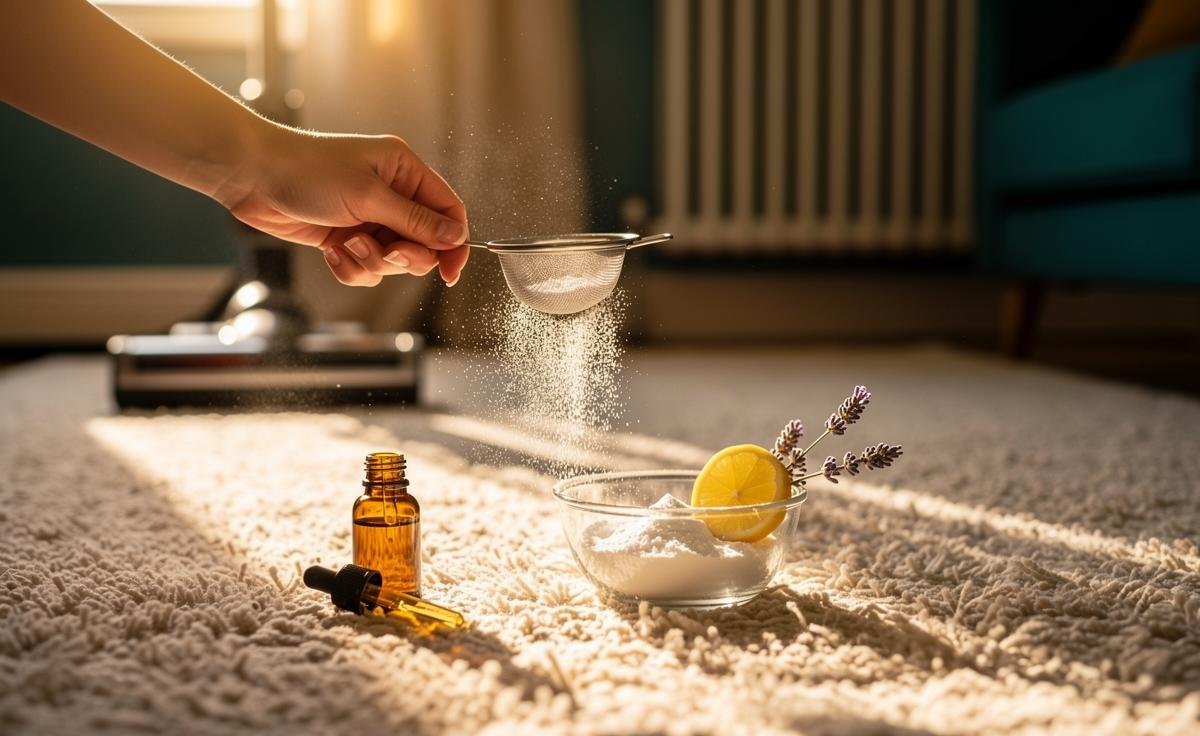
Here’s the no-fuss recipe that delivers quick wins. In a clean jar, combine 1 cup (about 200 g) of baking soda with 10–15 drops of your chosen essential oil. Seal and shake well for even distribution—clumping means uneven scent and residue. For lightly soiled zones, sprinkle a fine, even layer using a tea strainer; for high-traffic areas, apply a touch more but avoid drifts. Let the powder sit for 15–30 minutes to adsorb odours, then vacuum slowly on the highest safe suction for your carpet type. The result is a neutral base note with a brief, bright top note from the oils.
Baking soda works by adsorbing volatile compounds, while essential oils add a pleasant, fast-fading fragrance and—in some cases—mild antimicrobial action. Go light-handed: you’re freshening, not perfuming. For flats, keep windows cracked for a few minutes to carry away dislodged odours. If you’re prepping for guests, target the “nose-height” routes—hall runners and lounge perimeters—first. Do not overwet this mix; it’s a dry refresher, not a deep clean. For recurring odours, repeat weekly and consider addressing sources (shoes, pet bedding) to lock in the improvement.
Pick oils that match the moment: uplifting for mornings, soothing for evenings, and neutral for shared spaces. A quick blend idea: lemon (8 drops) + lavender (5 drops) for crisp calm; or eucalyptus (6) + peppermint (6) for energising freshness.
| Essential oil | Scent profile | Best for | Caution |
|---|---|---|---|
| Lavender | Soft, floral | Bedrooms, winding down | May smell powdery if overused |
| Lemon | Bright, citrusy | Kitchen-adjacent areas | Some pets dislike citrus |
| Peppermint | Cool, minty | Hallways, quick resets | Strong; use sparingly |
| Eucalyptus | Clean, camphoraceous | Post-illness airing | Can feel medicinal if heavy |
| Tea tree | Herbal, sharp | Pet accidents (odor only) | Not ideal in cat households |
Safety, Surfaces, and Science: What to Know Before You Sprinkle
Carpet fibre matters. Wool and wool blends can be more sensitive: keep oil doses low, and vacuum thoroughly to avoid powder lodging in the pile. Synthetic carpets tolerate the method well, but always test in a wardrobe corner first. Keep pets and children out of the room until the powder is fully vacuumed; cats, in particular, can be sensitive to certain oils (notably citrus and tea tree). If in doubt, choose gentler oils like lavender and use half the drop count. A vac with a HEPA filter helps capture fine particles and stray dander the soda dislodges.
Why it works: baking soda excels at adsorbing volatile odour molecules, while essential oils deliver a fast aromatic “mask” that dissipates as air exchanges. This is a maintenance refresher, not a substitute for extraction cleans when soils or spills are embedded. Overdoing oil is counterproductive: more scent doesn’t equal more clean; it just risks residue and irritation. If you detect any grittiness after vacuuming, do a second slow pass at right angles to the first. Tip: swap to a fresh vacuum bag/filter sooner; fine soda can fill bags faster than fluff.
- Why more oil isn’t better: can leave a tacky feel, attracts dust, and may irritate pets.
- Why less is smarter: faster vacuuming, cleaner finish, and a subtle scent that fades gracefully.
- When to skip oils: listings, rentals, or allergy-prone homes—use plain baking soda instead.
Speed Hacks for Busy Households
When time is tight, the difference between “nice idea” and “done” is set-up. Pre-mix a month’s supply of baking soda refresher in a labelled shaker jar, stored airtight in a cool cupboard; keep a small spoon inside to prevent over-pouring. For studio flats, micro-batch 1/2 cup with 6–8 drops—lighter, faster, and tailored. Open a window for five minutes during dwell time to vent stale air; on damp days, pop the dehumidifier on low to speed up odour lift. Vacuum slowly, two passes per lane: speed doesn’t save time if you have to redo it.
In a Leeds terrace last month, I timed a quick refresh on a traffic-worn hall runner: 2 minutes to mix, 3 to sprinkle, 12 to dwell, 5 to vacuum—under 25 minutes, kettle included. My notes rated pre-clean odour at 7/10 (wet shoes, dog) and post-clean at 3/10, with the peppermint–eucalyptus blend fading to neutral by evening. For renters, a discreet lavender–lemon mix keeps impressions crisp without shouting “air freshener.” A tidy sprinkle beats a heavy dump—coverage wins over clumps, and you’ll vacuum less powder in the end.
- Use a tea strainer for even, fine coverage.
- Spot-treat odour hotspots first: sofa fronts, doorway arcs, pet nap zones.
- Set a 15-minute timer; fold laundry while it dwells—no wasted minutes.
- Finish with a slow, overlapping vacuum pattern for a pro look.
When This Trick Isn’t Ideal—and Smarter Alternatives
There are moments when baking soda + essential oils isn’t the ace card. If a carpet has wet spills, sticky residues, or pet urine that’s soaked the underlay, you need targeted cleaning: blot, enzymatic treatment, and—if odours persist—professional extraction. For asthma-prone homes, skip oils altogether and lean on plain baking soda plus ventilation. On very low-pile commercial tiles, powder can sit visibly; use less, vacuum twice, or try a fabric-safe odour neutraliser spray applied lightly at a distance.
Why steam isn’t always better: moisture can drive odours deeper if drying is slow, and rental extractors often leave carpets too damp. If you must deep clean, choose a dry day, ventilate well, and finish with fans. For wool rugs, ask a pro about solvent or low-moisture methods. For chronic smells (smoke, mildew), combine strategies: wash textiles nearby (throws, curtains), replace underlay where needed, and run a HEPA air purifier for a week. Address the source; refreshing works best on odours that are lingering, not active, and it shines as part of a weekly reset.
Used thoughtfully, this simple pairing of baking soda and essential oils delivers a swift, low-cost refresh that respects both your time and your carpet. Keep batches small, scents subtle, and safety front-of-mind, and you’ll turn a tired room around in minutes without the harshness of synthetic sprays. If your home has different zones—muddy hallway, cosy lounge, sleepy bedroom—tailor blends and timing to each. What odour challenge is nagging you most this week, and which room will you trial with a quick shaker-and-vac to see the biggest impact first?
Did you like it?4.6/5 (28)