In a nutshell
- 🌿 Select English lavender (Lavandula angustifolia) for lasting scent; harvest just-before-bloom, dry in a dark airy spot 7–10 days, sift dust, and store airtight (freeze jars 24 hours to deter pests).
- ✂️ Craft simple sachets with breathable fabric (cotton, muslin, linen), 2–3 tbsp buds, and 2–4 drops essential oil; try no-sew tea filters or organza bags, and enhance with rice or cedar shavings.
- 📍 Optimise placement: 1 sachet per 20–25L drawer or per 4–5 hangers; avoid direct contact with silks/wool; suitcases, gym bags, shoe cabinets benefit too. Why more oil isn’t better: aim for balanced fillers for steady release.
- 🔁 Refresh and sustain: roll sachets to reactivate, add 1–2 drops at seams, top up buds every 3–6 months; compost spent filler, launder pouches, and keep out of pets’ reach.
- 🏡 Enjoy moth-safe, low-cost freshness: calm, clean aroma without synthetics; great as gifts; pair sachets with bicarbonate of soda for odour control—ideal for UK wardrobes, drawers, and airing cupboards.
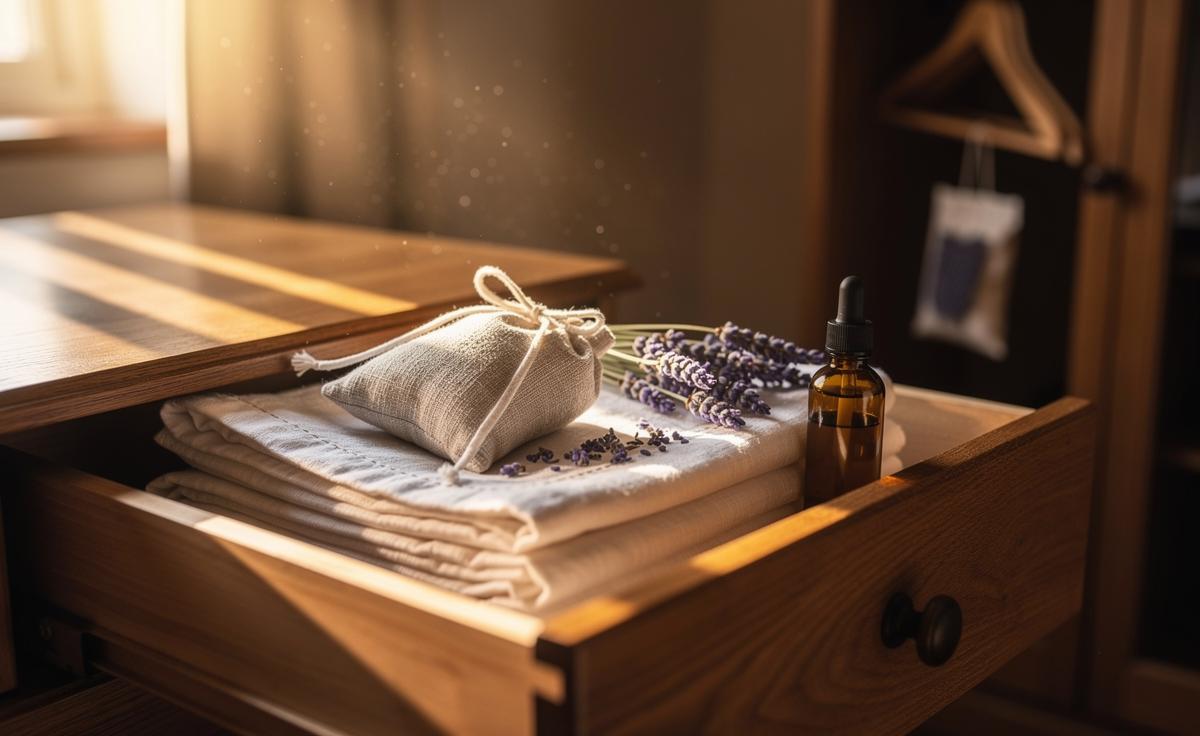
There’s a quiet luxury in opening a linen drawer and catching the clean, herbal lift of lavender. While candles and plug-ins fight for attention, simple sachets deliver a subtler, longer-lasting freshness that feels inherently “home”. In British houses—from Victorian terraces to modern flats—these pocket-sized scent makers tuck neatly into wardrobes, airing cupboards, and suitcases. With a handful of dried buds, a scrap of fabric, and a few drops of essential oil, you can craft low-cost, low-waste sachets that genuinely perform. Think of them as tiny, textile-based air filters—quietly working while you live. Here’s how to build, place, and maintain sachets that keep rooms, drawers, and fabrics smelling like a summer border in bloom.
Selecting and Drying Lavender the Right Way
Start with the right variety. For lasting fragrance, choose English lavender (Lavandula angustifolia) over showier French types; it’s richer in linalool, the compound that gives that signature calming aroma. If you’re harvesting, pick stems when most buds are just about to open and cut mid-morning, once dew has lifted. Tie in small bundles and hang upside down in a dark, airy spot for 7–10 days. Drying slowly preserves both colour and volatile oils—rush it and you’ll lose potency. If buying, look for UK-grown, pesticide-free buds; they’re often available from farm shops in Norfolk, Yorkshire, or online co-ops.
Once dried, strip buds off the stems by rolling between your palms over a tray. Sift out dust: it muddies the scent and can mark pale textiles. Store the buds in an airtight jar away from light. Freshness matters—properly dried and stored lavender keeps peak fragrance for 9–12 months. A journalist’s tip from a lavender grower I met in Kent: freeze sealed jars for 24 hours before use to discourage any lurking pantry moths. Clean inputs equal cleaner output in every sachet you sew. Prioritise quality buds, and the rest of the process becomes effortlessly effective.
Crafting Simple Sachets That Smell Like Summer
You don’t need couture skills—just a straight stitch and breathable fabric. Choose tightly woven cotton, muslin, linen, or upcycled shirt cloth; avoid synthetics, which trap moisture and blunt diffusion. Cut two 8–10 cm squares, stitch three sides, turn inside out, then loosely fill with 2–3 tablespoons of dried buds. Add 2–4 drops of lavender essential oil directly to the buds for an immediate boost. Stitch the final edge, or tie with a ribbon for refillable pouches. Breathability is non-negotiable: if air can’t pass through, fragrance can’t, either. For a softer hand feel in drawers, mix in a teaspoon of food-grade rice—it prevents clumping and acts as a gentle carrier.
For quick wins, no sewing required: spoon buds into reusable tea filters or small organza gift bags and knot tightly. For wardrobes, make longer sachets—think bookmark shape—to slip over hangers. To personalise, add a pinch of lemon verbena or dried rosemary for brightness, or a whisper of cedar shavings for moth deterrence. Here’s a materials checklist to get you started:
- Fabric: Cotton, muslin, linen, or repurposed pillowcase
- Fill: Dried lavender buds; optional rice or cedar shavings
- Boost: 100% pure lavender essential oil (2–4 drops per sachet)
- Tools: Needle and thread or machine, scissors, ribbon
Placement Strategies, Pros vs. Cons, and Why More Oil Isn’t Always Better
Placement determines performance. In drawers, aim for one sachet per 20–25 litres of space; in wardrobes, use one per 4–5 hangers. Slip a sachet into pillowcases, gym bags, and airing cupboards for steady diffusion. Small sachets in the right places outperform one overpowering diffuser. Avoid direct contact with delicate silks and dark wool—keep sachets in corners or pockets to prevent oil transfer. For suitcases, tuck one into the zip compartment; you’ll open to a holiday-ready scent even in February. In shoe cabinets, pair lavender with cedar to counter odours and insects without harsh chemicals.
More essential oil doesn’t guarantee longevity—overloading saturates fibres, making the first week intense and the next forgettable. Instead, rely on a smart filler mix for even release. Below is a quick comparison:
| Filler | Pros | Cons | Typical Longevity |
|---|---|---|---|
| Dried lavender buds | Authentic scent, natural moth deterrent | Can shed dust if not sifted | 6–12 months |
| Rice (with buds) | Even diffusion, budget-friendly | Less botanical intensity alone | 4–8 months |
| Cedar shavings | Extra moth resistance, woody lift | Can compete with lavender if overused | 6–10 months |
Why more oil isn’t always better: balanced carriers release fragrance steadily, not in a single burst. Use moderation for consistent, livable freshness.
Refreshing, Safety, and Sustainable Upgrades
When a sachet softens, refresh rather than replace. Roll it between your fingers to reawaken trapped oils, then add 1–2 drops of essential oil directly to the fabric seam—not the face touching textiles—to avoid spotting. Every 3–6 months, open refillable sachets and top up with a tablespoon of fresh buds. If a bag looks tired, decant the filler into compost, launder the pouch, and refill. Reuse beats replacement—your linen cupboard and wallet will both breathe easier. For pet households, keep sachets out of reach; concentrated oils shouldn’t be chewed or diffused near sensitive animals. The dried plant itself is gentle, but prudence pays.
For zero-waste flair, raid your mending basket: turn torn shirts into coordinated sachet sets, and label with fabric pen and the date. I trialled this in a rented flat in Manchester; a line of slender sachets on each hanger cut that musty “after-rain” smell without masking it. Want bigger impact? Pair lavender with bicarbonate of soda in a separate open jar under the sink—bicarb absorbs odours, sachets layer the fragrance. For gifts, bundle three: one for drawers, one for wardrobes, one for luggage. Practicality wrapped in charm is irresistible—and reliably used.
Lavender sachets prove that the simplest solutions can be the most elegant: low energy, low cost, and high reward. With thoughtful sourcing, careful mixing, and strategic placement, you’ll replace synthetic blasts with a calm, clean scent that lasts through seasons. From first harvest to final stitch, the process is tactile and satisfying—part craft, part care ritual for your home. If you try one upgrade this week, make it a set of sachets for the places you open every day. Which room or drawer in your home is most in need of that fresh, herbaceous lift—and what will you transform first?
Did you like it?4.2/5 (25)