In a nutshell
- 🧪 The science: white vinegar (acetic acid) dissolves limescale and grease, while olive oil fills micro-scratches to reduce fingerprints; avoid vinegar on natural stone and use pH‑neutral cleaners there.
- 🔧 Surface methods: For stainless steel wipe a 1:1 vinegar–water mix with the grain, dry, then buff a pea-sized dab of oil; mist laminates then rinse with soapy water; dwell on glass hobs; wrap taps to lift scale; always use microfibre.
- ⚖️ Pros vs. cons: Affordable, versatile, and low‑clutter with showroom finishes; limits include acid sensitivity and oil attracting dust; never mix vinegar with bleach or hydrogen peroxide; skip unsealed grout and rubber gaskets.
- 🧴 Safety & storage: Label sprays, store oil away from heat and light, rinse food-contact areas, patch‑test hidden spots, and launder cloths without softener; schedule weekly maintenance for hard‑water hotspots.
- ✨ Results & priorities: A real‑world 12‑minute reset restored a smudged fridge and glass hob for pennies; prioritise handles, control panels, splash zones, and sink rims for the fastest perceived gleam.
In British kitchens, the quiet double act of white vinegar and olive oil can keep everything from the hob to the fridge door looking camera-ready. Used thoughtfully, vinegar dissolves limescale and cuts grease, while olive oil buffs steel and wood to a soft sheen. The trick is knowing where each belongs, how much to use, and when to hold back. Having tested these methods across rental flats and family homes, I’ve found a few dependable routines that deliver professional polish without professional prices. Done right, this pairing offers speed, thrift, and remarkably consistent results—with a couple of crucial caveats you should never ignore.
The Science of Shine: Why Vinegar and Olive Oil Work
Vinegar is powered by acetic acid, a mild acid that reacts with alkaline deposits such as hard-water limescale, soap scum, and certain food residues. That’s why a 1:1 mix of vinegar and water slices through mineral rings on taps and glass, and helps release greasy films on hobs and tiles. It’s also naturally deodorising. But the very acidity that makes vinegar effective is why it must be used with care: avoid vinegar on natural stone like marble, limestone, and many granites, where acid can etch the surface. For those, a pH-neutral cleaner (or just warm water and mild soap) is safer. Distilled white vinegar is best—cheap, clear, and consistent.
Olive oil works differently. It’s hydrophobic, so a whisper-thin film fills micro-scratches on stainless steel and enhances wood’s grain, making surfaces look freshly polished. It can even slow fingerprints on fridges and cooker hoods by smoothing the surface. But oil is a finishing step, not a cleaner. Always remove grime first, then apply a tiny amount and buff dry. Less is more: over-application attracts dust and leaves smear-prone residue. On chopping boards, choose food-grade mineral oil for long-term conditioning; olive oil can turn rancid over time, especially in warm, humid kitchens.
Step-by-Step Methods for Different Surfaces
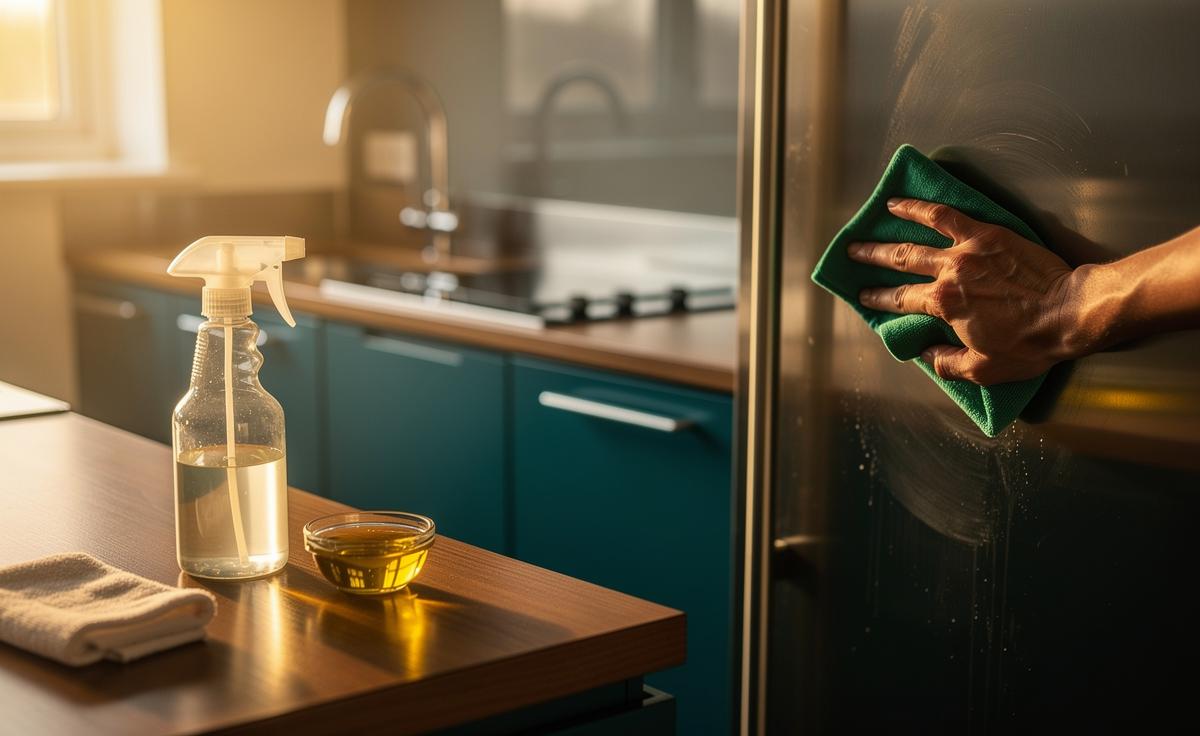
For stainless steel appliances, start with a damp microfibre cloth and a 1:1 vinegar-water mix. Wipe with the grain until clean, then dry fully. Dab a pea-sized amount of olive oil on a cloth and buff with the grain—edges, handles, then larger panels—until the surface gleams but feels dry. On laminate worktops, spray the same vinegar mix lightly, wipe, then follow with warm soapy water to neutralise the acid and protect any sealant; buff dry. For glass hobs, mist the vinegar mix, lay a warm damp cloth on stubborn spots for five minutes, then wipe and dry. Finish with a microfibre pass for that showroom shine.
With taps and sinks, vinegar is superb on limescale: soak a cloth in the mix, wrap the affected area for 10 minutes, then scrub with a soft brush and rinse. For wood cabinets, clean with mild soap first, dry, and only then touch on a fingertip of olive oil to revive dulled patches—buff until there’s zero tack. Do not use vinegar on marble or granite, and keep oils off floors to avoid slips. In my East London test, this routine restored a neglected stainless fridge in under eight minutes, saving the cost of a specialised spray and leaving a streak-free finish even under harsh evening light.
| Surface | Vinegar Mix | Olive Oil Use | Do / Don’t |
|---|---|---|---|
| Stainless steel | 1:1 with water, wipe then dry | Tiny amount, buff with grain | Do patch-test; Don’t over-apply |
| Laminate worktops | Light mist, then soapy rinse | Not needed | Do neutralise acid; Don’t soak seams |
| Glass hob | 1:1, dwell on spots | Not needed | Do use microfibre; Don’t use abrasives |
| Natural stone | None | None | Do use pH-neutral cleaner; Don’t use vinegar |
| Wood cabinets | Mild soap only | Thin buff for sheen | Do dry thoroughly; Don’t leave oily film |
Pros vs. Cons and Why “Natural” Isn’t Always Better
Pros: affordability, availability, and versatility. A bottle of white vinegar and a modest olive oil will handle a week’s worth of splashes, fingerprints, and cloudy glassware. The combo reduces product clutter and avoids heavy fragrances. On stainless and glass, the finish is often superior to many supermarket sprays. For renters, it’s a landlord-safe route to quick wins before inspections. Beyond aesthetics, vinegar reduces mineral build-up that can degrade taps over time, and olive oil rescues brushed steel from that dull, tired look caused by overzealous scrubbing with the wrong cloth.
Cons: acidity limits where vinegar can go, and oils can become dust magnets if overused. Vinegar shouldn’t touch natural stone or unsealed grout, and it may degrade rubber gaskets if left to sit. Olive oil isn’t a conditioner for chopping boards—that job belongs to food-grade mineral oil; olive oil can oxidise and smell. Above all, never mix vinegar with bleach or hydrogen peroxide—that’s a toxic or unstable cocktail, not a cleaner. If you prefer a ready-made option, look for pH-neutral sprays for stone, and stainless-steel polishes for heavy-use kitchens where daily fingerprints are inevitable.
- Best use-cases: stainless fronts, glass, chrome taps, microwave doors.
- Skip it on: marble, granite, quartzite, unfinished wood, rubber seals.
- Rule of thumb: clean with vinegar-water, dry, then finish with a touch of oil where appropriate.
Stain Scenarios, Safety, and Storage Tips
Case study: In a busy family flat near Manchester, a glass hob with caramelised sugar splatters and a fingerprinted fridge door faced the pre-guest test. Vinegar spray, a five-minute dwell under a warm cloth, and a soft scrape lifted the sugar without scratching. The fridge responded to a vinegar wipe and a microfibre dry; two pea-sized dots of olive oil on a cloth restored a uniform sheen that resisted new prints through supper. The entire reset took 12 minutes and cost pennies. The same routine freshened chrome taps, while a separate pH-neutral cleaner handled the quartz worktop.
Stay safe and organised. Decant vinegar into a labelled spray bottle; store olive oil away from heat and light to slow oxidation. Use microfibre over paper towels to minimise lint and improve pickup; wash cloths without fabric softener so fibres stay grabby. Patch-test hidden areas first. Rinse food-contact surfaces after vinegar use, especially around baby gear. Do not leave vinegar to sit on grout lines or rubber seals; wipe and dry. For hard-water hotspots, schedule a weekly quick pass to prevent thick scale. If you’re short on time, prioritise handles, control panels, splash zones, and the sink rim—the places that telegraph “clean” at a glance.
Used intelligently, vinegar and a hint of olive oil deliver the kind of everyday gleam that makes a kitchen feel calmer, cleaner, and more considered. Respect the limits—no acids on stone, no heavy oiling—and you’ll outshine pricier products without the cloying scent. With a couple of microfibres and two small bottles, you can turn a post-supper mess into a Sunday-afternoon polish in minutes. What’s your biggest surface headache right now, and which spot would you most like to see gleam by this time tomorrow?
Did you like it?4.5/5 (28)