In a nutshell
- 🧺 Step-by-step reset: wash towels with detergent (no softener), add white vinegar to the rinse, then run a quick second wash with baking soda; finish with ample airflow and dryer balls for loft.
- ⚗️ How it works: vinegar dissolves mineral deposits and residue, while baking soda deodorises and loosens grime—use them in sequence, not together, to avoid neutralising their cleaning power.
- 📏 Doses that deliver: 150–250 ml vinegar in the rinse and 50–75 g baking soda in the drum; scale up slightly for very hard water or opt for a 60°C cycle on robust cottons.
- 🛑 Safety and fixes: Never mix vinegar with bleach; reduce vinegar if there’s a lingering tang, add an extra rinse/spin, and pre-soak with baking soda for stubborn stiffness or odours.
- 🌿 Why softener isn’t always better: commercial softeners coat fibres and reduce absorbency, while vinegar + baking soda restore softness and absorbency at low cost with fewer irritants.
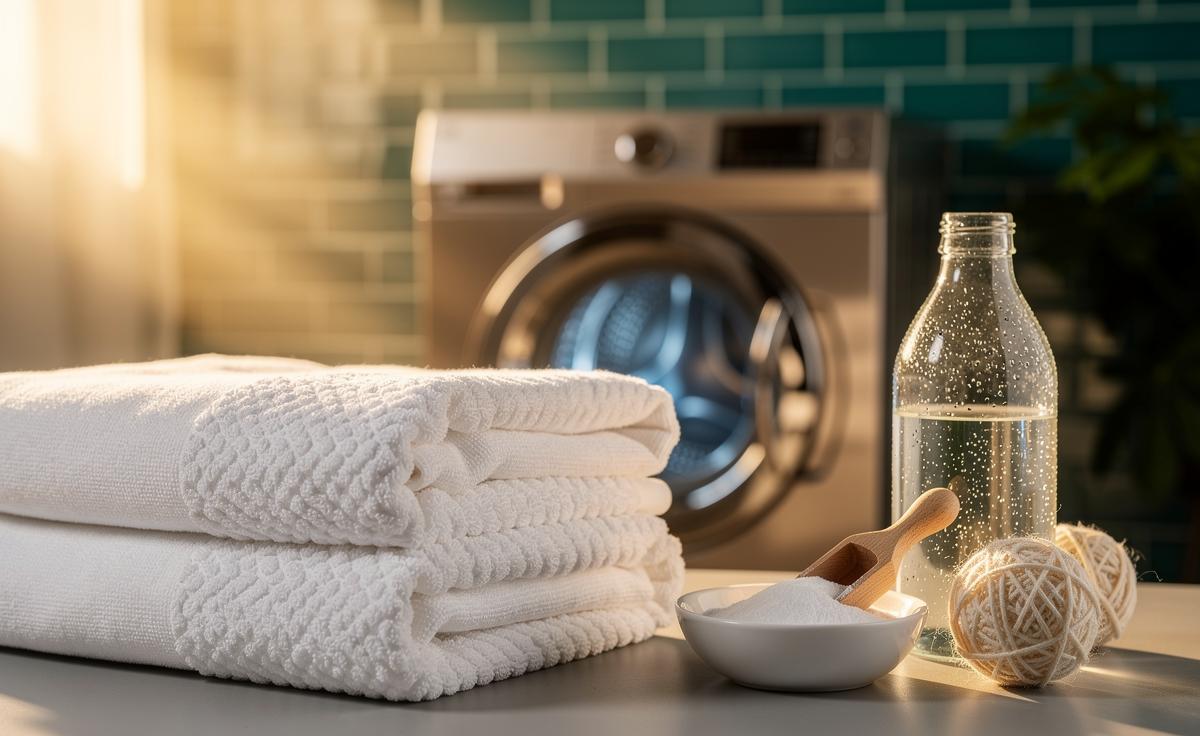
Stiff, scratchy towels are not a life sentence, and you don’t need pricey conditioners to rescue them. In many UK homes, hard water and detergent build-up turn plush loops into cardboard. The simplest reset? White vinegar and baking soda—two pantry staples that tackle minerals, residues, and musty odours with scientific precision. I’ve tested this method repeatedly in London’s hard-water belt, and it consistently restores softness and absorbency without perfumey coatings. Used correctly, these kitchen allies can outshine commercial softeners while protecting towels’ fibres and your washing machine. Here’s how to deploy them methodically, why it works, and the smart tweaks that make the difference between “meh” and marshmallow-fluffy.
Why Towels Go Crunchy—and How Vinegar and Baking Soda Help
Three culprits commonly sabotage softness: mineral deposits from hard water (limescale), detergent residue from over-dosing or cool cycles, and fabric softener films that mask, rather than fix, the problem. Minerals glue loops together; residues stiffen fibres; conditioners leave hydrophobic coatings that actually reduce absorbency. These effects are magnified in areas where tap water is rich in calcium and magnesium—true across much of the South and East of England.
White vinegar (around 5% acetic acid) gently dissolves mineral salts and helps rinse away surfactants. Baking soda (sodium bicarbonate) provides a mild alkalinity that deodorises and loosens greasy residues. Crucially, they work best in sequence, not together. Do not pour vinegar and baking soda into the same drawer or drum at the same time—neutralising fizz wastes their cleaning power. Think of vinegar as your rinse-stage descaler and baking soda as your pre-wash or separate-cycle refresher. With judicious doses and the right water temperature, you’ll reverse months of stiffness in a single laundry day.
Step-by-Step Method for Restoring Fluffiness
Start with clean, product-free towels (no fabric softener). If they’re heavily coated, run a plain hot wash first to strip perfume and dye residues. Then apply a two-part reset: vinegar to target limescale in the rinse; baking soda to tackle odours and grime in a separate phase. Splitting the treatment ensures each ingredient does its best work without cancelling the other. Use cooler settings for colour care, but don’t fear a 60°C cycle for whites and robust cottons; heat helps dissolve residues. Dry with ample airflow and avoid overloading—towels need room to loft.
| Washer Load | White Vinegar (Rinse Drawer) | Baking Soda (Direct to Drum) | Water Hardness Note |
|---|---|---|---|
| 7–8 kg | 150–200 ml | 50 g (≈3 tbsp) | Standard dosage |
| 9–10 kg | 200–250 ml | 75 g (≈5 tbsp) | Scale proportionally |
| Very hard water | +50 ml | +25 g | Consider 60°C cycle |
How to run it: 1) Wash towels with your usual detergent—no softener. 2) Add vinegar to the rinse compartment and run the rinse; this dissolves scale and aids rinsing. 3) For persistent odours or stiffness, run a quick second wash with baking soda sprinkled directly into the drum. 4) Dry with space: tumble on medium with two dryer balls, or line-dry then finish in the dryer for five minutes to lift the pile. Repeat every 4–6 washes, not every load, to protect elastics and seals.
Troubleshooting, Safety, and Real-World Results
If you notice a faint tang after a vinegar rinse, it’s a dosing or airflow issue. Reduce vinegar by 50 ml and extend the rinse; boost spin speed to expel more water. For greyed towels, the cause is usually detergent residue—try a hotter cycle and an extra rinse. Resist the temptation to pour in more product; over-dosing creates the very stiffness you’re trying to cure. Pre-soaking badly affected towels in warm water with 50 g baking soda for an hour before the wash often accelerates recovery.
Safety notes matter. Never mix vinegar with chlorine bleach—the combination releases hazardous gases. Avoid prolonged vinegar contact with natural stone surfaces in utility rooms. Check labels: some towels contain bamboo viscose or elastane; keep cycles gentle and avoid boiling temperatures. From my field notes in North London (very hard water), a two-cycle reset cut dry time on six bath sheets by about a tenth and restored the signature “loft” you feel when pinching the pile. Once revived, maintenance is simple: dose detergent modestly, use vinegar only as needed, and clean the machine monthly with a hot maintenance wash.
- Noisy rinse? Reduce load size; towels weigh more when saturated.
- Still flat? Over-dried towels compress; finish with a short, low-heat tumble plus dryer balls.
- Colour care: Test dark towels for colourfastness before hot cycles.
Why Fabric Softeners Aren’t Always Better
Conventional softeners feel like a shortcut, but they often create long-term problems. They deposit cationic surfactants that smooth fibres—pleasant at first touch but detrimental to absorbency, especially on cotton loops designed to wick moisture. Repeated use can make towels smell stale faster because residue holds onto body oils and detergent. Vinegar and baking soda remove the source of stiffness instead of perfuming over it. They’re inexpensive, widely available, and kinder to both septic systems and many allergy-prone skins—though always spot-test if you’re sensitive.
| Approach | Pros | Cons |
|---|---|---|
| Vinegar + Baking Soda | Restores absorbency; reduces residue; low cost; eco-leaning | Requires two steps; mild vinegar scent if overused; not for every single wash |
| Commercial Softener | Immediate plush feel; strong fragrance; one-step dosing | Coats fibres; can trap odours; pricier per load; potential irritants |
If scent is non-negotiable, compromise: restore towels with the vinegar/bicarb method, then add a small dose of softener only on special loads, or use wool dryer balls with a drop of essential oil on a cloth placed in the dryer (never directly on towels). For most homes in the UK’s hard-water zones, the reset plus modest detergent dosing yields the softest, thirstiest towels long-term.
Vinegar and baking soda won’t win any glamour awards, but they deliver dependable, measurable softness by solving the root of the problem: mineral scale and residue. Use them in sequence, mind your doses, and give towels the airflow they crave. You’ll save money, reduce chemical load, and—crucially—bring back that hotel-luxe fluff without sacrificing absorbency. Ready to try the reset on your own linen cupboard, and if so, which towel—gym, bath sheet, or guest set—will you test first to feel the difference?
Did you like it?4.4/5 (22)