In a nutshell
- 🔬 Baking soda’s deep absorption and mild alkalinity lift pigments and odours via capillary action, brightening fibres without harsh chemicals.
- 🧽 Follow a step-by-step method: blot, sprinkle 2–3 mm of baking soda, lightly mist (no puddles), allow dwell time, and vacuum slowly—never scrub.
- ⏱️ Tailor dwell and activators: red wine and coffee benefit from a vinegar-water mist, mud is treated dry first, and grease needs a tiny drop of washing-up liquid before powder.
- 💨 Prevent wick-back with disciplined drying—thorough vacuuming, pile grooming, ventilation, and, if needed, a dehumidifier; repeat thin applications for lingering shadows.
- 🐾 Safe for most synthetics and many wool blends; patch-test delicates, control moisture, and use extended dwell for pet odours without saturating the underlay.
Spilled tea on the lounge carpet? A splash of red wine after a long week? You don’t need a cupboard full of specialist chemicals. Baking soda puts in a quiet shift, pulling pigments and odours up from the pile with a speed that surprises first‑timers. Think of it as a dry sponge with microscopic edges. It clings. It wicks. And, crucially, it doesn’t flood backing materials the way liquid cleaners can. Used right, you’ll see colour lift in minutes while fibres stay calm. Do not rub; blot only. Then let physics do the heavy lifting. Here’s how deep absorption works—and how to harness it at home.
Why Baking Soda Works on Carpets
Baking soda (sodium bicarbonate) forms tiny, angular crystals with huge surface area. That structure behaves like a field of hooks, grabbing onto moisture and dissolved soils. Add its mild alkalinity and you’ve a gentle nudge that helps break the bond between acidic stains—wine, juice, pet accidents—and the fibre. The science is not glamorous. It’s capillary action and contact time. The result, however, is immediate: visible brightening, reduced odour, easier vacuuming. Because it’s dry and inert, you control moisture rather than the mess controlling you.
Another advantage: it’s safe for most synthetics (nylon, polypropylene, polyester) and many wool blends when used sparingly. It won’t bleach. It won’t leave soapy residues that attract dirt later. The caveat is dye stability. Some delicate wools, silks, and plant fibres like jute can brown or wick if soaked. So you apply moisture lightly, keep air moving, and work in measured layers. That way, deep absorption happens in the powder, not in your underlay.
Step-By-Step Method for Fast Stain Lifting
First, act fast. Blot fresh spills with white kitchen towel, pressing down to remove as much liquid as possible. Do not scrub—scrubbing distorts the pile and spreads the stain laterally. For dried marks, lightly mist with cool water to rehydrate only the stained area. You want damp, not wet.
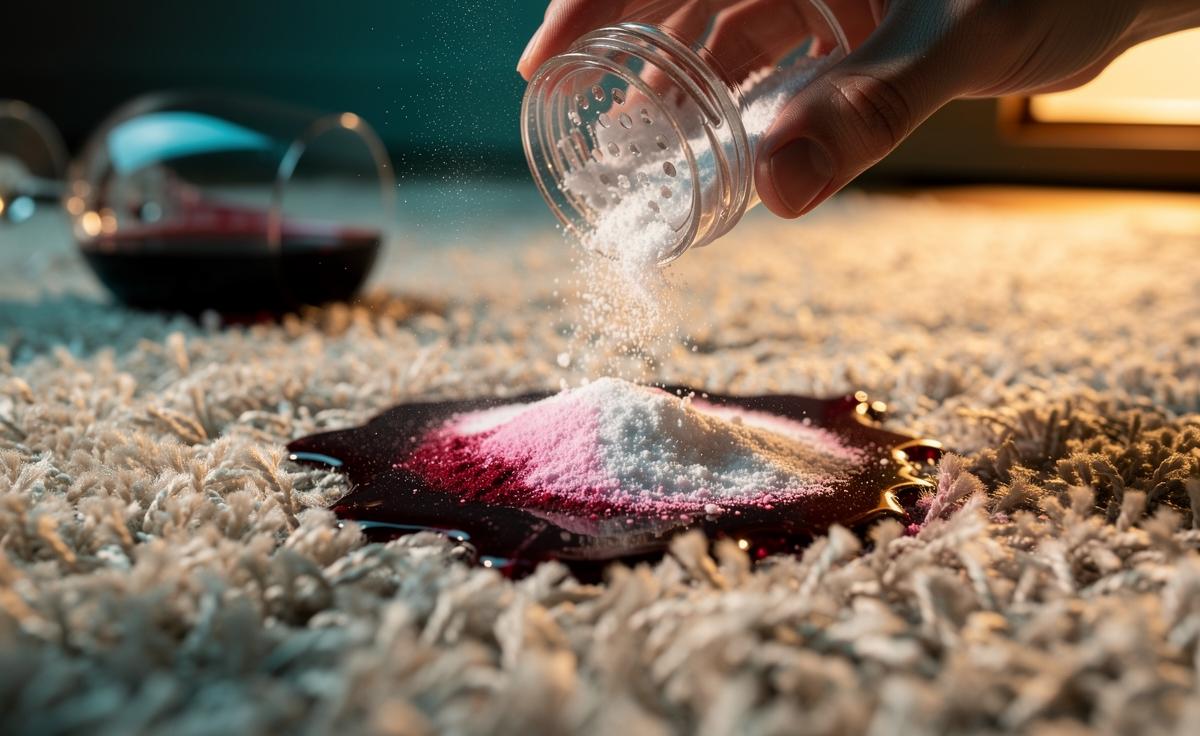
Now, sieve or sprinkle a generous, even layer of baking soda over the spot—about 2–3 mm deep. For activation, lightly mist with water (or a weak 1:8 white vinegar solution for tannin stains), stopping as soon as the top of the powder darkens. No puddles. Leave it to work: 10–15 minutes for fresh spills, 30–45 for stubborn patches. You’ll see clumping and colour transfer to the powder as capillary action pulls soils up. Always patch‑test in a hidden corner first.
Finish by vacuuming slowly, overlapping passes. If residue remains, repeat with a thinner pass of powder rather than adding more liquid. For odours, especially from pets, cover, ventilate, and allow an extended dwell—two hours to overnight—then vacuum thoroughly with a clean filter. The technique is gentle, quick, and repeatable without damaging fibres.
Tackling Tricky Spills: Wine, Coffee, Mud, and Grease
Different stains respond to the same principle—absorb and lift—but benefit from small tweaks. Red wine and coffee are tannin-rich. Start with a plain water blot, then use baking soda activated with a fine mist of diluted white vinegar to help neutralise acidity and detach colour. For muddy footprints, let the soil dry first, vacuum the loose grit, then apply powder to the shadow that remains. Grease is stubborn; emulsify with a single drop of washing-up liquid in warm water, blot, then switch to baking soda to draw out remaining oils without driving them deeper.
Use this quick guide to choose your activator and timing.
| Stain Type | Activator | Dwell Time | Notes |
|---|---|---|---|
| Red wine | Light mist of 1:8 white vinegar:water | 20–30 minutes | Blot first; avoid oversoaking backing |
| Coffee/tea | Cool water mist | 20–30 minutes | Add vinegar mist only if needed |
| Mud | No liquid initially | 10–15 minutes | Vacuum dry soil, then treat the mark |
| Grease | Tiny drop washing-up liquid, then water | 30–45 minutes | Follow with dry baking soda to finish |
| Pet odour | Cool water mist | 2–8 hours | Ventilate; repeat for deep padding smells |
Aftercare, Drying, and Preventing Reappearing Stains
Wick-back is the bane of DIY carpet care. Moisture in the backing migrates upward as the surface dries, returning the ring you thought you’d beaten. The fix is disciplined drying and thorough removal of the spent powder. Vacuum slowly, then groom the pile with a spoon edge or soft brush to stand fibres upright. Keep windows ajar, run a fan across the surface, and if you have one, use a dehumidifier for an hour. If the underlay is soaked from a major spill, call a professional extractor.
Check the area the next day. If a shadow returns, it simply means there’s more to lift. Apply a thinner layer of baking soda, mist lightly, extend dwell by 15–20 minutes, then vacuum again. Finish with a final dry sprinkle, no mist, to mop up lingering moisture and odour molecules. Routine: HEPA-filter vacuuming weekly, spot-treat immediately, and keep a jar of bicarbonate in the cupboard. It’s quiet insurance against life’s little catastrophes.
Used with a light hand and a little patience, baking soda delivers fast, visible results without the harshness of strong detergents. You’ll remove colour, tame odours, and protect the pile—often in the time it takes to make a cuppa. The method scales from hallway runners to living-room wool blends, as long as you avoid flooding and let the powder do the pulling. Ready to test the physics on your next spill, or do you have a particularly stubborn stain you’d like a step-by-step plan for?
Did you like it?4.5/5 (27)