In a nutshell
- 🧤 Rubber gloves use friction and static electricity to lift pet hair from upholstery instantly; a slightly damp glove boosts grip and control.
- 🔧 Follow a step-by-step method: pick latex/nitrile/silicone, dampen lightly, swipe in long single-direction passes, change angles, rinse the glove, then bin clumps.
- 🪑 Prioritise fabric safety: test delicate weaves, keep leather passes only slightly damp, avoid saturation, and choose nitrile if sensitive to latex.
- ♻️ Enjoy eco-friendly, cost-saving cleaning that cuts lint roller waste and reduces vacuum use—perfect for fast daily maintenance.
- 🚗 Versatility shines on sofas, cushions, stairs, car seats, and pet beds; pair with periodic HEPA vacuuming for deeper cleans.
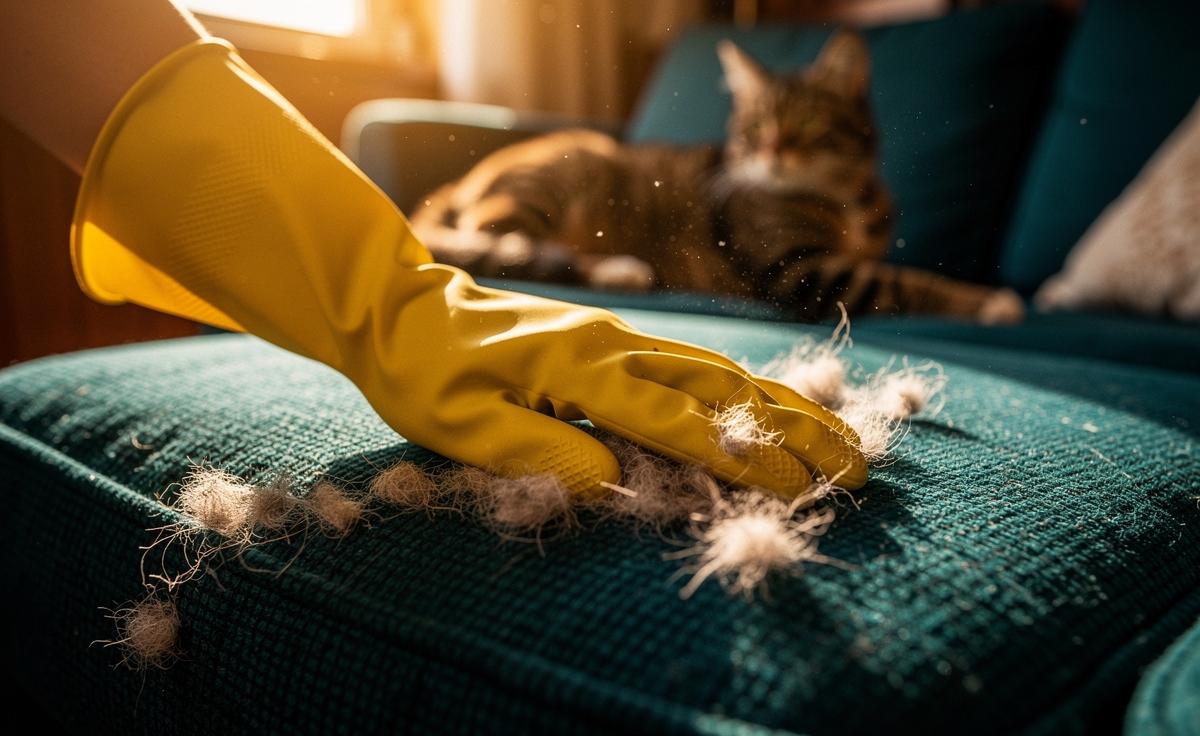
Pet owners know the ritual. You stand up from the sofa and wear the evidence of affection on your clothes. Here’s the quietly brilliant hack spreading through British homes: slip on a pair of rubber gloves, swipe the cushions, and watch pet hair gather in clumps like iron filings drawn to a magnet. The trick is disarmingly simple and fast. It turns a chore into a quick flick-and-lift. In mere seconds, you can corral embedded fur from upholstery without chemicals, fiddly attachments, or a noisy vacuum. It’s frugal, gentle on fabrics, and oddly satisfying. Let’s unpack why this works and how to nail the technique.
Why Rubber Gloves Attract Pet Hair
At the heart of this method lies two friendly forces: friction and static electricity. When you slide rubber gloves over fabric, you generate a small static charge. Pet hair, which clings stubbornly to fibres, is coaxed away by that charge and by the glove’s micro-texture. The result? Strands migrate from your upholstery to your palm, where they ball up into tidy tumbleweeds. This is why a single, confident swipe often gathers fur instantly. A slightly damp glove turbocharges the process by adding gentle adhesion without soaking the furniture. No sprays. No residues. Just physics and a touch of grip.
Rubber is also forgiving. It slides over boucle, linen, chenille, and cotton blends without snagging, while its grip helps lift flattened hair from high-traffic spots like armrests. On leather and faux leather, the method excels: the glove sweeps fur cleanly without pushing it deeper. For allergy-prone households, reducing pet dander load between deeper cleans can make the room feel fresher. The approach is eco-smart too, cutting reliance on disposable lint rollers and energy-hungry vacuums. It’s hard to argue with a tool that’s cheap, reusable, and already in your kitchen drawer.
A Step-by-Step Method for Instant Results
Preparation matters. Clear cushions, switch on decent light, and choose your glove: latex, nitrile, or silicone. If you’re sensitive to latex, go nitrile. Lightly dampen the glove under a tap and shake off excess; the glove should feel barely moist, not wet. Now anchor the fabric with your free hand and use long, steady strokes in one direction. Then change angle by 30–45 degrees to lift hair lodged in the weave. Keep your wrist relaxed—pressure should be firm but never aggressive. When hair gathers, pinch it off and bin it before continuing.
| Glove Type | Best For | Pros | Watch-outs |
|---|---|---|---|
| Latex | General upholstery | High grip, cheap | Allergy risk for some users |
| Nitrile | Delicate fabrics | Hypoallergenic, smooth control | Grip slightly lower than latex |
| Silicone | Leather, car seats | Excellent on slick surfaces | Can skid on textured weaves |
| Textured cleaning glove | Heavy shedders | Extra micro-texture grabs hair | Too grabby for loose weaves |
Work panel by panel: the seat base, backrest, arms. For cushions, lay them flat and swipe in overlapping lanes. Rinse the glove mid-session to reset grip; a quick shake removes clinging strands. Finish with a final pass using lighter strokes to catch flyaways. If a patch resists, mist the glove, not the sofa. A quick palm rub on your trousers or a tea towel neutralises static if it gets too tacky. In most homes, this tidy routine takes minutes, not half an hour.
Tricks, Troubleshooting, and Fabric Safety
If results feel underwhelming, adjust moisture first. Dry glove but stubborn hair? Add a whisper of water. Too sticky or dragging? Dry the glove with a cloth and lighten your touch. The sweet spot is a glove that glides yet gathers. For long-haired breeds, use shorter strokes and scoop motions to prevent hair from re-spreading. On thick weaves, change direction frequently to tease fibres open. For short, spiky fur (think terriers), criss-cross passes at shallow angles lift what vacuums often miss.
Fabric safety is straightforward with a few cautions. Avoid vigorous rubbing on delicate silks or very loose boucle, which can pill; test in a hidden corner first. Leather loves the method, but keep gloves only slightly damp to avoid water spots. On suede and nubuck, stay dry and very gentle. Latex allergies are easily managed by choosing nitrile. Never saturate upholstery; moisture is a tool, not a flood. If static fizzles out on a rainy day, a micro-mist from a plant sprayer on the glove restores attraction. And if hair clings to seams, pinch with your fingertips through the glove and roll upwards.
Finally, build a rhythm. A weekly two-minute sweep on the sofa prevents compaction that makes fur harder to lift later. Keep a glove in the car and another near the dog’s favourite chair. Consistency is the quiet multiplier here.
Eco-Friendly, Cost-Saving Cleaning Compared
This is a repair-and-reuse story in miniature. A single pair of rubber gloves can replace rolls of adhesive sheets and cut how often you drag out the vacuum. That’s less waste, less noise, less bother. Over a year, the maths is blunt: a couple of pounds for gloves versus a stream of sticky refills. Time matters too. The glove sweep is immediate; you spot fluff, you fix it. It’s the maintenance clean that prevents the marathon clean. For renters with thin walls—or newborns asleep in the next room—quiet wins the day.
- Cost: Gloves £2–£6; lint roller refills often exceed that monthly.
- Speed: 2–5 minutes per sofa versus 10–15 with setup and vacuuming.
- Waste: Zero consumables versus adhesive sheets by the dozen.
- Versatility: Works on sofas, stairs, car boots, pet beds.
That doesn’t make vacuums obsolete. Use the upholstery tool for deep, scheduled cleans and the glove for nimble, daily control. Lint rollers? Handy for coats on your way out, less stellar on furniture. The glove method occupies the sweet spot: quick enough to do often, effective enough to see immediately. Pair it with a weekly wash of throws and a HEPA vacuum pass and you’ll tame shed season without turning housekeeping into a second job.
In the end, the charm of the rubber glove trick is its elegance: low-tech, low-cost, high impact. You put on a glove, you swipe, the pet hair obeys, and your sofa looks a tier cleaner in a minute. It’s a small habit that pays back every day you share a home with animals. Will you try it tonight—perhaps on that cushion your cat has claimed—and see how much fur you gather in a single sweep, or will you adapt the method for your car seats first?
Did you like it?4.6/5 (29)