In a nutshell
- 🧪 Overnight chemistry: sodium bicarbonate in an open container neutralises acidic and basic odour molecules and captures others via adsorption, working best while the fridge stays closed.
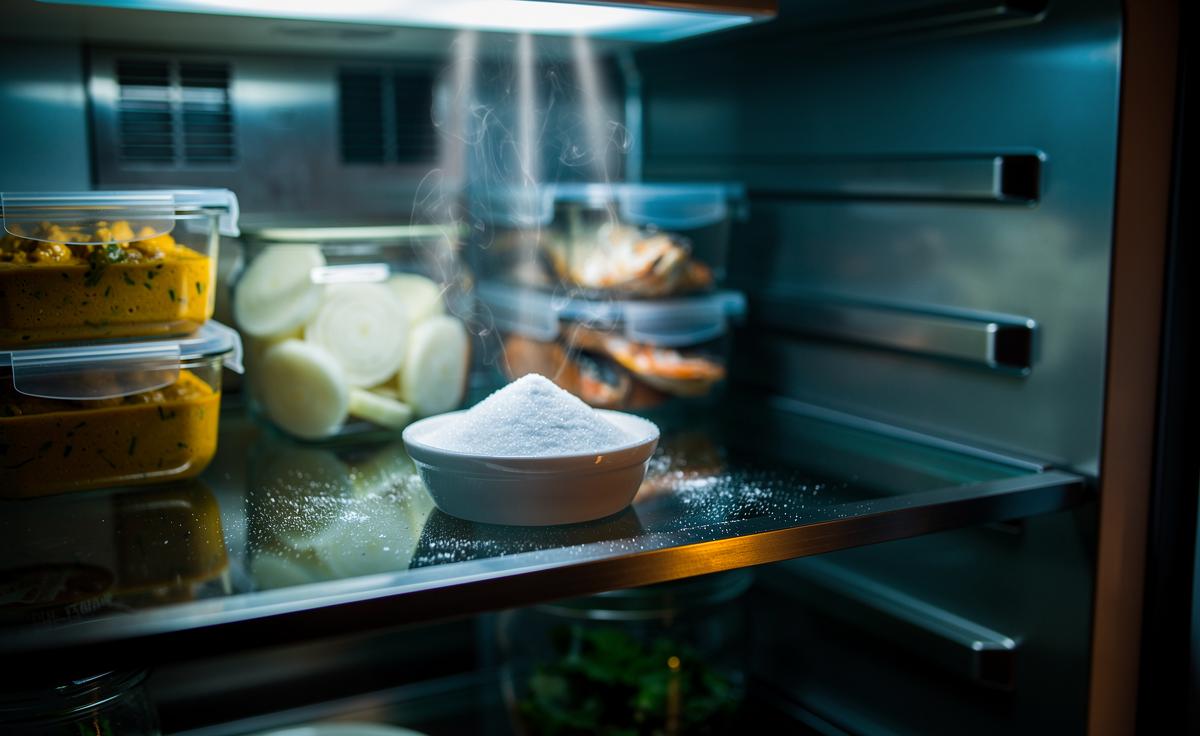
- 🥣 Correct setup: use a shallow, wide dish (½–1 cup baking soda), keep it uncovered to maximise surface area, place centrally or near a vent, and stir weekly for fresh exposure.
- 📏 Practical guide: small fridges need ~100–150 g, family models ~200 g, and very large or smelly setups 300–400 g in two dishes; adjust placement and quantity for airflow and intensity.
- ⚠️ Know the limits: bicarbonate is not a substitute for cleaning; spills, mould, or strong sulphur compounds require washing, food covering, and basic maintenance to prevent recurring smells.
- ♻️ Smart maintenance: replace monthly (sooner after heavy odours), never cook with used powder, and repurpose spent soda for drains or cleaning; double up during cheese, fish, or festive-heavy weeks.
Open your fridge at midnight and the truth hits you: a fug of last night’s curry, an onion’s lingering bite, a whiff of fish. You could mask it with fragrance. Or you could neutralise it while you sleep. The quiet hero is baking soda — the humble, food-safe powder already in your cupboard. In an open container, it intercepts and tames odour-causing molecules before breakfast. No gimmicks. No complicated kit. Just chemistry, airflow, and a little surface area. Below, we explain why it works, how to set it up properly, and the smart maintenance tricks that keep your refrigerator genuinely fresh without perfumes or fuss.
Why Baking Soda Neutralises Fridge Odours While You Sleep
At the heart of this method is sodium bicarbonate, a mild, amphoteric compound with a useful talent: it can react with both acidic and basic odour molecules. Fridge smells are often volatile organic compounds — from acids in fermenting leftovers to amines from proteins. Sodium bicarbonate doesn’t cover them up; it buffers and neutralises them, and also adsorbs some onto its grainy surface. The fridge helps. Doors stay shut overnight, airflow is steady, and cool air slows new emissions. The powder simply sits, quietly capturing chaos.
Surface area matters. A wide, shallow dish exposes the most powder to the circulating air, letting more molecules collide with the crystals. Leave the container open to maximise contact with circulating air. That small act turns a passive pantry staple into an active deodoriser. You may not smell the chemistry, but you’ll notice the absence: a cleaner, quieter fridge by morning, without the artificial sweetness of scented gels.
There’s also a timing advantage. Night-time is low-traffic. Fewer door openings mean fewer pressure changes and warmer air influxes, which can push odours around. Give baking soda six to eight uninterrupted hours and it will do its best work, mopping up the volatile stragglers that make otherwise fresh food seem questionable. It’s simple, consistent, and frugally effective.
How to Set Up an Open Container Correctly
Choose a shallow, wide container — a ramekin, a low bowl, even a jar lid if it’s large. Pour in 120–240 g of baking soda (roughly 1/2 to 1 cup) and spread it so the layer is no deeper than 2–3 cm. Do not cover it; the powder must remain exposed to the air to work. Place it on a stable, central shelf or near a rear vent where airflow is strongest, and keep it away from spills or the crisper, where moisture can cake the powder. If odours are intense — post-fish supper or a garlicky feast — deploy two smaller dishes on separate shelves.
Stir the powder every week to expose a fresh surface. If you accidentally splash stock or fruit juice into it, discard and replace. Do not use a deodorising batch for cooking or baking. For large appliances, or after a leak, double up on quantity for the first fortnight to accelerate recovery. The aim is consistency: a quiet, always-on filter that complements good food storage and regular wipe-downs.
| Fridge Size/Scenario | Baking Soda Amount | Container | Placement | Replacement Cycle |
|---|---|---|---|---|
| Small under-counter (100–150 L) | 100–150 g (≈1/2 cup) | Shallow dish (<3 cm deep) | Top or middle shelf, near vent | Every 30–45 days |
| Family fridge-freezer (250–400 L) | 200 g (≈1 cup) | Shallow dish or two ramekins | Middle shelf/back corners | Every 30 days |
| American-style or strong odours | 300–400 g (1.5–2 cups) | Two shallow dishes | Near separate vents/shelves | Every 2–3 weeks |
Science and Limits: When Baking Soda Works—and When It Doesn’t
Baking soda excels with odours that are acidic or basic because it can neutralise them, shifting them into less volatile forms. It also captures some compounds via adsorption, clinging to its crystalline surfaces. But it has limits. Very strong sulphur compounds, spill-saturated gaskets, or hidden mould can overwhelm passive deodorising. Bicarbonate is a brilliant assistant, not a substitute for cleaning and proper food rotation. If a container leaks fish stock under a drawer, no powder can fix that until the liquid is removed and the plastics are washed.
Know your targets. Alcohols and some neutrally charged organics are less reactive with sodium bicarbonate, so the effect can be slower. Cold air reduces volatility, which helps your powder keep pace, yet in the face of new emissions — pungent cheese left unwrapped, say — odours will return. That’s not failure. It’s a prompt to tidy, cover foods, and let the powder handle the background haze. Consider it the final polish after a sensible clean, not the only tool in the shed.
There’s also the human nose. We adapt quickly to smells. An overnight refresh can “reset” your perception, making subtle problems easier to spot and fix next day. In practice, this pairing — clean, cover, bicarbonate — gives the most reliable, low-cost results.
Smart Maintenance: Rotation, Reuse, and Waste-Free Tips
Mark the container with the date you opened it. Replace monthly, or sooner after a heavy-smell week. A weekly stir keeps the surface area fresh and breaks crusting. If condensation clumps the powder, spread a new layer. When odours persist despite fresh soda, investigate for spills, blocked drains, or perished seals. Don’t waste what you’ve used: while it’s no longer ideal for food, it’s still a versatile household helper.
Spent baking soda can be poured into the sink followed by hot water to freshen drains, or sprinkled into the bin base to tame residual whiffs. You can also use it as a gentle scouring agent for glass shelves and vegetable drawers; its mild abrasiveness lifts residue without scratching. If you bake the used powder on a tray at 200°C, it partly converts to sodium carbonate, which is stronger for cleaning jobs like greasy oven doors. Just label it clearly. Never return a deodorising batch to your cooking supplies. Keep a fresh box dedicated to the fridge, and a separate tub for cleaning repurposes.
For odour-heavy seasons — post-Christmas cheeses, summer barbecues, fish Fridays — place two containers on different shelves for a week, then revert to one. It’s a small, smart adjustment that keeps the air neutral and your ingredients tasting like themselves.
Left open overnight, a shallow bowl of baking soda quietly restores equilibrium, neutralising the volatile troublemakers that make good food seem suspect. It’s cheap, safe, and almost absurdly easy. Better still, it works while you sleep, so morning starts with clarity rather than compromise. Pair it with clean containers and prompt spill wipe-ups and you’ll rarely need perfumed “fresheners” again. Ready to try the open-container method tonight — and if you do, where in your fridge will you place it for the best results?
Did you like it?4.5/5 (22)