In a nutshell
- ✨ Olive oil revives tired wood in seconds by filling micro-scratches, enriching the grain, and delivering a soft, low-sheen glow as cosmetic conditioning rather than a hard coating.
- 🧽 Follow a simple method: clean, test first, apply a teaspoon to a cloth, work with the grain, then buff dry—never pour directly onto the furniture to avoid smearing and dust attraction.
- 🧴 Choose wisely: refined oil for a milder scent, extra virgin for richness, or a beeswax + oil blend for added resilience; mineral oil offers neutrality, while commercial polishes trade convenience for potential silicone buildup.
- ⚠️ Know the limits: avoid heavy use on porous or veneered areas, watch for uneven absorption, and prevent rancidity by using tiny amounts and buffing until the surface feels dry-to-touch.
- 🔥 Prioritise safety: oil-soaked rags can self-heat—dry them flat outdoors or submerge in water; respect the risk of spontaneous combustion and store blends capped and out of direct sun.
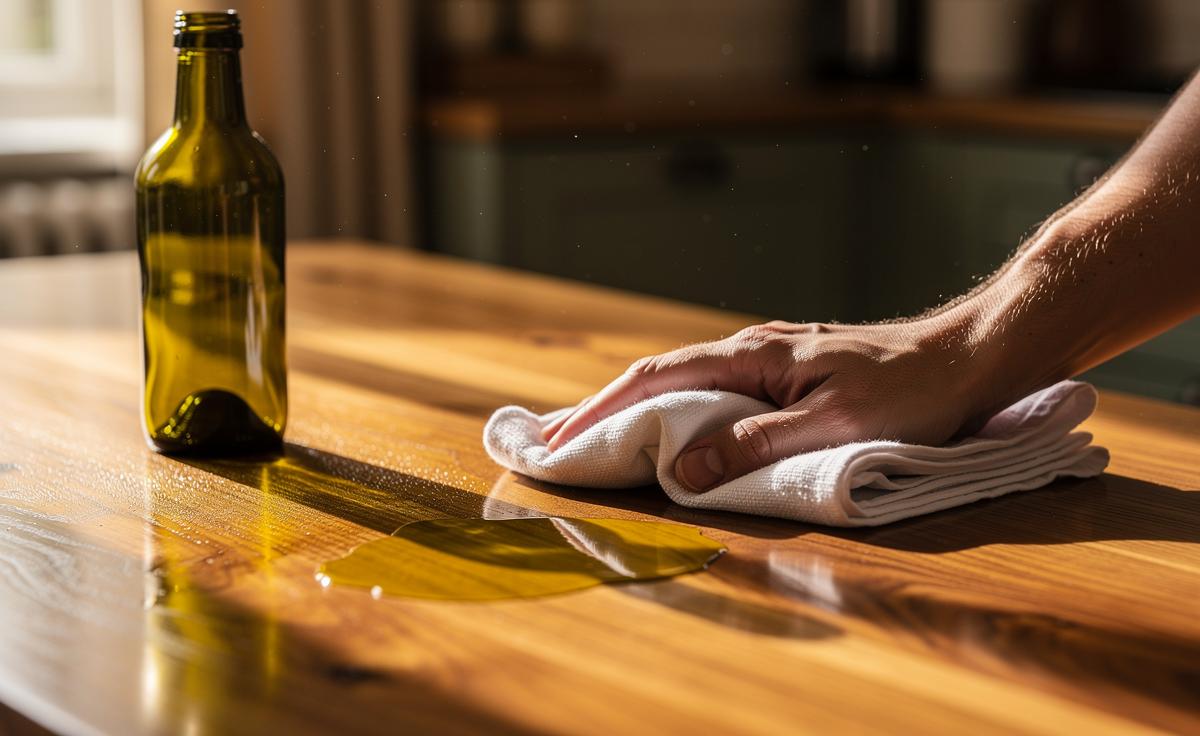
Open your cupboard, not your wallet. There, beside the pasta and tins, sits a bottle of olive oil—a humble kitchen staple that can make tired timber gleam in moments. It’s a trick as old as housekeeping itself, but one today’s eco-conscious homes are happily rediscovering. A few drops, a soft cloth, a patient hand: that’s all. The payoff is instant. Colour deepens. Grain pops. Surfaces feel nourished rather than shellacked. As a quick refresh before guests arrive, or a regular habit to keep heirlooms lively, olive oil turns the daily dust into a small act of care, restoring warmth and character without harsh chemicals.
Why Olive Oil Revives Tired Wood
Wood looks dull when its surface dries out and microscopic scratches scatter light. Olive oil solves both issues at once. It slips into the top fibre layer, darkening the grain slightly and reducing light diffusion. The result? A warmer tone and a soft, low-sheen glow that reads as freshly polished rather than plasticky. Because oil is refractive, it fills tiny abrasions, making them less visible. This is why even weary oak responds in seconds. The effect is not a hard coating; it’s a cosmetic conditioning, a gentle boost that flatters existing finishes.
Crucially, olive oil’s viscosity helps lift dust and old wax residue as you buff. That mechanical action—cloth, pressure, circular motion—does half the job. The oil simply makes the effort more efficient, acting like a lubricant for your cleaning strokes while leaving a whisper-thin film behind. On sealed finishes (varnish, shellac), it sits on the surface and brightens. On drier, open-grain woods (like ash), it penetrates a touch deeper, adding pliancy.
There’s chemistry, but also psychology. Shine signals care. The human eye reads contrast and highlight; a revived table instantly changes the mood of a room. For landlords staging flats, or families refreshing a hand-me-down dresser, that quick uplift feels priceless.
How to Polish Furniture with Olive Oil
Start clean. Wipe the piece with a barely damp, lint-free cloth to remove gritty dust. Dry thoroughly. Then do a test patch on an inconspicuous area. Always test first—finishes vary. If the colour holds steady and the feel is pleasant, you’re good. Put a teaspoon of olive oil on a folded soft cloth (microfibre or old cotton T-shirt). For small surfaces, less is more; you can always add a second pass.
Work in small sections, moving with the grain. Apply light pressure in slow circles, then follow with long, straight strokes. The first pass loosens grime and smooths micro-scratches. The second evens the sheen. Wait a minute. Now buff with a clean, dry cloth until the surface feels dry-to-touch. If you prefer a brighter pop, add a drop of lemon essential oil to the cloth for scent (optional) or mix 5 parts oil to 1 part white vinegar to cut old residues.
Sticking? You’ve used too much. Feather it out with a dry cloth, then leave to settle for 10–15 minutes. For regular upkeep, a light application every few weeks on busy pieces is sufficient; quieter items need only seasonal attention. Never pour oil directly onto the wood—overapplication leads to dust attraction and smearing. Corners, mouldings, and drawer fronts benefit from a cotton bud or the tip of the cloth to avoid build-up in crevices.
Choosing the Right Oil and Blend
Not all oils behave the same. Extra virgin brings a richer scent and a slightly greener tint; “light” or refined olive oil is paler, subtler, and less likely to announce itself in small rooms. If you’re sensitive to odour or polishing pieces in a bedroom, refined oil is a safe pick. For a silkier, longer-lasting finish, many restorers blend olive oil and beeswax: melt a little wax, let it cool until soft, and whisk in oil for a spreadable balm that buffs to a mellow lustre. Wax adds resilience without the plastic shine of silicone sprays.
| Option | Best Use | Pros | Cons | Cost |
|---|---|---|---|---|
| Olive oil | Quick refresh; medium sheen | Natural, accessible, fast results | Can attract dust if overused | Low |
| Mineral oil | Neutral scent; routine wipe-downs | Stable, non-yellowing | Less rich colour “pop” | Low |
| Beeswax + oil | Added protection; hand-rubbed glow | Velvety feel, hides fine marks | More prep; needs buffing | Medium |
| Commercial polish | High gloss; quick showroom look | Immediate shine, anti-static variants | Silicones can interfere with refinishing | Medium–High |
For antiques with delicate shellac or French polish, stay gentle and sparse. Modern polyurethane finishes are forgiving, but they don’t “drink” oil; they simply benefit from the buffing and the light optical lift. When in doubt, consult a restorer for museum-grade pieces—and always, always test a hidden area first.
Risks, Limits, and Long-Term Care
There are boundaries. Olive oil is a conditioner, not a cure-all. On porous, unfinished woods it may migrate deeper, leading to uneven patches or softening at the surface. On very open-grain oak, the oil can slightly emphasise tannin streaks; work lightly, then buff hard. Avoid heavy use on veneer edges where glue lines are close to the surface. And skip it entirely on sticky, degraded finishes that need professional stripping, or on matte lacquer designed to stay flat.
Rancidity is often overstated on furniture, but it isn’t imaginary. A thick, neglected film can trap dust and pick up a stale odour over months. The prevention is simple: use tiny amounts and buff until dry-feeling. If a piece feels tacky, clean with a mild white-vinegar-and-water wipe (well wrung), dry, then re-buff. For ongoing care, dust weekly with a dry cloth, then do a light oil pass monthly or seasonally depending on use and central heating cycles in the UK.
One non-negotiable: rag safety. Oil-soaked cloths can self-heat. Lay them flat to dry outdoors, or submerge in water and dispose safely. Never ball them up in a bin. Finally, remember that spontaneous combustion risk is about airless wads and heat build-up, not drama. Respect the rule and you’ll be fine. Store your bottle away from direct sun, cap tightly, and label any homemade blends with the date so you know what’s fresh.
A bottle from the cupboard, a cloth, five minutes: revitalising wood doesn’t need solvents or sprays, only a patient hand and a light touch. In a cost-of-living squeeze, that’s welcome news for every sideboard and stair rail. The secret is restraint—thin coats, thorough buffing, regular but sparing attention. Your furniture will look loved, not lacquered, and the room will feel warmer for it. Which piece in your home would you bring to life first with a small, glimmering pour of olive oil?
Did you like it?4.5/5 (30)