In a nutshell
- ✨ Baking soda revives tarnished silver fast by lifting residue and reversing silver sulfide, bringing back a mirror finish without harsh chemicals.
- 🧽 Two methods: a mild abrasive paste for light tarnish using a damp cloth, and an aluminium foil bath for intricate or heavily tarnished pieces.
- 🧪 The foil bath triggers an electrochemical reduction, transferring sulphur from silver to aluminium, restoring shine without grinding away precious metal.
- ⚠️ Safety first: be gentle with silver plate, avoid bleach and abrasive toothpastes, don’t soak knives, and skip the dishwasher to prevent damage.
- 🗄️ Maintain lustre with anti‑tarnish storage, prompt hand‑washing and drying, monthly light polishing, and handling by stems to reduce fingerprint-induced tarnish.
Clouded forks. Greyed spoons. A favourite family set that looks tired when it should sing. Tarnish on silverware is sneaky yet solvable, and the fix is sitting in your cupboard. Baking soda, that humble white powder, can strip away the film and coax back a mirror finish with startling speed. No boutique polish required. No harsh fumes. In minutes, dull turns dazzling. This is a practical, frugal method with a reassuringly low learning curve, ideal before a dinner party or a festive table reset. Treat the metal gently, choose the right technique, and the shine returns without drama.
Why Silver Tarnishes and How Baking Soda Works
Silver doesn’t rust; it reacts. Airborne sulphur compounds—from cooking eggs, city pollution, even wool—bond to the surface and form silver sulfide (Ag2S), the blackish film we call tarnish. Light handling accelerates it. So does storage near rubber bands or newspaper inks. The result is purely surface chemistry, not decay of the underlying metal, which is why it can be reversed quickly and safely.
Baking soda earns its keep in two ways. As a paste, its powdery crystals act as a mild abrasive that loosens tarnish mechanically while its gentle alkalinity helps lift greasy residues. Used with a soft cloth or sponge, it’s kind to solid silver and conservative on well-preserved plating. Scrubbing should be light; you’re removing a film, not sanding timber.
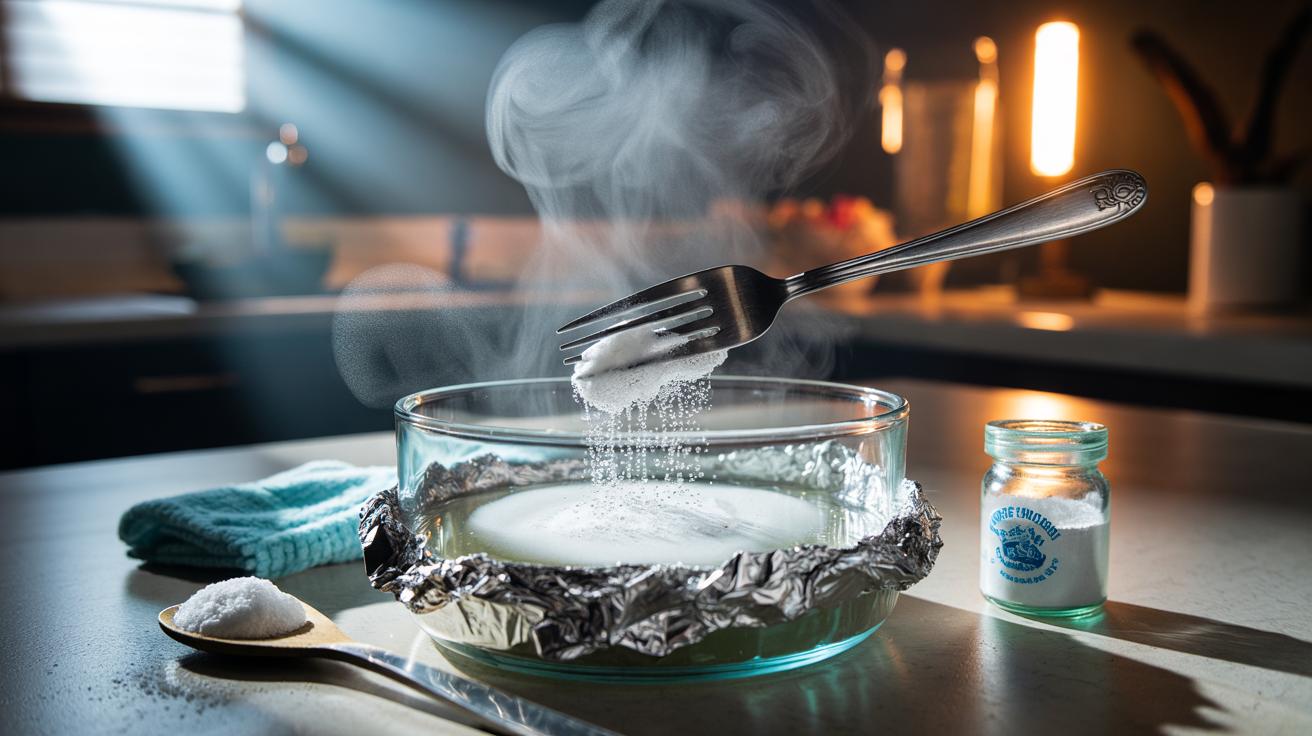
The faster method relies on an aluminium-foil bath. Line a non-reactive bowl with foil (shiny side up), add hot water and a spoon of baking soda, then immerse the cutlery. A tiny electrochemical reduction occurs: sulphur transfers from the silver to the aluminium, turning silver sulfide back into metallic silver. This reverses tarnish without grinding away precious metal, which is why collectors love it for intricate patterns and hallmarked heirlooms.
Step-by-Step: Two Fast Methods to Restore Shine
Method one, the quick rub. Rinse the piece to remove grit. Make a paste: one teaspoon of baking soda with a few drops of water. Dab on with a damp microfibre cloth. Work in small circles along the grain, paying attention to crevices but keeping pressure modest. In 30–60 seconds per fork, the grey blush fades. Rinse thoroughly in warm water, then dry immediately with a lint‑free towel. Water spots dull the finish as surely as tarnish, so finish with a dry buff.
Method two, the foil bath. Line a heatproof dish with aluminium foil, shiny side up. Add very hot (not boiling) water to cover, and stir in one tablespoon of baking soda per 500 ml. Submerge the silverware so it contacts the foil. You may notice a faint sulphurous whiff; that’s the chemistry doing the heavy lifting. In one to three minutes, the darkness lifts. Remove pieces, rinse well, and dry at once. For stubborn corners, repeat briefly rather than over-scrub.
| Method | Kit Needed | Time | Best For | Key Tip |
|---|---|---|---|---|
| Paste Rub | Baking soda, water, microfibre cloth | 1–2 minutes per item | Light tarnish, solid or plated flatware | Use minimal pressure; rinse thoroughly |
| Foil Bath | Aluminium foil, hot water, baking soda | 3–5 minutes for a batch | Heavy tarnish, ornate patterns | Ensure contact with foil for full effect |
Safety, Patina, and What Not to Do
Silver plate demands care. The gleam sits on a thinner skin of precious metal above a base alloy, so aggressive abrasion is the enemy. Do not attack plated pieces with scouring powders or stiff brushes. The foil-bath route is kinder, especially for spoons and forks with deep “lace” patterns. For knives, skip soaking: many have cemented or hollow handles that water can invade, loosening joins or staining the blade.
Avoid chlorine bleach. It can pit metal and create stubborn stains. Steer clear of whitening toothpastes; many contain silica and peroxides that are too harsh. If your item has intentional oxidised patina or blackened recesses—a common design flourish—use a light paste only on raised areas, preserving contrast. When in doubt, test on an inconspicuous spot first. If the rag picks up base-metal colour, stop immediately and reassess.
Rinse is non-negotiable. Residual soda leaves a chalky haze that dulls the finish. Dry with a soft towel, then a quick buff with a clean cloth to seal the shine. Gloves help; fingerprints are miniature tarnish starters. And yes, the dishwasher is out: heat, detergent, and agitation spell micro‑scratches and accelerated dulling.
Maintenance Rituals for Long-Lasting Lustre
Good storage beats endless polishing. Wrap pieces in anti‑tarnish cloth or unbuffered acid‑free tissue. Add a sachet of activated charcoal or silica gel to drawers. Keep rubber bands and woollen liners away; they off‑gas sulphur. After use, wash promptly in warm water with a mild, non‑lemon washing‑up liquid, rinse well, and dry at once. Leaving silver to air‑dry invites spotting and streaks.
Build a light-touch routine. Once a month, give frequently used flatware a 30‑second soda wipe and rinse; it prevents the deep blackening that takes longer to reverse. For display pieces, a quarterly foil bath is plenty. Handle by the stems, not the bowls, to cut down on skin oils. Rotate sets so one doesn’t shoulder all the work at Christmas or Eid. Keep a small microfibre cloth in the drawer for a fast buff before guests arrive. Small acts, big results. The shine lasts, and the tradition feels alive.
With a box of baking soda, a sheet of foil, and a steady hand, you can turn the tide on tarnish without spending a penny on specialist polish. The chemistry is sound, the process swift, and the results reliably camera‑ready for any table. Respect the metal, rinse scrupulously, and store smart, and you’ll polish less each year. It’s frugal housekeeping with a distinctly elegant payoff. Which piece in your drawer deserves the first sparkling revival, and what story will it tell once it catches the light again?
Did you like it?4.4/5 (25)