In a nutshell
- ✨ Lemon’s citric acid disrupts tarnish layers of silver sulphide (Ag2S) and copper oxides, restoring shine in under two minutes on lightly dulled silver.
- 🧪 Method: cut lemon, optional tiny salt, gentle straight strokes for 30–90 seconds, rinse immediately, optionally neutralise with bicarbonate, then dry and buff with microfibre.
- ⚠️ Safety: limit contact time, avoid porous stones and lacquered pieces, be cautious with silver plate, never mix acids with bleach, and work in a ventilated area.
- 🔄 Alternatives: for heavy, black tarnish, use an aluminium foil + bicarbonate bath (electrochemical reduction); for mirror finishes, apply a quality silver polish.
- 🛡️ Prevention: store with anti-tarnish strips, keep pieces dry, use silver regularly, and preserve intentional patina by cleaning sparingly in recesses.
Britons have long passed down the quiet magic of a lemon on dull silver. It looks like a parlour trick. It isn’t. When your teaspoons or candlesticks lose their gleam to a film of tarnish, a cut lemon and a soft cloth can restore the sparkle with surprising speed. Citric acid in lemon juice targets the very chemistry that dulls silver, loosening the grime so it wipes away in moments. No laboratory. No harsh fumes. Just a kitchen staple and a bit of patience. Used correctly, this acidic solution can revive a soft shine in under two minutes, especially on light, recent tarnish.
Why Lemon Works on Tarnish
Silver doesn’t rust, but it does react with airborne sulphur to form silver sulphide (Ag2S), the dark film we call tarnish. Lemon juice is rich in citric acid and has a low pH of roughly 2, which helps disrupt that film. On sterling, which is 92.5% silver and the rest mostly copper, the acid also dissolves copper oxides and sulphides that often dominate the surface layer. The result is twofold: protonation weakens the sulphide layer and citrate ions can complex freed metal ions, while light wiping physically lifts the loosened tarnish. That’s why a quick lemon rub clears superficial dullness so quickly.
Add a pinch of table salt and you introduce chloride ions plus a fine, gentle abrasiveness. This speeds removal of thin films, but restraint matters; excessive grainy scrubbing risks micro-scratches that scatter light and mute the finish. The trick is contact time. For a typical teaspoon with fresh tarnish, acidic contact of 30–90 seconds followed by a thorough rinse is ample. Heavy, blackened tarnish is different; the sulphide layer is thicker and more stubborn, and lemon alone becomes slow and inconsistent. In that case, a foil-and-bicarbonate bath (an electrochemical reduction) outperforms pure acid chemistry.
Step-by-Step Method for a 2-Minute Shine
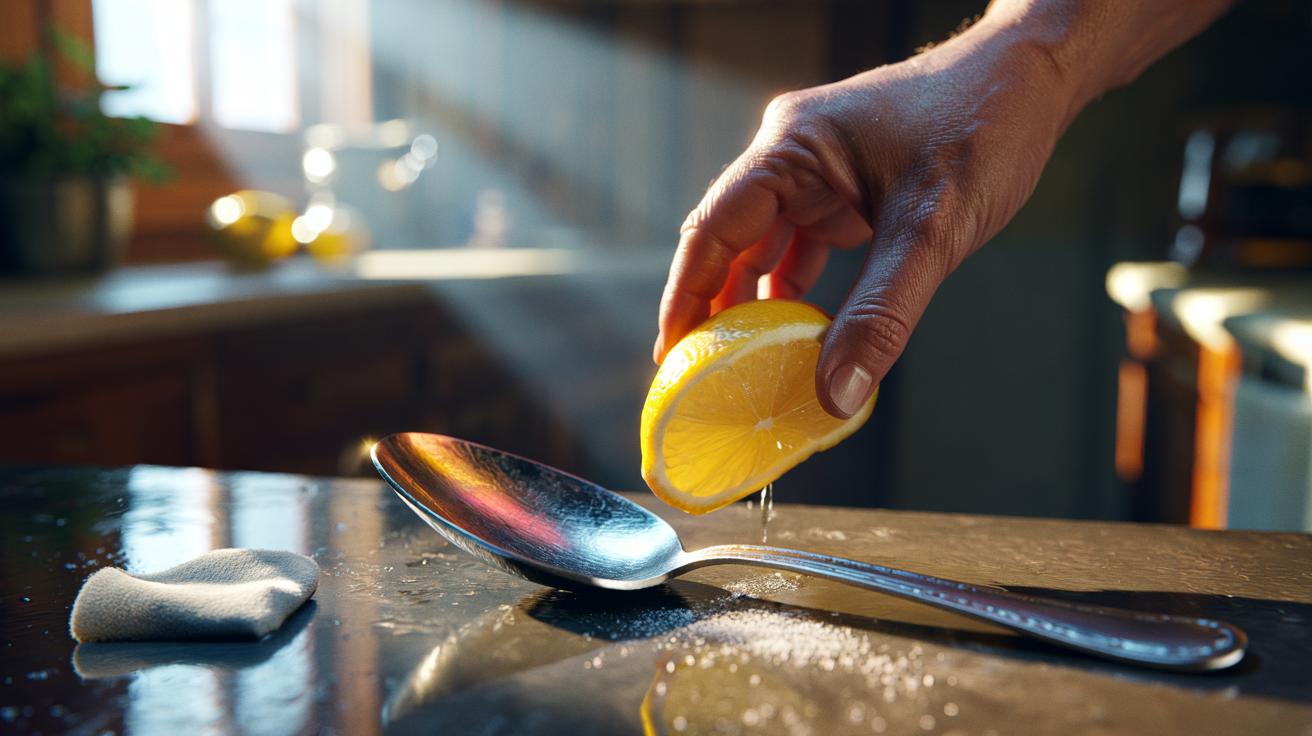
Start with clean hands and a sink clear of other metals. Halve a fresh lemon. Lightly squeeze to wet the cut face and, if desired, sprinkle a tiny pinch of salt. Test on an inconspicuous spot first, especially for plated ware or engraved areas. Gently rub the lemon across the silver in straight, short strokes. Keep pressure low. Tarnish should lift onto the lemon and cloth quickly; stop as soon as the grey smears reduce and the surface brightens. For forks and pierced pieces, use a cotton bud dipped in juice to target crevices.
Rinse immediately in warm running water. This halts the acidic action and flushes dissolved compounds. Optional but smart: a brief dip in a weak bicarbonate solution (half a teaspoon in a mug of water) helps neutralise lingering acidity. Rinse again. Dry thoroughly with a soft microfibre cloth, patting first, then buffing in long strokes to align the polish lines. Do not soak for more than two minutes. Avoid lemon on pieces with porous stones (turquoise, pearls, opals), on intentionally oxidised detailing, or on lacquered silver. If you suspect silver plate, limit contact to seconds; plating is thin, and aggressive rubbing can reveal base metal.
Science, Safety, and Caveats
Lemon’s speed is about kinetics and thickness. Tarnish films are often nanometres to a few micrometres thick. Acids accelerate surface reactions, so the first layer loosens fast. But as soon as bright metal appears, continuing the treatment delivers diminishing returns and increases risk to the finish. That’s why the two-minute window is a discipline as much as a convenience. Stop at “clean enough,” then protect the surface. Apply a tiny dab of neutral silver polish or rinse-and-dry meticulously to delay the next tarnish cycle.
Safety is straightforward. Wear washing-up gloves if you have sensitive skin. Work in a ventilated area; while lemon is benign, reducing sulphides can release faint sulphurous odours. Never mix acids with bleach. Keep acids away from concrete worktops and certain marbles they can etch. Technically minded readers will note that citric acid doesn’t magically convert all Ag2S to bright silver; instead, it removes or disrupts the film and assists in lifting it during wiping. On sterling, citrate’s affinity for Cu2+ also helps clear copper-rich tarnish. For heirlooms with valued patina, clean sparingly and avoid recesses to preserve contrast. When in doubt, consult a conservator.
When to Choose Another Technique
Lemon excels at fast refreshes of lightly tarnished pieces. It’s less effective for thick, black sulphide crusts or silver with complex filigree. In those cases, choose an electrochemical approach: line a bowl with aluminium foil, add hot water, bicarbonate, and a pinch of salt; immerse the silver so it contacts the foil. The foil acts as a sacrificial anode, reducing silver sulphide back to silver and transferring sulphur to the aluminium as aluminium sulphide. No rubbing required, and detail survives. For mirror finishes or scratches, use a dedicated silver polish with micro-abrasives and work methodically. Museum-grade creams balance cut and lubrication to limit wear.
Plated items warrant special care. Aggressive acids or abrasives can prematurely expose base metal. If you’re unsure, adopt the gentlest option and the shortest contact time, then reassess. And remember prevention: store silver with anti-tarnish strips, keep it dry, and use it regularly; handling slows tarnish formation as gentle buffing keeps films from thickening. The table below summarises when lemon shines and when to reach for a different remedy.
| Method | Typical Time | Best For | Cautions |
|---|---|---|---|
| Lemon Juice Rub | 30–120 seconds | Light, recent tarnish; flatware | Limit contact; avoid porous stones and heavy plating |
| Aluminium Foil Bath | 2–5 minutes | Heavy sulphide films; intricate pieces | Use hot, not boiling, water; ventilate |
| Commercial Silver Polish | 3–10 minutes | Mirror finishes; scratch refinement | Follow grain; avoid over-polishing edges |
Lemon’s appeal is its elegance: a common fruit, a short window, and results you can see before the kettle boils. Used with restraint, citric acid restores a soft, convincing shine without special kit, making it a practical first line for everyday silver. Respect the chemistry. Keep time tight. Rinse and dry like you mean it. Then store smarter to slow the next round of tarnish. Light touch, quick rinse, careful buff—that’s the formula. Will you reach for a lemon today, or does your silverware call for a different strategy before the next dinner party?
Did you like it?4.6/5 (27)