In a nutshell
- 🔬 The chemistry: Tarnish is silver sulphide (Ag2S); in hot, alkaline water, aluminium foil forms a tiny galvanic cell that reduces the sulphide back to silver without abrasion.
- 🛠️ Fast method: Line a dish with foil (shiny side up), add very hot water, mix in 1 tbsp bicarbonate of soda per 500 ml (plus optional salt), ensure the silver touches the foil, wait 2–5 minutes, then rinse and dry.
- ⚠️ Safety first: Use cooler water and brief times for silver plate; keep pearls, opals, turquoise, malachite and glued stones out; avoid bleach or ammonia; test a hidden spot and skip lacquered or painted parts.
- 🧼 Sensible alternatives: For light tarnish, use a microfibre cloth and non‑abrasive polish; avoid toothpaste; pick bicarbonate for jewellery and washing soda only for robust cutlery and trays.
- 🧳 Prevent tarnish: Store in anti‑tarnish bags or acid‑free wraps with silica gel, limit contact with sulphur‑rich foods, and do quick monthly rinses to preserve hallmarks and detail.
Britons love silver heirlooms. Tea sets, spoons, bangles, keepsakes. Yet the grey creep of tarnish dulls their charm, often faster than we expect. Here’s the good news: an age-old kitchen trick using aluminium foil, hot water and a pinch of bicarbonate of soda can reverse the darkening in minutes. It’s quick, cheap and surprisingly gentle on solid silver. With a little science and a little steam, the black film lifts, the shine returns, and the piece looks like it did when it left the box. No harsh polishing, no elbow-sapping buffing. Just a neat reaction doing the graft for you.
The Science Behind the Foil Method
Tarnish on silver is mostly silver sulphide (Ag2S), the product of silver reacting with sulphur compounds in air, wool, rubber or certain foods. The aluminium-foil method exploits a simple electrochemical reaction. When silver and aluminium touch in a warm, mildly alkaline electrolyte (hot water plus bicarbonate or washing soda), they form a tiny galvanic cell. Electrons flow from aluminium to the tarnish layer, reducing silver sulphide back to metallic silver. In effect, the dark film becomes silver again, while aluminium is oxidised and sequesters the sulphur.
Heat accelerates the reaction. So does contact: the item should be in physical touch with the foil. Bicarbonate of soda (sodium hydrogen carbonate) works well; washing soda (sodium carbonate) is stronger and acts faster. You may notice a faint “egg” odour. That’s small traces of hydrogen sulphide as sulphur swaps partners. The process removes tarnish rather than abrading the metal, which is why it preserves hallmarks and crisp engraving better than aggressive polishing pastes. It’s science you can see—no mystery, just redox at the kitchen table.
Step-by-Step Guide to Restore Shine in 5 Minutes
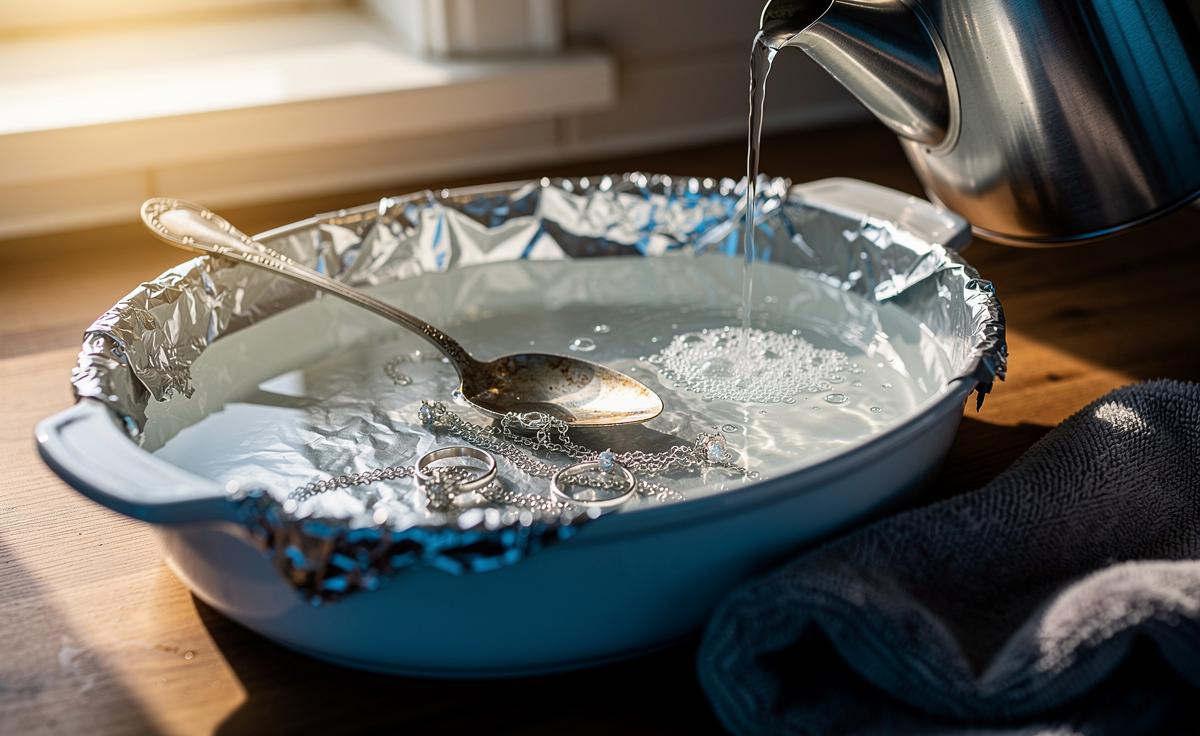
Line a heatproof glass or ceramic dish with shiny-side-up aluminium foil. Add very hot tap water—just off the boil for solid silver items without stones. Sprinkle in bicarbonate of soda: think one heaped tablespoon per half-litre. A teaspoon of table salt helps conductivity. Submerge the silver so it touches the foil. Wait 2–5 minutes. Flip once if needed. When the dark veil lifts, rinse thoroughly in clean warm water and dry immediately with a soft microfibre cloth. Do not leave pieces to soak indefinitely; once bright, you’re done.
| Item | Quantity/Detail | Purpose |
|---|---|---|
| Aluminium foil | 1 sheet, shiny side up | Provides reactive metal surface |
| Hot water | Enough to fully cover items | Speeds electrochemical reduction |
| Bicarbonate of soda | 1 tbsp per 500 ml | Creates alkaline electrolyte |
| Table salt (optional) | 1 tsp per 500 ml | Boosts conductivity |
| Soft cloth | Lint-free microfibre | Final dry and buff |
For silver-plated items, use cooler water and shorter times to avoid loosening ultra-thin plating. Keep pearls, opals, turquoise, malachite and glued-in stones out of hot solutions. If in doubt, test a hidden area first. The leftover solution can be poured down the sink; it’s mostly aluminium hydroxide salts and trace sulphides.
Common Pitfalls, Safety, and When to Choose Alternatives
Electrolytic cleaning has limits. If your piece has an intentional oxidised patina (antiqued recesses on jewellery), the process may strip it. Stop and pick a gentler polish for highlights only. Avoid this method on lacquered silver, painted handles, or hollow pieces with open seams; trapped solution can leave a white residue. With silver plate, proceed briefly and gently. The reaction will not fix scratches, dents or pitting—those need professional care. Never combine bleach or ammonia with this technique; you risk nasty fumes and damage.
Use microfibre cloths and a non-abrasive silver polish if tarnish is light. Keep toothpaste away from silver—its abrasives are too harsh. Prefer bicarbonate for jewellery; reserve washing soda for robust cutlery and trays. To slow future darkening, store pieces in anti-tarnish bags or wrap with acid-free tissue and add silica gel or charcoal strips. Eat eggs and onions away from your best spoons. A quick monthly warm-water rinse and dry will delay the chemistry that blackens your favourites. Prevention is always easier than correction.
In under five minutes, a foil-lined bowl, hot water and a spoonful of bicarbonate can turn gloomy grey back to silver-bright. It’s a thrifty fix, eco-friendly, and satisfying to watch. You’ll hear a faint fizz, maybe catch a whiff of sulphur, and then—like that—the sheen returns. Keep common sense close: test sensitive items, avoid gemstones, and don’t overdo heat with plate. The method respects hallmarks and detail, so family pieces look loved rather than scoured. Ready to rescue a tea set, a locket, a run of forks—what will you revive first, and what story will it tell when it shines again?
Did you like it?4.5/5 (25)