In a nutshell
- 🫖 Black tea tannins deposit a microscopic film that evens light scatter, creating a natural shine on sealed floors; avoid waxed or raw wood to prevent blotching.
- ⏱️ The three-minute polish: brew strong (3–4 bags/500 ml), apply a whisper-thin layer with a microfibre pad, then buff dry; over-wetting causes streaks, so keep moisture minimal.
- 🍵 Choose your tea: Ceylon for clear, neutral sheen; Assam for warmer tones; English Breakfast as a balanced all-rounder; green/herbal teas lack sufficient tannins.
- ⚠️ Practical safeguards: always do a test patch, discard leftover brew after 24 hours, don’t mix with silicone polishes, and let floors dry before pets or foot traffic.
- 💷 Results and rhythm: a quick, thrifty maintenance hack—not a recoat—delivering subtle clarity; use weekly in high-traffic zones with periodic neutral cleaning for aftercare.
Speed, thrift, and a dash of kitchen alchemy: that’s the unlikely promise of polishing wood floors with a pot of strong black tea. In under three minutes, the brew’s natural tannins can tighten the look of the grain, mellow hairline scuffs, and leave a quick, soft sheen that flatters both new and timeworn boards. There’s no silicone slickness, no overpowering scent—just a subtle glow and a cleaner feel underfoot. For renters, busy households, and anyone sceptical of heavy-duty chemicals, it’s a compelling trick. Always test in a hidden corner before you commit to a whole room. Here’s how the science stacks up and how to do it right.
How Tannins Create a Natural Shine
Black tea is rich in polyphenolic tannins—astringent molecules that interact with the wood’s surface. On sealed floors, those tannins deposit a microscopic, transparent film that gently evens out light-scattering roughness. The result is more uniform reflection, which our eyes read as shine. The brew’s slight acidity (typically pH ~5) can lift light mineral haze left by mopping water, while the tea’s theaflavins and thearubigins subtly enhance tone. Think of it as a micro-buff rather than a heavy varnish: you’re not building a coating, you’re refining what’s there.
The effect plays especially well with oak, ash, and walnut finished in polyurethane or lacquer, where the sealed surface welcomes a quick polish. On oil-finished floors the glow is warmer but may fade faster, since oils soak in. Do not use on waxed floors or raw, sanded boards—tea can blotch, darken, or raise grain unevenly. And remember: tea does not fix deep scratches. It disguises micro-marring and improves clarity, a subtle optical upgrade that lasts through the next few cleans.
What about colour shift? Expect a whisper of warmth, not a stain. Darker teas can nudge pale timbers toward honeyed amber; mid and dark species simply appear richer. If your priority is neutral clarity, choose a brisk, clean-tasting Ceylon or English Breakfast rather than malty Assam.
Three-Minute Polish: A Step-by-Step Method
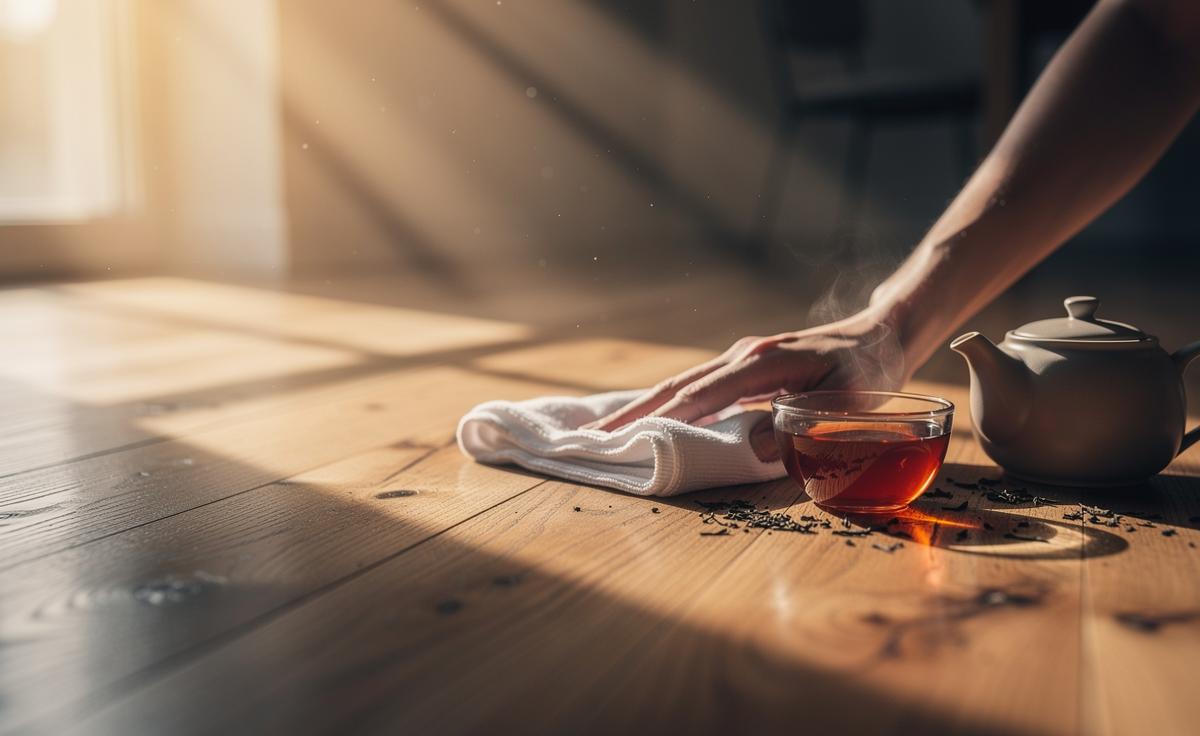
Boil the kettle and brew a concentrated solution: 500 ml of water with 3–4 black tea bags, or 2 tablespoons of loose leaves. Steep 6–8 minutes for a high-tannin extract, then strain. Allow to cool to just warm—comfortable to the touch—not hot. Decant into a spray bottle or lightly dampen a clean microfibre pad. Avoid drips and puddles—excess moisture is the enemy of wood.
Work in small sections. Mist the pad, not the floor, and glide with the grain. You’re looking for a whisper-thin dampness that flashes off quickly. Immediately follow with a dry microfibre cloth to buff. The buffing matters: it aligns the microfilm and picks up any residue, transforming “cleaned” into “polished”. Edges and thresholds shine with a few tight hand-buffs. On a typical sitting room, the visible lift appears in under three minutes once you’re practiced.
If streaks appear, your brew is likely too strong or the pad too wet. Dilute with 30–50% more water and try again with lighter pressure. Never combine tea with commercial polishes or waxes in the same session; interactions can smear or dull. For stubborn heel marks, a pre-wipe with a barely damp cloth and mild soap helps, then finish with the tea pass.
Choosing Tea, Tools, and Floors
Different teas produce slightly different finishes. Brisk, high-grown Ceylon tends to deliver a clear, quick-drying sheen. Assam, with its malty heft, offers a warmer cast that flatters darker boards. English Breakfast blends the two, a reliable middle-ground for mixed species or patchwork flooring. Decaf black can work if extracted strongly, though it often carries fewer tannins. Green and herbal teas are poor candidates—too low in astringency to polish meaningfully. When in doubt, brew strong and dilute to taste on your test patch.
Equipment matters. A flat microfibre mop head minimises streaking and reaches under sofas. Keep one cloth for application, one for buffing. If you have underfloor heating, let the room cool; fast evaporation can cause patchiness. For finishes, polyurethane and lacquered floors respond best; hardwax oils can benefit, but the sheen is subtler and shorter-lived. Avoid use on waxed, shellac-heavy, or unsealed floors—risk of spotting is high.
| Tea Type | Brew Ratio | Tannin Level | Tone Effect | Best For |
|---|---|---|---|---|
| Ceylon | 3 bags / 500 ml | Medium–High | Neutral–clean | Light woods (maple, ash) |
| Assam | 4 bags / 500 ml | High | Warm amber | Oak, walnut |
| English Breakfast | 3–4 bags / 500 ml | Medium–High | Balanced | Mixed species rooms |
| Darjeeling (2nd Flush) | 4 bags / 500 ml | Medium | Light, bright | Subtle refresh |
| Decaf Black | 5 bags / 500 ml | Medium | Mild | Neutral finish |
Risks, Aftercare, and Long-Term Results
Tea polishing is a maintenance hack, not a miracle cure. It won’t fill gouges or replace a professional recoat, but as a weekly or pre-guest buff it’s hard to beat. Cost is pennies: a batch of strong tea often runs under 10p, compared with 30–60p per use for many commercial sprays. Time is the real win. Once brewed, application and buffing in a standard room take minutes and dry fast. Keep the solution fresh; discard leftovers after 24 hours to avoid souring and stickiness.
Common pitfalls are easy to avoid. Over-wetting causes cloudy patches; fix by buffing dry and repeating with a lighter touch. Extremely pale, raw, or wire-brushed floors can darken unpredictably—skip the method unless the surface is sealed. Households with pets should let the floor dry fully before roaming; once dry, the residue is minimal and odour-neutral. If you’ve recently used silicone-heavy polishes, clean with a manufacturer-approved neutral cleaner first; silicone can repel the tea film and streak.
For rhythm, try this: a quick tea buff weekly in high-traffic areas, a neutral clean fortnightly, and a deeper maintenance polish each quarter if your finish allows. When the glow fades faster than it used to, that’s your signal to consider a professional refresh rather than doubling down on DIY shine.
Black tea’s tannins offer a deft, thrifty way to coax clarity from tired boards, delivering a calm glow without heavy chemicals or build-up. The method rewards a light hand and keen eyes: brew strong, apply thin, buff bright. It’s not showy; it’s quietly convincing, the kind of finish guests notice but can’t name. For heritage flats and new-builds alike, the speed-to-impact ratio is exceptional, and the ingredients are already in your cupboard. Will you try the three-minute polish on a test patch this weekend, and if so, which tea will you reach for first?
Did you like it?4.6/5 (30)