In a nutshell
- ⚡ Anti-static action: Dryer sheets use cationic compounds to neutralise charge, making dust cling on contact and slowing re-settling for days.
- 🧽 Technique that works: Prefer used dryer sheets, fold for a firm edge, wipe in overlapping passes, and pinch slats on blinds for fast capture without scattering.
- 🖥️ Surface savvy: Great for skirting boards, plastics, lamps, and frames; use feather-light strokes on electronics housings and avoid screens and vents to prevent residue and smears.
- ✅ Benefits and limits: Offers speed and a tidy finish as a maintenance step, but it’s not a deep clean—pair with a HEPA vacuum or damp microfibre for stubborn grime.
- ♻️ Safety and sustainability: Choose unscented if sensitive to fragrances, keep off food-contact surfaces, reuse one sheet across rooms, and bin after—acknowledging single-use waste.
There’s a simple, surprising hack hiding in your laundry cupboard. Grab a dryer sheet, and you’ve got a fast, low‑fuss way to tame household dust. The secret isn’t magic; it’s chemistry and charge. Dryer sheets are infused with anti-static agents that change how particles behave on contact with surfaces. A quick wipe on skirting boards, blinds, even lamp bases, and dust clings instead of floating back into the air. It feels instant. It looks thorough. And it slows re-settling for days because the treated surface resists the build-up of static. That’s time reclaimed, especially in busy UK homes where dust seems relentless.
Why Dryer Sheets Grab Dust So Quickly
The reason dryer sheets make dusting feel effortless is rooted in electrostatics. Friction from everyday life charges surfaces; dry air boosts it. Dust particles, many carrying a mild negative charge, hover or repel off equally charged materials. Dryer sheets are coated in cationic surfactants—often quaternary ammonium compounds—that spread a microscopically thin, slightly waxy layer. Those positive charges help neutralise static and encourage fine particles to adhere instead of drifting off. In short, the sheet blunts repulsive forces and replaces them with grab. That’s why the first pass looks so dramatic.
There’s another benefit. The coating leaves a slick, low-friction finish on plastics and painted wood, which makes it harder for new charges to build up in the days ahead. Less charge, less dust attraction. The effect isn’t permanent, but for high-traffic spots—banisters, TV cabinets, window sills—it buys you breathing space. Used sheets excel here. They’re slightly spent, less greasy, and more controllable. The fibres also develop a soft nap that corrals particles into the sheet rather than pushing them around. Fast capture, slower return—that’s the win.
How To Use Dryer Sheets For Faster Dusting
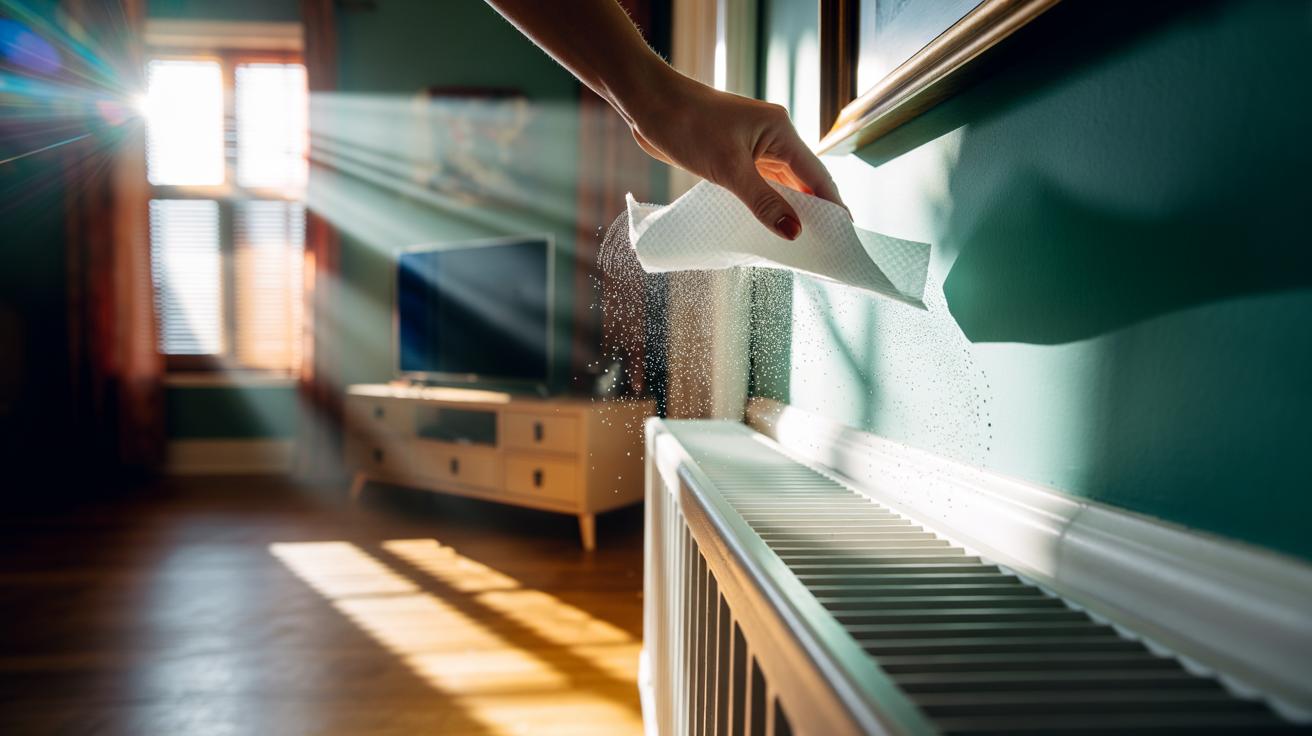
Start with a used dryer sheet. Fold it in quarters for a firm edge, then wipe once to lift loose debris and again at a different angle to catch what’s left. For slatted blinds and radiators, pinch the sheet over the edge and glide. On skirting boards, run a continuous pass, then tap the sheet to release excess fluff into the bin. Electronics? Light, careful strokes on plastic housings are fine, but avoid open vents and glossy screens where residue can smear. Less pressure, more passes—that’s the technique that stops streaks and residue.
| Surface | How to Use | Caution/Result |
|---|---|---|
| Skirting boards, door frames | Long, overlapping strokes with a folded sheet | Anti-static film delays re-dusting |
| Blinds and shutters | Pinch slats and wipe both sides in one pass | Catch fine dust without scattering |
| TV cabinets, consoles | Feather-light strokes on plastic housing | Avoid screens; risk of smearing |
| Lamps, picture frames | Short, precise wipes around edges | Stops static that invites fresh dust |
Top tip: layer your clean. Vacuum first with a HEPA tool, then finish with the dryer sheet to neutralise remaining charge. If using a new sheet, dab it on a cloth to offload excess coating before touching delicate finishes. Test inconspicuously on lacquered or matte surfaces, as some fragranced formulations can mark if overworked.
Benefits, Limits, and Safety Considerations
The upsides are obvious. Speed. Less resettling. A pleasing, just-cleaned look with minimal effort. The anti-static effect is particularly handy in winter when heating dries the air and charges spike. That said, dryer sheets are a maintenance tool, not a deep clean. They won’t lift greasy film from kitchen cupboards or dislodge compacted dust from carpet edges; use a microfibre cloth with a damp finish or a crevice tool for that. Think of the sheet as a static “mute button,” not a miracle sponge.
There are also sensible caveats. Some brands use strong fragrances and quats that can irritate sensitive skin or pets. If that’s a concern, choose unscented or plant-based variants, or switch to a reusable electrostatic duster. Avoid bare food-contact surfaces and touchscreens; the residue can smear or attract fingerprints. From an environmental standpoint, dryer sheets are single-use. Limit waste by reusing one for multiple rooms and then consigning it to the bin, not the loo. In UK households aiming to reduce disposables, a rotation works well: vacuum, microfibre for heavy soil, dryer sheet for anti-static finishing. Targeted use delivers the benefits without the bin guilt.
In a world of pricey gadgets, the humble dryer sheet earns its keep by taming dust through simple charge control and clever chemistry. A few light passes, the right surfaces, and your home stays visibly cleaner for longer with far less effort. Pair it with smart habits—regular HEPA vacuuming, controlled humidity, and tidy cable runs—and the payoff compounds week after week. The result is cleaner air, calmer eyes, and more time for everything else. How will you deploy this anti-static edge in your own rooms, and which surfaces will you test first to see the fastest wins?
Did you like it?4.5/5 (29)