In a nutshell
- 🧪 The science: acetic acid dissolves mineral and detergent build-up, reopening cotton loops to restore absorbency and neutralise odour.
- 🌙 Overnight method: Soak in warm water with white vinegar (250–300 ml per 5 L) for 6–12 hours, then wash at 40–60°C, skip softener, and dry thoroughly.
- 🚿 Hard-water help: Ideal for UK regions with hard water; a vinegar reset every 2–3 weeks keeps towels soft, fresh, and properly thirsty.
- ⚠️ Safety first: Never mix vinegar with bleach, avoid natural stone surfaces, and patch-test vivid dyes; the vinegar scent vanishes as towels dry.
- 💚 Cost and eco wins: Reduces reliance on fabric softeners and repeat washes, saves energy by improving drying, and leaves a clean, neutral finish.
There’s a quiet domestic miracle hiding in your cupboard. White vinegar, the clear, food-safe liquid you splash on chips, can transform musty, heavy towels back into springy, thirsty cloths. No scrubbing. No synthetic perfume. Just a patient soak while you sleep. In the UK’s hard-water regions, minerals and detergent films build up fast, trapping odour and flattening loops. Vinegar cuts through that haze. By morning, your bath linen feels lighter, cleaner, and properly absorbent again. One overnight treatment can reset years of residue without harsh chemicals or costly additives. Here’s why it works, how to do it, and what to watch.
The Science: How White Vinegar Revives Cotton Fibres
At the heart of the trick is acetic acid, the gentle acid that gives white vinegar its tang. In solutions of 5–8%, it dissolves the mineral deposits from hard water—chiefly calcium and magnesium carbonates—that crust onto cotton. Those deposits make towels feel stiff and trap stale odours. When acetic acid breaks them down, it frees the loops. Fibres open up. Water can pass through. Drying power returns. Residue off, absorbency on.
There’s a second act. Over time, detergent residue clings to fibres, especially if you use too much soap or a cool wash. Vinegar lowers the rinse water’s pH, helping detach those surfactants so the machine can flush them away. That same shift makes the environment less friendly to odour-causing microbes. Think of it as a gentle reset for fabric, not a mask. No clingy softener film, either; vinegar softens by removing what shouldn’t be there, not by coating the towel. It’s a clean softness, not a perfumed illusion.
Crucially, white vinegar is safe for cotton at reasonable dilutions and short contact times. It won’t eat cellulose, but it will nip limescale. The scent? Temporary. As vapours disperse in the wash and during drying, the sharpness fades. What’s left is neutral freshness, the smell of nothing—just clean cloth ready to drink up water after your morning shower.
The Overnight Method: A Simple Routine While You Sleep
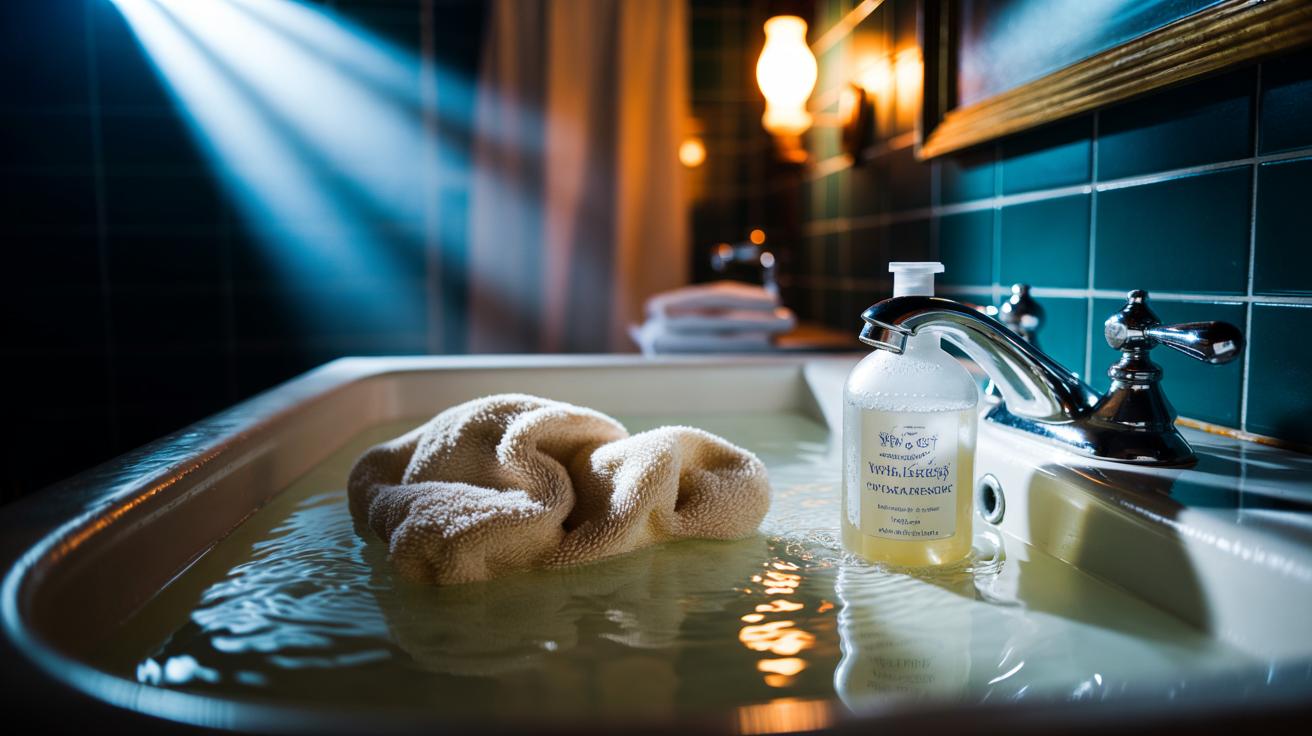
Give your towels a spa night. Fill a sink, tub, or a clean bucket with warm water. Add white vinegar at roughly 250–300 ml per 5 litres, enough to acidify without being aggressive. Submerge towels fully, press out air, and leave them to soak overnight—six to twelve hours is ideal. Never mix vinegar with bleach or chlorine-based products—ever. In the morning, drain the liquor, wring gently, and transfer straight to the machine. Run a full cotton cycle at 40–60°C with your usual detergent, but skip fabric softener. It undoes the good work by laying down a film again.
Dry thoroughly. A brief tumble lifts the nap; finish on a line or an airing cupboard for energy savings. If line-drying only, fluff the towels by hand to coax up the pile. The vinegar aroma vanishes as fibres dry. Hard cases—gym or pool towels—may need a second round. For coloured towels, the soak is typically safe, but test a hidden corner if you’re wary of unstable dyes. If your clothes steamer or iron leaves mineral spots, vinegar rinses can help there too, but keep it to fabrics, not stone.
| Vinegar Type | Distilled white vinegar (5–8% acetic acid) |
| Soak Ratio | 250–300 ml per 5 L warm water |
| Soak Time | 6–12 hours (overnight) |
| Wash After Soak | 40–60°C cotton cycle, no softener |
| Drying | Short tumble for loft, then line or airing cupboard |
Hard-Water Britain: Odour Control, Softness, and Safety
From Kent to the Cotswolds, much of Britain wrestles with hard water. Those dissolved minerals don’t just fur up kettles; they lodge in textiles, especially plush cotton loops. That’s why towels feel waxy, smell wrong, and resist water. A monthly vinegar reset keeps them lively. If your taps leave rings on glasses or your showerhead crusts quickly, you’ll benefit more often—every 2–3 weeks is fair. The aim isn’t fragrance; it’s genuinely clean fibres that dry you faster and dry themselves quicker on the rack.
Safety notes matter. Vinegar is gentle on cotton but unfriendly to certain surfaces. Avoid splashing on natural stone (marble, limestone) and iron-based metals. Rinse containers after use. Do not combine with bleach, oxygen or otherwise; reactions can release harmful gases or neutralise cleaning power. For vivid towels, vinegar tends to stabilise rather than strip, but fabrics with unstable dyes can bleed under any soak—so test first. Economically, vinegar is a win: one bottle replaces softener, deodorisers, and repeat washes. Environmentally, it cuts fragranced products and helps towels dry faster, saving energy. Softness by subtraction—no coating, no compromise.
There’s also comfort. Towels that actually absorb leave skin drier, which curbs that humid, must-trap atmosphere in small British bathrooms. Less damp lingering in fibres means fewer musty microbes settling in. Pair the reset with good drying—radiators in winter, open windows when you can—and you’ll notice the difference. It’s quiet maintenance. Regular, sensible, effective. Your future self will thank you when the morning shower ends with a proper, satisfying pat-down instead of a smeary wipe.
In the end, white vinegar is a modest, evidence-backed fix for a very British problem: mineral-heavy water and towels that seem to give up. A simple overnight soak revives fibres, restores absorbency, and leaves nothing behind but clean cotton. No gimmicks. Just chemistry and patience doing the heavy lifting while you sleep. If you only try one laundry tweak this month, make it this. Will you give your towels that quiet spa night—and what will you refresh next once you’ve seen the difference?
Did you like it?4.5/5 (20)