In a nutshell
- 🧂 Salt is hygroscopic, drawing out moisture and odour-carrying compounds from carpet fibres, so it neutralises smells rather than masking them.
- ⏱️ Method: pre‑vacuum, apply a light dusting of 60–80 g per m² via a sieve, leave for 8–12 hours, then vacuum slowly in overlapping passes; keep pets out and never wet the salt.
- 🧪 Choosing salt: Table salt (fine) gives the best coverage; fine sea salt works; rock salt is not recommended; optional bicarbonate mix helps acidic odours but be cautious with dyed wool.
- 🚫 Limits: Salt won’t fix set‑in urine crystals, mould, or smoke tar; consider enzymes or professional extraction and test delicate fibres like sisal, jute, and wool.
- 🧹 Aftercare: use bagged vacuums, empty outdoors, avoid robot vacs; ventilate rooms, keep shoes off, and repeat light treatments monthly; investigate underlay if odours return.
Locked-down winter homes, wet dogs and takeaway mishaps all leave their imprint on floors. You could mask those notes with a spray, or you could tackle the source. The simplest trick in the book? Sprinkled salt. Common table salt is cheap, quiet, and surprisingly effective at drawing out lingering carpet odours while you sleep. Leave a fine, even layer overnight and vacuum in the morning: that’s the entire routine. It won’t perfume your room; it will pull moisture and the volatile compounds riding on it. For renters, pet owners, or anyone between professional cleans, this is a pragmatic, low-risk reset.
Why Salt Neutralises Carpet Odours
Salt’s power begins with its structure. Sodium chloride forms crystalline lattices that are mildly hygroscopic—they attract and hold onto water molecules from the air and from the carpet pile. Odour molecules frequently hitch a ride on moisture or exist as dissolved compounds after spills. Draw down that dampness and you remove a transport medium, reducing evaporation of smelly volatiles into the room. In short: salt absorbs; it does not disguise. That distinction matters because masking smells with fragrance often produces a louder, stranger blend. Removing the carrier phase quietly turns the volume down.
There’s also a useful physical effect. Dry salt crystals nestle between fibres and create a temporary desiccating layer. As the pile dries, vapours that would otherwise off‑gas are captured on crystal surfaces. That’s why a thin, even coating works better than heaps. It maximises contact area without clumping. Unlike baking soda, salt isn’t alkaline, so it won’t react with dyes or natural fibres as readily. It’s largely inert. Still, the goal is moderation. Use enough to sip the smell, not so much that you sandpaper your vacuum.
Step-by-Step: Overnight Salt Deodorising
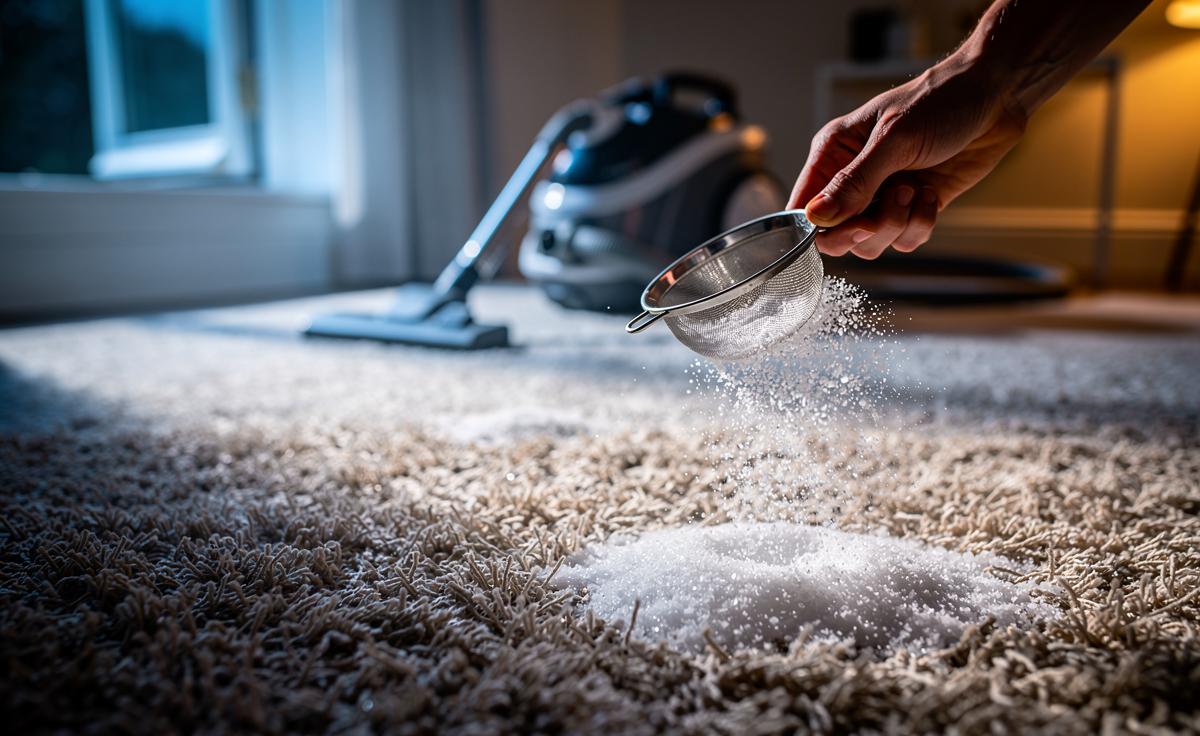
First, prep the battlefield. Blot any fresh spill thoroughly with plain cloths; remove solids; pre‑vacuum to lift grit. The carpet should be surface-dry. Shut windows for now to limit ambient moisture. Choose fine table salt or fine sea salt. Load a mesh sieve and gently shake a light, even dusting across the target area—think a frosted look, not a snowdrift. Typical usage: 60–80 g per m² (roughly 4–5 level tablespoons). For stubborn whiffs, go up to 120 g per m². Use a soft brush to ease crystals into the tips of the pile without grinding deep. Don’t wet the salt. Water dissolves it, kills airflow, and can leave rings.
Leave the room undisturbed for 8–12 hours. Overnight is ideal. In the morning, open windows, then vacuum slowly in overlapping passes—north–south, then east–west. Empty the canister or change the bag outside to avoid re‑aerosolising captured compounds. If the scent persists, repeat once. After a pet accident, pair the routine with a targeted enzyme cleaner first, then salt after the area is dry to touch. For loop-pile wool or delicate plant fibres like sisal and jute, test a saucer‑sized patch. If you see any lightening, matting, or crystalline residue after vacuuming, stop.
Choosing the Right Salt and Simple Add-ons
Not all salts sprinkle equally. Fine crystals give broader coverage and better surface contact, which is what you want with pile fabrics. Coarse rock salt looks dramatic but leaves big voids between grains; it’s poor at mopping up micro‑films. Iodised versus non‑iodised? For odour work, the difference is negligible. What matters is grain size and dryness. Keep your salt sealed so it doesn’t cake; stale, damp salt underperforms. As for boosters, a half‑and‑half mix with bicarbonate of soda can assist with acidic kitchen smells, but stick to pure salt if you’re worried about alkaline sensitivity in dyed wool.
Use this quick reference before you shake:
| Salt Type | Grain Size | Amount per m² | Best For | Notes |
|---|---|---|---|---|
| Table Salt | Fine | 60–80 g (4–5 tbsp) | General stale odours, light pet smells | Top all‑rounder; easy to vacuum |
| Sea Salt (fine) | Fine | 60–100 g (4–6 tbsp) | Musty rooms, kitchen residues | Flow can clump; sieve well |
| Rock Salt | Coarse | Not recommended | — | Poor surface coverage; risk to vacuums |
When Salt Works and When It Doesn’t
Salt shines with light, recent issues: that faint dog bed aroma, last night’s curry vapours absorbed by fibres, the mustiness of a closed‑up spare room. It also helps after you’ve handled a spill correctly—blotted, spot‑cleaned, dried—by catching what’s left. What it won’t do is reverse chemistry. Set‑in urine crystals, mildew growth, smoke tar, and protein‑rich accidents can bind to fibres or form films that salt can’t break down. Those call for enzymes, oxidisers, or a professional hot water extraction.
Watch the surroundings too. Salt attracts moisture from air; in very humid rooms it can cake and underperform. Avoid leaving it down for days; you might encourage wicking or leave a faint haze on dark synthetics. Move metal‑legged furniture off the treated area—salt and humidity can encourage corrosion marks. For plant fibres such as sisal, jute, and seagrass, keep applications minimal and test. These materials dislike moisture shifts and can develop water rings. Rule of thumb: if the smell is structural—mould, smoke saturation—call the pros; if it’s superficial, salt buys you calm and time.
Aftercare, Safety, and Vacuuming Tips
Salt is benign around people and pets, but ingestion in quantity isn’t. Keep curious animals and toddlers out of the room while the crystals sit. When vacuuming, use a bagged machine or a cylinder with a clean filter; salt dust can stress tired motors and cloud HEPA cartridges. Empty immediately outdoors. Avoid robot vacuums for this job. They hate fine granules. If you’re cautious about abrasion, lift the beater bar and rely on suction for the first passes; re‑engage for a final groom once most crystals are gone. Two slow passes beat six fast ones.
To maintain results, ventilate daily, keep shoes off carpet, and rotate pet beds. Between deep cleans, a light monthly salt refresh on high‑traffic zones keeps the air honest without perfumes. Store a kilo of table salt in a dry cupboard and a small sieve with it; readiness is half the trick. If odours keep returning in the same spot, investigate underlay and subfloor for trapped moisture. Odour is a message—fix the source and the silence lasts.
Used this way, salt is less a miracle and more a disciplined habit: quick prep, light sprinkle, overnight patience, patient vacuuming. It suits renters, busy families, and anyone who prefers neutral air to chemical fog. As with all low‑tech fixes, its limits are clear, but so are its strengths—cost, speed, and simplicity. Ready to try an overnight reset and wake to a quieter room, or is there a stubborn smell you’d like help diagnosing next?
Did you like it?4.6/5 (28)