In a nutshell
- 🧪 Baking soda is mildly alkaline and highly absorbent, drawing pigments and liquids up from fibres, often lifting stains in as little as two minutes while neutralising odours.
- 🧼 Two-minute method: blot, don’t rub; blanket the spot with powder; light mist (water or diluted vinegar); press and lift with a clean cloth; dry and vacuum.
- 🍷 Stain-specific tactics: tannins (coffee, tea, wine) respond to a vinegar mist; grease needs dry powder first, then a tiny drop of washing-up liquid; pet urine is neutralised and deodorised with baking soda.
- 🧵 Fibre care essentials: synthetics handle brief vinegar mists; wool needs minimal moisture and short contact; always patch-test and never mix with bleach (peroxide only on synthetics if needed).
- 💡 Practical wins: keep a jar of baking soda and a white cloth handy for a fast, eco-friendly, low-cost response that prevents stains from setting and reduces repeat cleaning.
For all the fancy sprays lining supermarket shelves, the quiet hero of carpet care is sitting in your cupboard: baking soda. This fine, alkaline powder doesn’t just mask stains—it helps lift them, fast. On fresh spills, you can watch colour leach upwards in as little as two minutes, buying you precious time before pigment or grease locks into fibres. It’s safe, cheap, and odour-taming, which matters when a pet mishap or a toppled espresso strikes at the worst moment. Act quickly and you’ll prevent a temporary mark becoming a permanent memory. Here’s how the chemistry works, and how to deploy it like a pro on everything from wine to mud.
Why Baking Soda Works So Fast
Speed starts with chemistry. Baking soda (sodium bicarbonate) is mildly alkaline, nudging acidic stains—think coffee, tea, wine—towards neutrality. That shift loosens the bond between pigment molecules and carpet fibres. The powder’s microcrystalline structure is also highly absorbent. It behaves like millions of tiny sponges, wicking liquid vertically out of the pile so the stain moves up and into the powder instead of down to the backing. That is why a pale bloom often appears within two minutes of application: the stain is physically transferring into the baking soda.
Add a mist of water or a light vinegar solution and you trigger gentle fizzing as bicarbonate reacts with acid, creating carbon dioxide bubbles that agitate the spot at fibre level. It’s a soft mechanical lift without harsh scrubbing. The bonus? Baking soda adsorbs odour-causing compounds, especially useful for pet accidents and sour dairy spills. Always test on an inconspicuous patch first, particularly with wool, and avoid long dwell times on natural fibres. When used promptly and correctly, it’s swift, forgiving, and remarkably effective.
Two-Minute Method: Step-by-Step
1) Blot, don’t rub. Use a white cloth or plain kitchen roll to lift as much liquid as possible. Press down firmly. Turn the cloth and repeat until transfer slows. Never scrub a wet carpet; blot only.
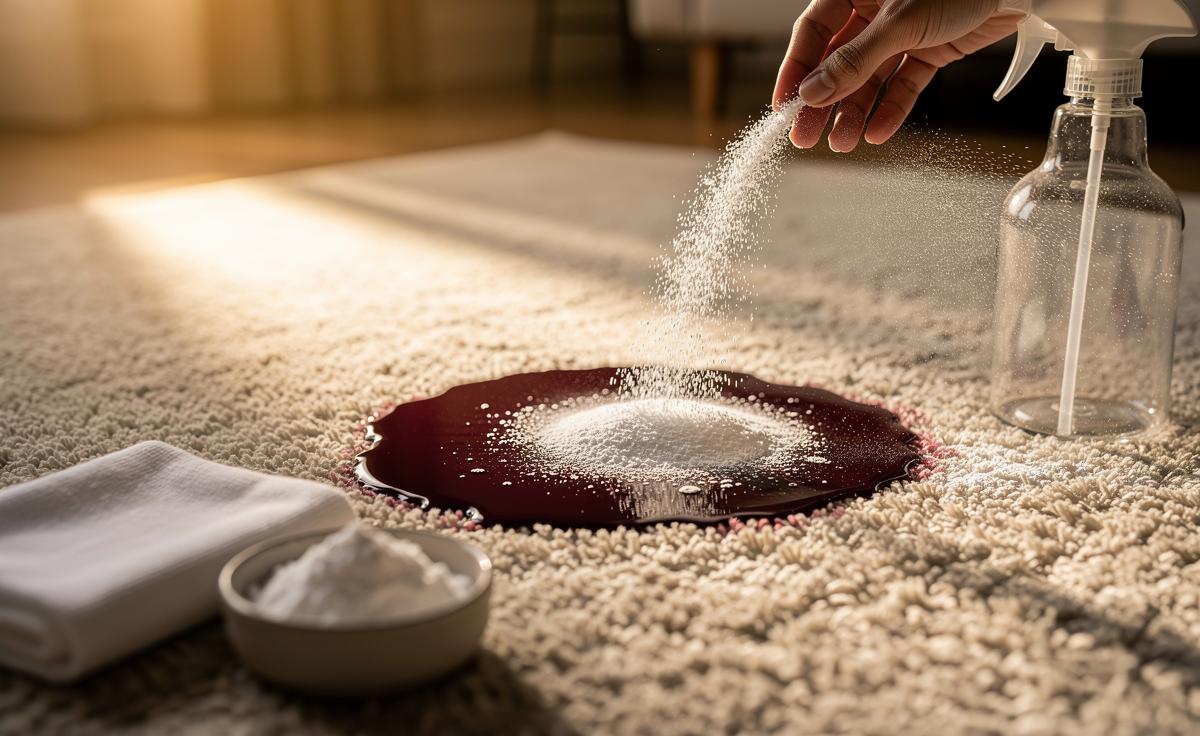
2) Blanket with baking soda. Sprinkle a generous, even layer over and just beyond the mark. For fresh spills, you’ll often see the powder darken as it drinks the stain almost immediately.
3) Activate lightly. Mist with cool water for tannin stains, or a 1:3 white vinegar-to-water mix for coffee, tea, or wine. Don’t soak. Wait two minutes. Watch for the halo as colour lifts upward. For greasy drips, skip water and let the powder draw oil first.
4) Press and lift. Lay a clean cloth over the area, press with your palm or a spoon’s back. Replace the cloth as it picks up residue. If needed, re-dust and repeat once.
5) Dry and vacuum. Allow to dry thoroughly, then vacuum to remove the remaining powder. If a faint shadow remains, a second pass usually clears it.
| Stain Type | Powder Amount | Add-On Liquid | Wait Before Blot | Notes |
|---|---|---|---|---|
| Coffee/Tea | 1–2 tsp per 10×10 cm | 1:3 vinegar:water mist | 2 minutes | Repeat once for older marks |
| Red Wine | 2 tsp | Cool water mist | 2–3 minutes | Blot fast to prevent setting |
| Grease | 2–3 tsp | None initially | 5 minutes | Add a drop of mild washing-up liquid if needed |
| Pet Urine | 2 tsp | 1:3 vinegar:water mist | 2 minutes | Neutralises odour |
| Mud | 1–2 tsp | Water mist | 2 minutes | Let clumps dry before vacuuming |
Dealing With Common Stains and Fibres
For tannins (coffee, tea, red wine): blot hot spills fast, then use baking soda with a light vinegar mist. The fizz helps detach colour compounds. If a shadow lingers, repeat once or twice rather than flooding the carpet. For grease (butter, lipstick): apply baking soda dry first. Let it sit to draw oil, then blot. A tiny drop of washing-up liquid can break surface tension before a second dusting. For pet accidents: after blotting, the bicarbonate neutralises acids and tames odour, especially when paired with diluted vinegar. Avoid ammonia-based products on urine—they can set the smell.
Fibre matters. Synthetics (polypropylene, nylon) are resilient and tolerate brief vinegar mists. Wool is protein-based and dislikes alkali and over-wetting; keep contact times short and moisture minimal. On light synthetics, a final pass with 3% hydrogen peroxide can brighten stubborn organic stains—never on wool, and always patch-test. The big mistakes? Over-scrubbing, drowning the pile, and skipping the vacuum at the end. Do not mix baking soda with chlorine bleach. Used with restraint, this simple powder doubles as an eco-friendly deodoriser and a targeted spot-lifter, saving you money and your carpet’s dignity.
Baking soda excels because it’s fast, clean, and predictable. In the time it takes to find a branded stain remover, you can blot, dust, and see visible lift, often inside two minutes. That immediacy prevents wicking, stops dyes from setting, and reduces repeat work later. Keep a jar beside the washing-up liquid and a clean white cloth under the sink, and you’ll turn spills into non-events. If a mark proves stubborn, escalate gently rather than reach for harsh chemistry. Which spill has challenged your carpet most recently, and how will you try this two-minute method next time?
Did you like it?4.7/5 (27)