In a nutshell
- 🧪 Baking soda’s mild alkalinity and micro-abrasive crystals loosen dirt bonds and lift grit without damaging fibres or fading dyes.
- ⏳ Overnight dwell time lets the paste dry, draw out moisture and soil, and deliver cleaner results with less scrubbing.
- 🧼 Step-by-step method: dry-remove mud, apply a 2:1 (or 3:1 for carpets/trainers) paste, brush gently, leave 8–12 hours, then brush off, rinse, and optionally pH-balance with diluted vinegar.
- 👟 Fabric-specific tweaks: adjust ratios, brushes, and times for denim, wool, carpets, canvas, leather; use dry bicarb only on suede/nubuck.
- ⚠️ Common pitfalls and safety: avoid rubbing wet mud and hot water, patch test for colourfastness, prevent halo rings by feathering edges, and keep powders away from eyes and pets.
Britain’s rain makes mud inevitable. The school run, a woodland walk, a five-a-side pitch: stains happen. The good news is that baking soda, a cheap cupboard staple, can outsmart grime while you sleep. Think chemistry, not brute force. Its mild alkalinity loosens grit, while fine crystals lift soil without scouring fibres. Let the paste do the night shift, not your elbows. With a smart routine—dry, brush, paste, rest, remove—you can wake to cleaner jeans, carpets, and trainers. This guide explains why the method works, when to tweak it, and the quiet tricks professionals use to avoid halos, stiff patches, or colour loss.
Why Baking Soda Breaks Dirt Bonds
Mud is a stubborn mix: mineral clay, silt, organic matter, and often a little oil from pavements or playing fields. Baking soda tackles that cocktail in two ways. First, its buffered alkalinity helps break weak bonds between dirt particles and fibres, easing out the binders that make soil cling. Second, the powder’s tiny, soft crystals create a micro-abrasive effect, physically nudging grit without shredding threads. Crucially, the paste can dry into a chalky cake that draws up moisture and suspended soil as it contracts.
There’s science behind the wait. Dwell time matters because moisture must migrate through the fabric, carrying loosened particles to the surface. A thicker paste slows evaporation, giving the chemistry and capillary action longer to work. Patience beats scrubbing every time when fibres are at risk. Because baking soda is gentle—pH just above neutral—it suits most everyday textiles and rubber outsoles. It won’t bleach dyes. It won’t fume. Yet it’s strong enough to disrupt muddy films that simple soap leaves behind. The result: cleaner fibres, less felting, and a finish that feels natural rather than over-washed.
The Overnight Scrub Method, Step by Step
Start dry. Flick off clods with a spoon or blunt knife. For carpets and car mats, vacuum slowly to lift grit from the base. Avoid water at this stage; wetting mud prematurely cements clay deeper into fibres. Mix a paste: two parts baking soda to one part cool water for fabrics, three to one for carpets and trainers where you want a firmer layer. Aim for toothpaste thickness. Thick paste stays put and works longer.
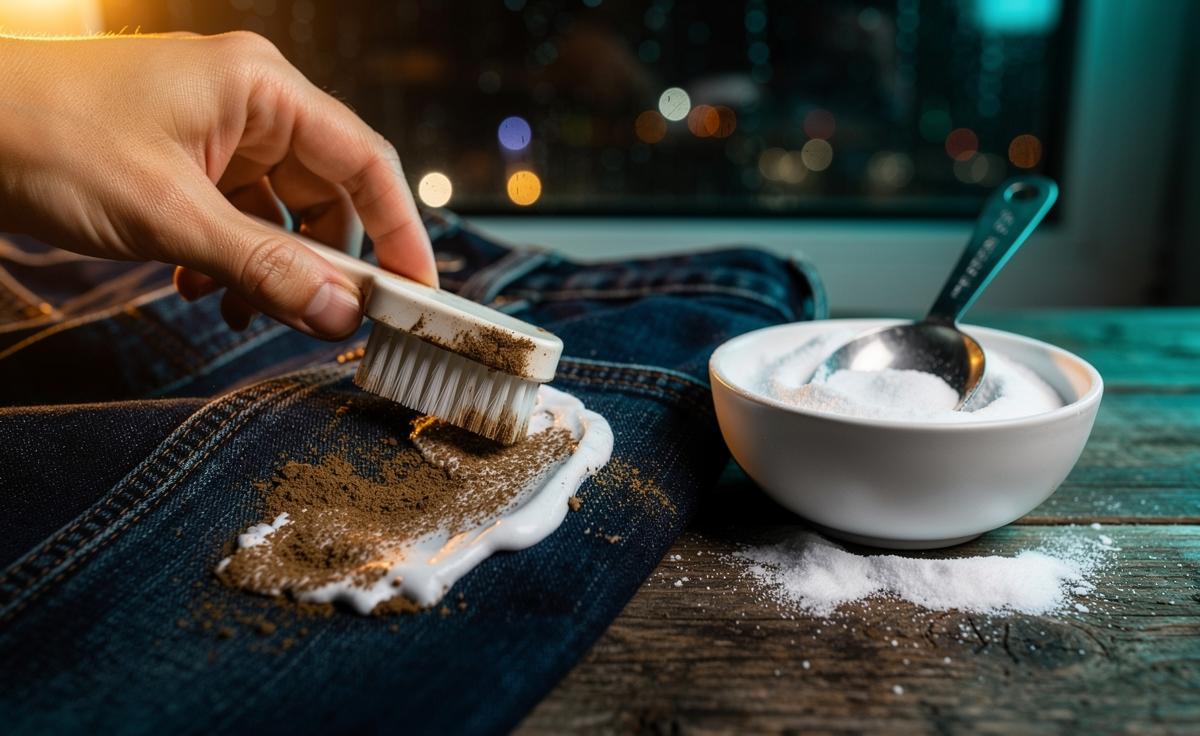
Work the paste in gently using a soft brush or an old toothbrush. Short, controlled strokes. No heavy grinding. You’re coating, not sanding. On garments, treat only the stained zone and a small margin to avoid rings; on pile carpets, brush with the nap, not against it. Leave overnight—at least 8 hours, up to 12 if the mud is clay-heavy. If you fear hard white marks on delicate fabric, tent the area loosely with cling film to slow drying without sealing in wetness.
Morning matters. Brush away the chalky residue. Vacuum carpets again. On clothing, shake outside, then rinse the area with cool water or wipe with a damp microfiber cloth. For a silky finish, follow with a very mild pH-balancing step: one teaspoon white vinegar in a cup of water, dabbed lightly, then blot dry. Launder or air-dry as usual. Don’t judge results until the fabric is fully dry. Many “ghost” marks vanish as fibres relax.
Fabrics, Carpets, and Trainers: What Changes
Not all materials behave the same. Cotton denim tolerates a firmer brush and a drier paste, while wool blends prefer a lighter touch and shorter waits. Carpets benefit from a thicker crust that can be vacuumed clean. Trainers are a story of parts: canvas soaks and releases easily; leather wants minimal moisture; rubber outsoles love a gritty paste and a nylon brush. Always patch test inside a hem or tongue. Assume dyes can migrate until proven otherwise. And remember the rule of nap: on velour or pile, follow the lay to avoid shading lines.
| Surface | Paste Ratio (Bicarb:Water) | Dwell Time | Brush Type | Notes |
|---|---|---|---|---|
| Cotton/Denim | 2:1 | 8–12 hrs | Soft toothbrush | Rinse, then normal wash |
| Synthetics (Sportswear) | 2:1 | 6–10 hrs | Soft brush | Cool water only |
| Wool/Wool Blends | 1.5:1 | 4–6 hrs | Very soft brush | Blot, no rubbing |
| Carpet/Upholstery | 3:1 | 10–12 hrs | Nylon detailing brush | Vacuum thoroughly |
| Canvas Trainers | 3:1 | 8–12 hrs | Toothbrush | Stuff with paper to dry |
| Leather Trainers | 1:1 (dab) | 2–4 hrs | Soft cloth | Condition after |
For suede and nubuck, skip wet paste entirely. Use dry baking soda as an absorbent powder, leave 2–3 hours, then brush with a suede brush. Repeat if needed. Rubber soles caked in pitch mud respond brilliantly to a stiffer 3:1 paste and a focus on grooves. Finish with a damp wipe to banish chalk traces. Less water equals fewer rings and faster drying.
Common Pitfalls, Smart Fixes, and Safety
Biggest mistake? Rubbing wet mud. It spreads the stain and forces clay deeper. Second is hot water, which can set tannins from soil and grass. If you’ve already done either, don’t panic: let the item dry completely, flake off, then restart with the baking soda method. Grainy paste leaving scuffs? Your mix is too dry or you’re using the wrong brush. Add a splash of water and switch to softer bristles. Halo rings after drying often mean uneven application—feather the paste edge next time and wipe outward with a damp cloth to blend.
Safety is simple but worth stating. Always patch test for colourfastness. Keep powders out of eyes and away from curious pets. Avoid mixing with strong acids during the treatment; you don’t need the fizz, and it dilutes the paste’s helpful alkalinity. On aluminium or unfinished wood, limit contact time and wipe promptly. Store bicarbonate of soda dry and sealed so clumps don’t form. Deodorising trainers between cleans? Sprinkle a teaspoon inside overnight and tap out in the morning. It won’t remove mud on its own, but it keeps odours at bay while you plan the next deep clean.
Mud happens, but it doesn’t have to linger. With baking soda, a soft brush, and a calm overnight window, you can lift dirt cleanly without harsh detergents or frantic scrubbing. The method respects fibres, saves money, and fits around busy evenings. Set it up before bed, wake to better news. Keep this routine in your back pocket for rainy weeks and football season alike. What’s the first muddied item you’re keen to rescue tonight, and which surface guide here will you put to work?
Did you like it?4.6/5 (23)