In a nutshell
- 🕔 Act fast: use cold water and quick blotting with a 1:1 white vinegar solution to lift mustard yellow in about five minutes—never rub or apply heat.
- 🧪 Know the culprit: mustard’s curcumin pigment plus oils and sugars bind to fibres; mild acetic acid in vinegar helps loosen this bond, especially when handled cold.
- 🧼 Follow the method: scrape solids, blot outside-in, perform several vinegar blot cycles, add a drop of dish soap to degrease, rinse thoroughly, and air dry before any heat.
- 🔁 If yellow remains: for whites use hydrogen peroxide, for colours try oxygen bleach, and for delicates dilute vinegar further; always test colourfastness first.
- 🏠 Surfaces matter: on carpet/upholstery use minimal moisture with vinegar mist and blotting; on hard surfaces wipe and rinse, but avoid vinegar on natural stone—use a pH-neutral cleaner instead.
You’re halfway through a picnic and a bright splash of mustard lands on your shirt. Panic is natural. It doesn’t need to be permanent. With white vinegar and quick blotting, that stubborn yellow can lift in as little as five minutes. The trick is simple: act fast, go cold, and let mild acidity do the heavy lifting. You only need a clean white cloth, cool water, and pantry vinegar. Add a touch of dish soap if there’s grease. Speed matters more than scrubbing. Done right, the stain fades before it has a chance to set, and your day stays on track.
Why Mustard Stains Stick So Stubbornly
Mustard’s brightness comes from turmeric-derived curcumin, a pigment that clings to fibers and loves to lodge in the tiny pores of cotton, linen, and even some synthetics. It’s not just color. Prepared mustard contains oils and sugars, which help the yellow migrate and bond. Heat is the villain. Warm rinse water or a hot dryer drives the pigment deeper, then locks it there. Keep it cold from the start. Vinegar’s mild acetic acid (typically 5%) helps by nudging the pigment loose and breaking the hold that alkaline residues and body oils have on the fibers.
Different textiles react differently. Cotton usually releases well if treated immediately. Polyester can be trickier, as oils in mustard cling to its slick surface, so adding a little dish soap after vinegar improves results. Delicates—silk, wool, viscose—need gentler handling and shorter contact times. Always test a discreet spot: dab diluted vinegar (1:1 with water) on an inside seam and blot. If color transfers to your cloth, stop and switch to a detergent-only approach. When the fabric is stable and cool water is used, vinegar-assisted blotting works swiftly.
Five-Minute Rescue: Vinegar Blotting Method
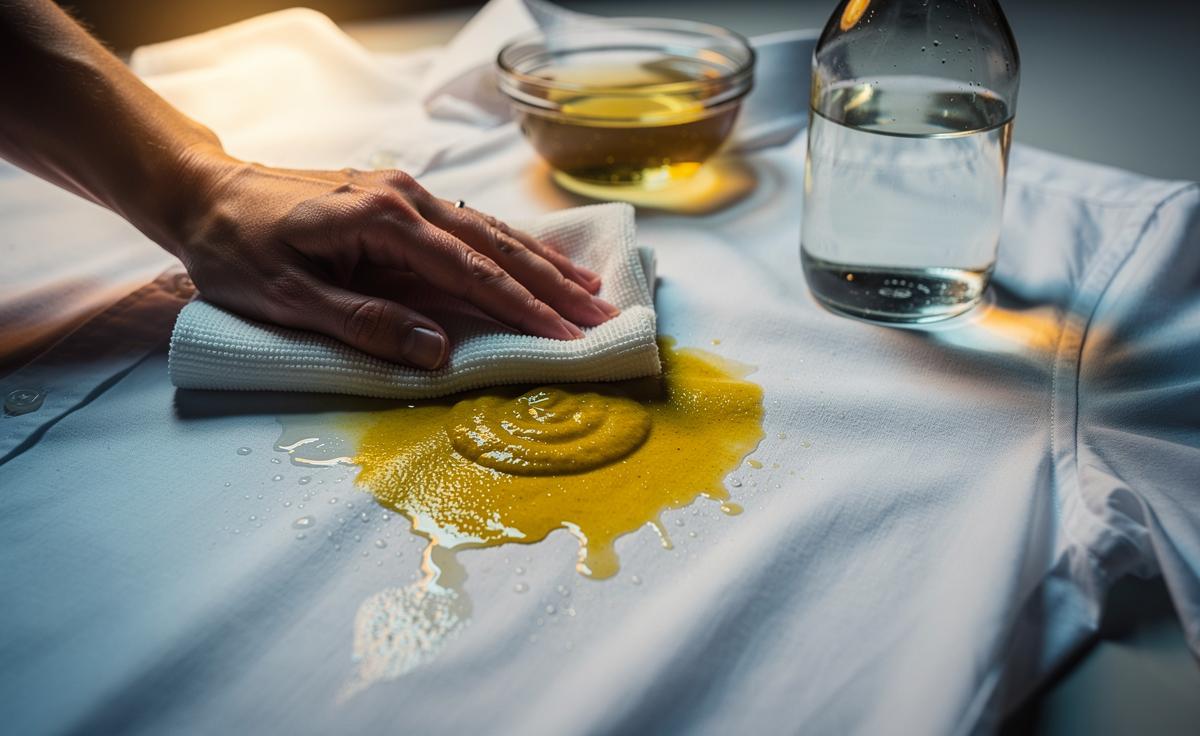
First, scrape any solids with a dull knife or card. Don’t rub. Rubbing pushes pigment deeper. Blot from the outer edge inward using a white cloth; this avoids spreading the halo. Flush the back of the stain with cold water to move color out of the fibers rather than through them. Mix a 1:1 solution of white vinegar and cold water. Soak a clean cloth in the solution, then press it onto the stain for 30 seconds. Lift, rotate to a clean area, and press again. Repeat several cycles. In many cases, yellow lift is visible within five minutes.
Follow with a drop of dishwashing liquid to break any oily residue. Gently pinch the fabric together to work in the soap without grinding. Rinse well with cold water. Air dry flat and check. Never apply heat until the stain has fully disappeared. If a faint tint remains, repeat the vinegar blot once more. This sequence—cold, acid blot, light surfactant, rinse—tackles pigment, sugar, and oil in the quickest order possible.
| Step | What to Use | Mix/Amount | Time/Notes |
|---|---|---|---|
| Scrape & Blot | Paper towel/white cloth | Dry | 30–60 sec; outside-in |
| Cold Flush | Cold water | Gentle stream | 20–30 sec from fabric back |
| Vinegar Blot | White vinegar + water | 1:1 solution | 3–5 cycles, total ~5 min |
| Degrease | Dish soap | 1–2 drops | Lightly work in; no scrubbing |
| Rinse & Dry | Cold water, air | Rinse thoroughly | Air dry; inspect before heat |
What to Do Next if Yellow Remains
If a pale shadow lingers after your five-minute rescue, escalate smartly. For white cottons or linens, dab with 3% hydrogen peroxide on a cotton bud, then blot with a damp cloth. Peroxide breaks down color bodies without harsh scrubbing. Rinse well. For colored garments, mix oxygen bleach (sodium percarbonate) per label in cool water and soak 15–30 minutes, then rinse. Check colorfastness before any bleaching step. Stains that are older or heat-set may respond to a pre-treat of equal parts glycerin and dish soap, gently massaged, then a repeat of the vinegar blot.
Delicates require care. Use a weaker vinegar solution (1:3 with water) and brief contact—press, lift, assess. Avoid peroxide or oxygen bleach on silk and wool. On polyester blends, repeat cycles rather than increasing strength; time works better than force. Always finish with a cool wash using an enzymatic detergent if the garment allows, which targets residual proteins and sugars. Do not machine-dry a stained item; residual heat locks in what’s left. Air dry, inspect under natural light, and only then return the garment to normal laundering and wear.
Fabric, Carpet, and Hard Surfaces: Adjusting the Method
Mustard on carpet or upholstery demands minimal moisture. Blot immediately with dry towels. Mist a 1:1 vinegar solution, then press with a clean cloth; repeat in short cycles. Finish with a tiny amount of dish soap on a damp cloth, then a plain-water blot to remove residues. A wet/dry vacuum speeds recovery on pile carpets. For microfibre upholstery, keep solutions very light and blot only; too much liquid leaves rings. Always test on an inconspicuous area first. On machine-washable throws or cushion covers, remove the cover and treat from the back before laundering cold.
Hard surfaces are split. Ceramic tile, laminate, stainless steel, and sealed vinyl usually let go with a vinegar wipe, then a rinse. Unsealed grout benefits from a vinegar blot followed by an oxygen-based cleaner if yellow persists. Do not use vinegar on natural stone like marble, limestone, or travertine; acids etch. Use a pH-neutral stone cleaner and a soft brush instead. Wooden tables with robust sealants typically tolerate a brief vinegar wipe, but raw or oiled wood should be spot-cleaned with mild soap and water. The principle remains: blot, apply the right chemistry briefly, then remove residue completely.
Five minutes. That’s often all it takes when you reach for white vinegar, stay cool, and blot with purpose. You counter pigment with mild acid, lift oils with a dab of surfactant, and refuse heat until the fabric is truly clean. The faster you start, the better the odds. Keep a small stain kit—vinegar, dish soap, white cloth—in your bag or kitchen drawer. Test discreetly, work from the outside in, and let air be your final inspector. What’s your go-to trick when a bold stain strikes at the worst possible moment, and which fabrics have challenged you most?
Did you like it?4.7/5 (23)