In a nutshell
- 🧪 Baking soda lifts set-in stains through mild alkalinity and capillary absorption, loosening oils and residues without bleaching or damaging fibres.
- 🧽 Follow a clear method: dry sprinkle for fresh grease, a 3:1 paste for older marks, light misting on carpets, and overnight dwell time before vacuuming or rinsing.
- 🧭 Tune by surface: carpets, fabrics, grout, and enamel each have specific ratios and dwell times; patch-test colourfastness, go gentle on silk/wool, and avoid acids on natural stone.
- 🧰 Troubleshoot smartly: add a drop of washing-up liquid for makeup, use oxygen bleach on white cotton, enzymes for pet accidents, and never heat-dry until the stain is gone.
- 💷 Safe and economical: this low-cost, low-odour approach relies on time and texture, preserving colours and finishes while quietly removing stubborn grime.
Old marks don’t have to be permanent. With a pot of baking soda — the same sodium bicarbonate you bake with — set-in grime can be coaxed out gently rather than blasted with bleach. The trick is absorption, not aggression. Fine crystals wick out oils, loosen oxidised residues, and buffer lingering acids without shredding fibres or stripping finishes. Done right, it works in hours, not days. Always test on an inconspicuous spot first. Then let time and texture do the quiet heavy lifting. Carpets, mugs, grout, cotton shirts: all candidates. The method scales easily, costs pennies, and won’t fumigate your house with harsh chemical odours.
How Baking Soda Works on Set-In Stains
Baking soda is mildly alkaline, with a pH that nudges residues into a less stubborn state. That gentle alkalinity helps break bonds in oily soils and faintly saponifies grease, while the powder’s microcrystalline structure excels at capillary absorption. Think of it as a soft sponge made of mineral dust: it draws moisture and oils up and away from fibres or pores. Crucially, it does this without bleaching dyes or etching finishes. It lifts rather than strips. That’s why it shines on older marks where scrubbing has already driven grime deeper.
The particles also add very mild mechanical action. When used as a paste, they disrupt the surface film clinging to fibres, so stains can release under a rinse or vacuum. There’s a deodorising bonus: sodium bicarbonate neutralises acidic odours — ideal for pet accidents or stale mug rings. Because it buffers pH, it can stabilise colour during rinsing, reducing the risk of bleed. It’s the chemistry of patience: leave it in contact with the stain long enough, and the powder takes up what the fabric or surface would rather keep.
Time matters. The longer the dwell time, the more thoroughly bicarb can absorb and loosen residues. Old coffee, make-up, body oils, even muddy tracks benefit from an undisturbed rest under powder or paste. That’s why overnight treatments often surprise; they allow absorption to finish its quiet work while you sleep.
Step-by-Step Method: From Dry Sprinkle to Overnight Lift
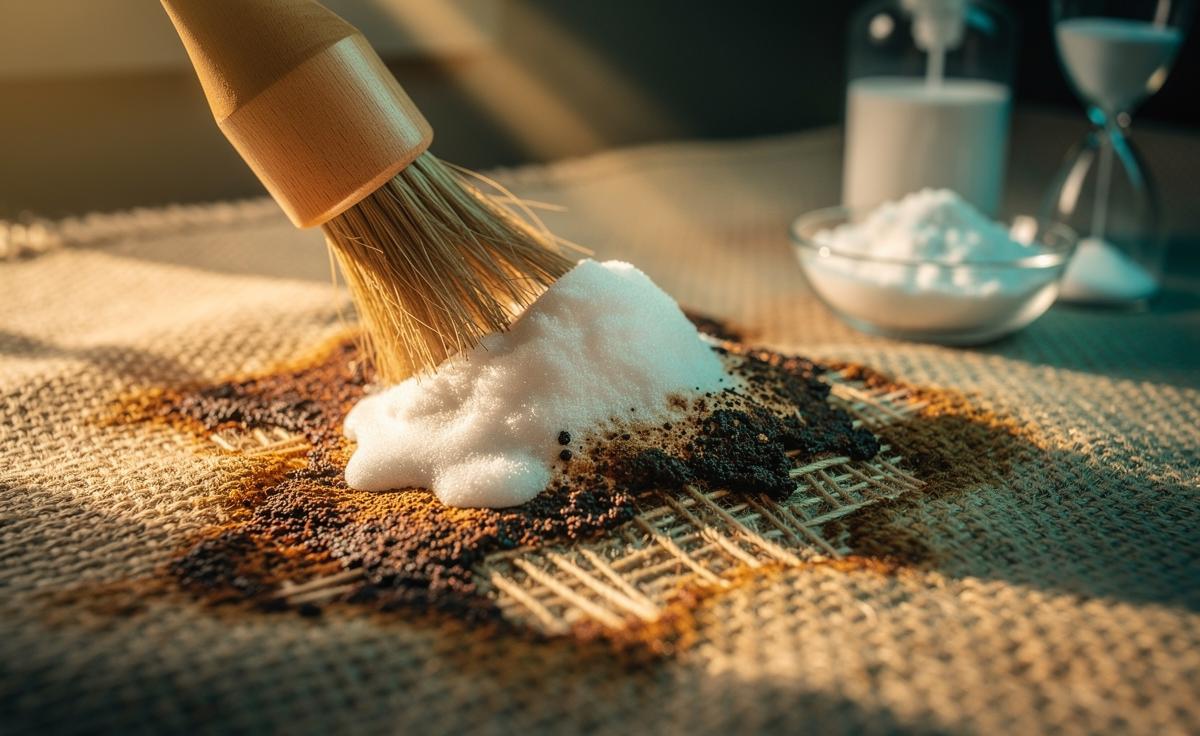
Start by removing loose soil. Scrape dried residues with a blunt knife, then vacuum or shake out fibres. Blot, don’t rub. Rubbing pushes soils deeper. For fresh greasy patches, go straight to a dry sprinkle: cover the area with baking soda, work it in with fingertips or a soft brush, and leave for 30–60 minutes before vacuuming. For older, set-in marks, mix a paste — three parts baking soda to one part water — and spread a thin layer over the stain.
On carpets and upholstery, mist the area lightly with warm water before applying the paste to help capillary action. Don’t soak; damp, not wet. Cover with a breathable cloth to slow drying, and leave for 2–8 hours. Overnight is often best. When time’s up, lift the crusted powder, then vacuum thoroughly. For washable fabrics, apply paste, let sit 30–120 minutes, brush off, then launder cool. Check before heat-drying; heat can set remaining residues.
Hard surfaces differ. On grout, ceramic, enamel, and glass, a paste dwell of 10–30 minutes followed by a microfiber wipe is usually enough. For mugs and worktops, a damp sprinkle works as a mild polish. Avoid vigorous abrasion on high-gloss coatings and soft plastics. If you want fizz, a touch of white vinegar can help on ceramic — but skip acids on natural stone and metal finishes that spot easily.
Surfaces, Ratios, and Dwell Times at a Glance
Use this quick guide to tune your approach. Adjust contact time based on temperature, stain age, and how porous the surface feels under the finger. Err on the side of longer dwell and lighter touch if you’re unsure.
| Surface | Mix Ratio | Technique | Typical Dwell | Removal |
|---|---|---|---|---|
| Carpet/Upholstery | 3:1 bicarb:water paste | Mist, apply, cover lightly | 2–8 hours | Lift crust, vacuum slowly |
| Washable Cotton/Linen | 2–3:1 paste | Spread thinly on mark | 30–120 minutes | Brush off, launder cool |
| Grout/Ceramic/Enamel | 2:1 paste or damp sprinkle | Apply, light circular wipe | 10–30 minutes | Rinse, microfiber buff |
| Grease Spills (fresh) | Dry powder | Heavy sprinkle, press gently | 30–60 minutes | Vacuum or shake out |
| Trainers/Canvas | 3:1 paste | Spot treat only | 20–60 minutes | Brush, wipe damp |
Note the exceptions. Silk and wool are sensitive to alkalinity; use brief contact and cool water. On natural stone (marble, limestone), bicarb is fine as a paste, but skip vinegar entirely. For aluminium, keep abrasion minimal to avoid dulling. Always patch-test colourfastness on a hidden seam, especially with dark dyes or delicate weaves. A soft brush — not a stiff one — keeps fibres safe while letting the powder reach into the weave.
Troubleshooting and When to Combine Methods
If a shadow remains, rehydrate lightly and repeat. Stains layered over time often release in stages. Add a drop of washing-up liquid to the paste for makeup and sunscreen; the surfactant loosens oily binders while the bicarb absorbs. For tea, coffee, or berry ghosts on white cotton, a second pass with oxygen bleach (sodium percarbonate) in the wash can finish the job. Do not tumble-dry until the mark is truly gone.
Some marks need different chemistry. Rust requires a reducing or acidic remover, not bicarb. Paint and permanent ink prefer solvents: try isopropyl alcohol on a cotton bud, then return to bicarb to lift lingering residue. Pet accidents respond best to enzymes first; when odour fades, use baking soda overnight to absorb leftovers. On grout stained by cooking oils, a warm pre-wash with a tiny amount of washing-up liquid helps, followed by a bicarb paste to pull oils from pores.
Still struggling? Increase dwell time, keep layers thin so air can circulate, and vacuum slowly to maximise lift from carpet pile. A final cool rinse or a damp microfiber pass removes any chalky film. The virtue of this approach is its safety: you let physics and gentle chemistry do the work, preserving colour, texture, and finish while the stain quietly gives up.
Used patiently, baking soda turns old stains from immovable to manageable. It’s low-cost, low-risk, and unexpectedly effective because it relies on absorption and time, not harsh bleaching. Keep a jar under the sink, a soft brush nearby, and treat marks as layered problems that respond to calm persistence. Your textiles and surfaces will look fresher, and you’ll skip the chemical fog. What long-standing mark will you tackle first with a measured sprinkle, a quiet wait, and a careful vacuum or rinse?
Did you like it?4.5/5 (28)