In a nutshell
- ⚡ Static electricity from rubber gloves lifts pet hair fast: use short strokes to build charge, long sweeps to collect; dry rooms boost results, damp air blunts them.
- 🧤 Glove choice matters: textured latex for friction, allergy-friendly nitrile for sensitivities, silicone nubs for stubborn rugs; ensure a snug fit and avoid anti-static coatings.
- 🧽 Step-by-step technique: prep surfaces, rub gloves to prime charge, sweep and gather into clumps, then lightly mist for a finishing pass; ground on metal to manage zaps and vacuum to remove residual dander.
- 🌦️ Troubleshooting: control humidity, use staged passes on clingy fabrics, switch gloves for wiry guard hairs, and test delicate textiles; don’t over-wet as water kills the charge.
- 🌱 Care and sustainability: rinse, soap, and air-dry gloves; store away from sun; enjoy low-cost, reusable cleaning with minimal waste versus lint rollers, supplemented by grooming and HEPA vacuuming.
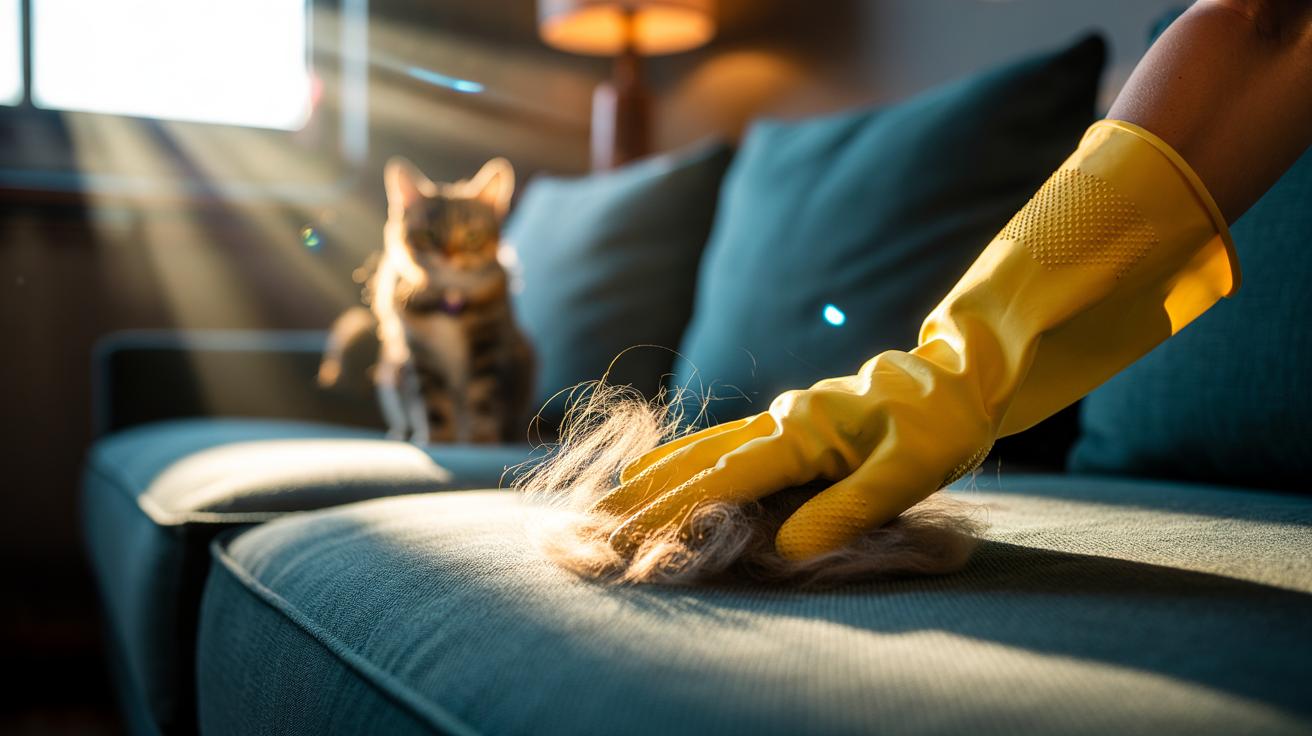
Pet hair sneaks into every crevice, clinging to sofas, stair runners, and car seats with maddening persistence. Yet the simplest solution often hides in the washing-up cupboard: rubber gloves. When you slip them on and sweep across fabric, static electricity pulls loose fur into clumps you can lift and bin in seconds. It costs pennies. No chemicals, no noisy gadgets, just friction and physics. It’s fast, frugal, and oddly satisfying. Whether you share your home with a moulting Labrador or a stealth-shedding tabby, this trick turns an endless chore into a quick routine. Here’s how static does the heavy lifting—and how to master the method.
How Static Electricity Lifts Pet Hair in Seconds
Rubber sits high on the triboelectric series. That matters. When you move a glove over fabric, electrons transfer, leaving glove and fibres with different charges. Opposites attract, so hair—light, filament-thin, and easily mobilised—jumps from upholstery into the field created at your hand. That micro-attraction is strong enough to lift strands other tools smear around. No sprays are required; the charge comes from motion. A quick, brisk sweep “wakes” the surface, and suddenly you see curling wisps gather into neat, grabbable snakes.
Conditions change results. Dry rooms amplify the effect; damp rooms blunt it, because moisture lets charge leak away. That’s why winter living rooms often feel like magic, while summer kitchens with open windows feel stubborn. Work with the physics: keep gloves dry for the first passes, then lightly mist the last pass to tame flyaway fuzz. Short strokes build charge; longer pulls collect. If you feel a nip, just touch a metal tap to discharge. The aim is cling, not crackle.
Choosing the Right Rubber Gloves
You don’t need anything fancy. Thick washing-up gloves with textured palms are ideal: grippy, durable, and brilliantly charge-friendly. Latex provides excellent friction, but nitrile is a smart choice for anyone with sensitivities. Silicone grooming gloves work too, especially on rugs, though they sometimes over-grab delicate weaves. Fit matters as much as material. A snug glove translates micro-movements directly into the pile, increasing charge and control. If the cuff is loose, fold it once to stop slipping. Avoid anti-static coatings; they cancel out the very effect you want. Dry beats damp at the start, every time.
| Glove Type | Key Traits | Best Uses |
|---|---|---|
| Latex (textured) | High friction, flexible, strong static build | Sofas, cushions, curtains, stair runners |
| Nitrile (powder-free) | Allergy-friendly, good grip, durable | Car seats, mats, pet beds, wool throws |
| Silicone (nubbed) | Aggressive pickup, easy rinse | Rugs, boot liners, heavy-shed zones |
If you’re equipping a cleaning caddy, keep one glove pair for soft furnishings and another for floors or the car boot. Colour-code to avoid cross-contamination. And remember: texture helps gather clumps, but the static is doing the invisible work. Replace gloves when the palms go shiny—worn surfaces generate less charge and smear fur instead of lifting it cleanly.
Step-By-Step Technique for Sofas, Carpets, and Car Interiors
Prep: Shake cushions outdoors, then lay them flat. On carpets, pick up loose debris first. In cars, slide seats back and remove mats. You’re creating a clear stage for fur to move, gather, and lift. Less grit means more charge—and better results.
Prime the charge: Put on dry gloves and rub palms together briskly. Start with short, quick strokes in overlapping bands, working with the fabric grain. On sofas, sweep from the backrest to the seat, then to the front edge. Watch for sudden “fur rivers” forming; that’s your cue the field is working.
Sweep and gather: Switch to longer pulls to herd hair into ropes. Curl your fingers slightly so the glove’s fingertips skim the surface. On carpets and car mats, use curved, windshield-wiper motions. Press lightly on delicate weaves; add pressure on hard-wearing textiles. Pinch clumps between gloved fingers and drop them into a bin as you go.
Finish smart: If flyaway strands appear, mist the glove lightly and do one slow finishing pass to settle stragglers. For perfectionists, a quick vacuum over the now-loose pile removes residual dander. Static lifts the hair; airflow removes the dust. Finally, touch a metal tap to discharge any lingering zap before you move on.
Troubleshooting Stubborn Fur and Static Pitfalls
Some fibres fight back. Velour and certain microfibres cling to everything, including charge. Tackle them in stages: two dry, quick-charge passes to mobilise, a brief glove rinse and shake, then a slow, slightly damp pass to consolidate. If humidity is high, run a dehumidifier or switch on heating for ten minutes; dry air restores the field. Don’t over-wet—water is a charge killer.
Got wiry guard hairs from double-coated breeds? Switch to a silicone-nub glove for the initial lift, then revert to latex or nitrile to refine. For antique textiles, test an inconspicuous patch first. If you see any pilling or snagging, ease off and use a softer touch. Static should lift, not abrade. Leather and vinyl are different again: use only feather-light passes to avoid scuffing, then wipe with a slightly damp microfibre to finish.
If you have latex allergies, choose nitrile. For sensory-sensitive pets, keep them in another room; the rapid motion can excite curious noses and paws. And if you experience persistent shocks, ground yourself periodically by tapping a radiator valve or a metal door handle. Controlled charge is the sweet spot.
Care, Hygiene, and Sustainability Considerations
Good gloves last. Rinse after each session under warm water to release trapped dander, then wash with a drop of washing-up liquid. Hang to dry with palms open so they don’t stick. Weekly, give them a deeper clean in a mild bleach solution (check the material) or hot soapy soak to keep allergens down. Clean gloves charge better and smell fresher. Store flat, away from direct sunlight; UV weakens rubber over time.
The economics are compelling. A £2–£4 pair of household gloves used twice a week can last months, delivering dozens of hair-lifting sessions. Compare that with disposable lint rollers or single-use wipes—pricey, and landfill-heavy. Static cleaning is quiet, power-free, and kind on fabrics, especially when you’re avoiding harsh chemicals. For households with heavy shedders, pair glove sweeps with regular grooming and HEPA vacuuming to cut overall dander load. Minimal waste, maximum pickup—and a cleaner sofa at the end of it.
In a world crowded with gadgets and gimmicks, a simple pair of rubber gloves remains a standout tool for tackling pet hair. The trick lies in harnessing static, reading the room’s humidity, and matching glove texture to fabric. Once you’ve nailed the rhythm—short passes to charge, long sweeps to collect—the results are swift, visible, and oddly therapeutic. It’s cleaner air, calmer surfaces, and fewer tumbleweeds rolling along the skirting boards. Will you try the static-glove method this week, and if so, which furry battlefield will you conquer first: sofa, stairs, or the car boot?
Did you like it?4.4/5 (20)