In a nutshell
- 🧤 A quick, damp rubber glove swipe instantly lifts pet hair from sofas, clothes, and car seats, clumping fur for easy disposal—fast, cheap, effective.
- ⚡ It works via rubber micro-texture, light moisture, and electrostatic charge, pulling embedded fur and dander to lower the home’s allergen load.
- 🧭 Step-by-step: lightly dampen, test a spot, sweep in one direction, trace seams with fingertips, peel clumps, rinse glove, then finish with microfibre or vacuum—minimal effort, big results.
- 🔧 Tools at a glance: glove for upholstery and tight spaces, lint roller for clothing touch-ups, vacuum with pet tool for carpets; sequence them for speed and thoroughness.
- 🌱 Care and sustainability: avoid over-wetting, use gentle pressure, rinse and air-dry for longevity; the reusable method cuts plastic waste and ongoing costs.
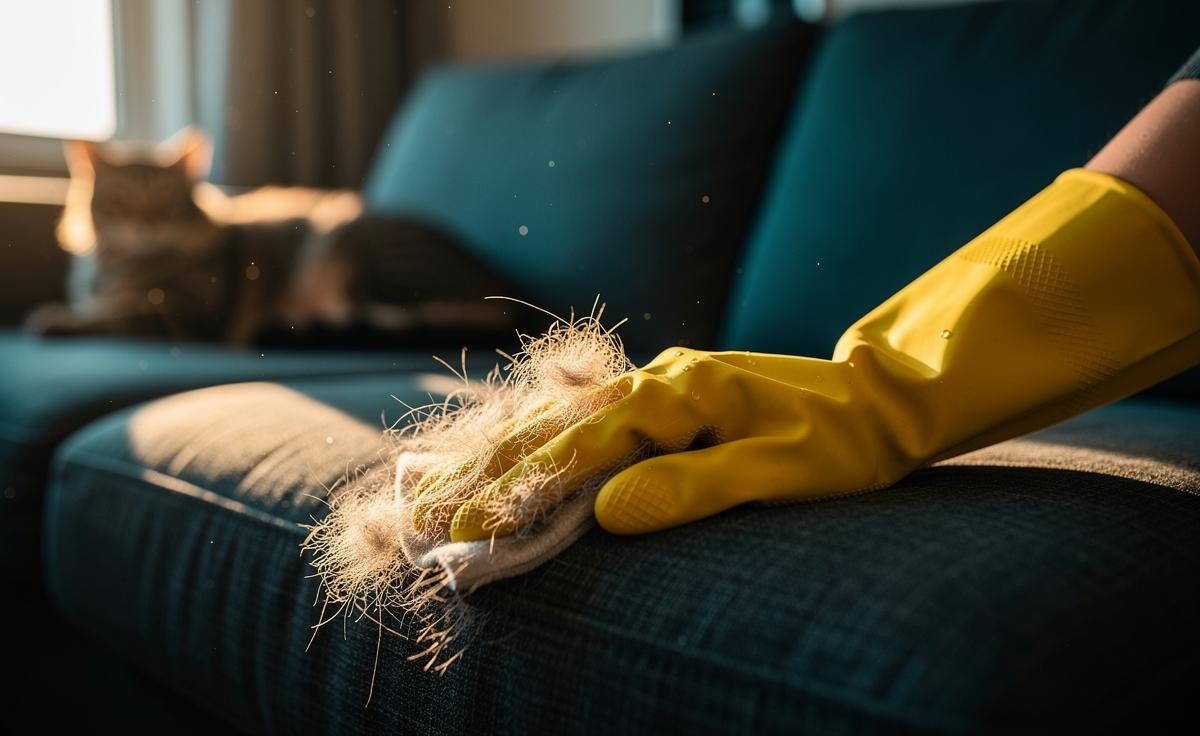
Pet owners know the drill: you sit down in work clothes and, seconds later, you’re wearing a fur coat you didn’t buy. There’s a quick, surprisingly satisfying fix hiding in your kitchen. Slip on a rubber glove, add a hint of moisture, swipe once, and watch the fluff clump like iron filings to a magnet. The science is simple; the results feel like magic. Remove pet hair with a rubber glove and you’ll reclaim sofas, car seats, and jumpers in minutes without tossing another disposable sheet in the bin. It’s fast, cheap, and strikingly effective on stubborn fibres that defeat rollers and brushes.
Why Rubber Gloves Lift Fur Instantly
Rubber is naturally grippy. Its micro-textured surface snags loose fibres, while a light mist of water adds just enough tack for hair to clump instead of flying. The real party trick is electrostatic charge. As the glove glides over fabric, friction builds a static pull that attracts hair from the weave. The result is a tidy line of fluff you can pinch off and bin in seconds. A single damp swipe can outpace a lint roller, especially on broad cushions and armrests where adhesive sheets quickly saturate and lose bite.
There’s also precision. Your fingers mold around seams, buttons, and piping where fur wedges itself. That dexterity beats flat tools on curves and corners—think car interiors and the tight gap between seat and console. Because gloves are reusable, you won’t keep paying for refills, and you’ll cut plastic waste at the same time. For allergy sufferers, removing hair also pulls loose dander, subtly reducing the allergen load at home. You don’t need to scrub hard; steady, overlapping passes do the job, protecting delicate upholstery while lifting embedded fluff from the pile.
Step-by-Step: The Quick Wipe Method
First, choose a simple washing-up glove—classic yellow rubber works brilliantly. Lightly dampen it; you want a faint sheen, not drips. Test on an inconspicuous patch, especially on vintage fabrics or delicate knits. Start with broad, smooth strokes in one direction to gather hair into visible lines or little tumbleweeds. Then use your fingertips to trace seams, edges, and stitching. Short, confident motions help build static and maintain control. If hair seems stubborn, add a breath more moisture and slow your sweep to increase tack without soaking the fabric.
As clumps form, peel them away and rinse the glove under the tap. Shake off excess water and continue. On carpets or pet beds, work in sections—left to right, top to bottom—so you don’t scatter captured fur. For loose throws, flatten the fabric and anchor a corner with your knee to keep it taut. Switch hands to avoid fatigue. Finish with a dry microfibre cloth to catch strays, or a quick vacuum pass if you’ve lifted deeply embedded fluff. Minimal effort, maximum effect, and no disposable waste.
When to Use Each Tool: Gloves vs Rollers vs Vacuums
Different surfaces demand different tactics. A damp rubber glove shines on sofas, car upholstery, pet beds, and stairs—anywhere texture traps fluff or tight spaces defeat bulky tools. Lint rollers are tidy for clothing on the go, especially wool coats, but they burn through adhesive on heavy-shed days. Vacuums dominate on carpets and rugs, yet they can leave wispy hair on low-pile furniture where static outperforms suction. Mix tools strategically to cut time and boost results, not to mention saving money and plastic waste.
| Tool | Best For | Pros | Cons | Cost per Use |
|---|---|---|---|---|
| Rubber glove (damp) | Upholstery, car seats, stairs | Reusable, precise, fast on edges | Not ideal for large carpets | Near-zero |
| Lint roller | Clothing, quick touch-ups | Portable, simple | Wasteful, weak on embedded hair | Ongoing |
| Vacuum with pet tool | Carpets, rugs, large areas | Deep clean, allergen reduction | Bulky, misses wisps on upholstery | Electricity/filters |
For British homes with a mix of hardwood and textiles—think wool throws, velvet cushions, car boot liners—the glove wins for speed and reach. Use it two or three times a week for maintenance and reserve the vacuum for a weekly deep clean. Keep a roller by the front door for last-second de-furring before you sprint for the train. The trick is sequencing: glove to lift, vacuum to finish, roller for wardrobe polish.
Troubleshooting, Care, and Sustainability Tips
If fur smears or sticks, your glove is too wet. Wring it and wipe again. If you get flyaway fluff, add a whisper of moisture or shorten your strokes to rebuild static. On delicate fabrics like silk or mohair, test lightly or use a dry microfibre cloth instead. For knitted jumpers, support the fabric with your other hand to avoid stretching. Pets wary of the glove? Offer a sniff, keep movements calm, and work while they’re snoozing. Gentle pressure does more than scrubbing ever will, because it preserves the fabric and relies on static, not brute force.
Rinse the glove after each session to remove oils and dander that reduce grip. Hang it to dry away from heat so the rubber stays supple. A single pair should last months. That durability is the green win: fewer adhesive sheets, less plastic waste, less faff. Team the glove with a HEPA-filter vacuum to minimise allergens, and wash pet bedding at 60°C when possible. For hard floors, use the glove to tidy skirting board edges where hair eddies collect, then sweep or vacuum. Simple habits, cleaner rooms, happier sinuses.
In a world of gadgets and gimmicks, the humble rubber glove proves its worth with quiet, reliable efficiency. It’s tactile, oddly therapeutic, and brilliant at hauling fur from tight corners and textured weaves. Combine it with smart sequencing—a quick glove sweep, a focused vacuum pass, a last-minute roller touch—and you’ll see less fluff and breathe easier. Ready to try the 60-second wipe and watch the clumps roll up like magic—what surface in your home will you reclaim first?
Did you like it?4.5/5 (21)