In a nutshell
- 🧪 Vinegar’s chemistry: Acetic acid dissolves iron oxides into soluble compounds, lifting rust stains while sparing most surfaces with short contact times.
- ⏱️ 10-minute method: Pre-clean, saturate with white vinegar, wait 5–10 minutes, gently agitate (optional salt), rinse, then neutralise with bicarbonate and dry.
- ⚠️ Surface safety: Safe briefly on stainless, enamel, chrome, and many fabrics (test first); avoid natural stone and use caution on grout/paint; never mix with bleach.
- 🧰 Tools and stubborn rust: Use short, monitored soaks for carbon steel, then scrub, rinse, neutralise, dry, and oil to prevent flash rust.
- 🛡️ Prevention wins: Control moisture, fix drips, dry surfaces, use microfibre buffs, apply light oil or protectants, and reduce limescale to stop stains returning.
Vinegar is the no-nonsense household acid that quietly outperforms many pricey cleaners. Point it at rust stains on sinks, taps, tiles, or tools and, in the right conditions, it can lift the orange-brown blotches in as little as 10 minutes. That speed isn’t hype; it’s chemistry. The mild acid in white vinegar targets the brittle iron oxides that stick to surfaces yet leaves most base materials unharmed when used briefly and rinsed well. This guide explains why acetic acid works, the fastest method to deploy it, and when to hold back to avoid collateral etching. Expect practical steps, cautionary notes, and ways to prevent a repeat performance.
Why Vinegar Works on Rust
Rust is not the metal itself; it’s a flaky, porous layer of iron oxides formed when iron reacts with oxygen and moisture. Acetic acid, the active component in vinegar (typically 5–8%), dissolves those oxides by converting them into soluble iron salts and complexes that can be wiped away. The acid tackles the crusty layer first, softening its grip. That’s why a stain can appear to “vanish” quickly, even as the underlying steel or enamel remains intact once rinsed and dried.
Speed is safety here. Short contact times limit any risk of dulling sensitive finishes. Unlike aggressive mineral acids, household vinegar is mild enough for brief applications on stainless steel, enamel, ceramic, and many plastics. It’s also water-based, so you can dilute it for delicate jobs. The catch? Some materials don’t play nicely with acids at all. Natural stone—marble, limestone, travertine—contains calcium carbonate, which fizzles under acid. Do not use vinegar on natural stone or on fresh concrete. A quick spot test in an inconspicuous area remains wise for painted or anodised coatings.
There’s another quirk: rust binds grime. Soap scum and limescale shield stains, slowing the reaction. A fast pre-clean with a neutral detergent clears the way for the acid to work directly on the oxide. Then, once the stain loosens, wiping removes both the dissolved residue and the debris that trapped it.
Fast Method: 10-Minute Rust Removal
For kitchen sinks, bathroom tiles, tools, or chrome fittings, this is the reliable routine. Keep it simple. Keep it timed. Never mix vinegar with bleach—this can release dangerous chlorine gas.
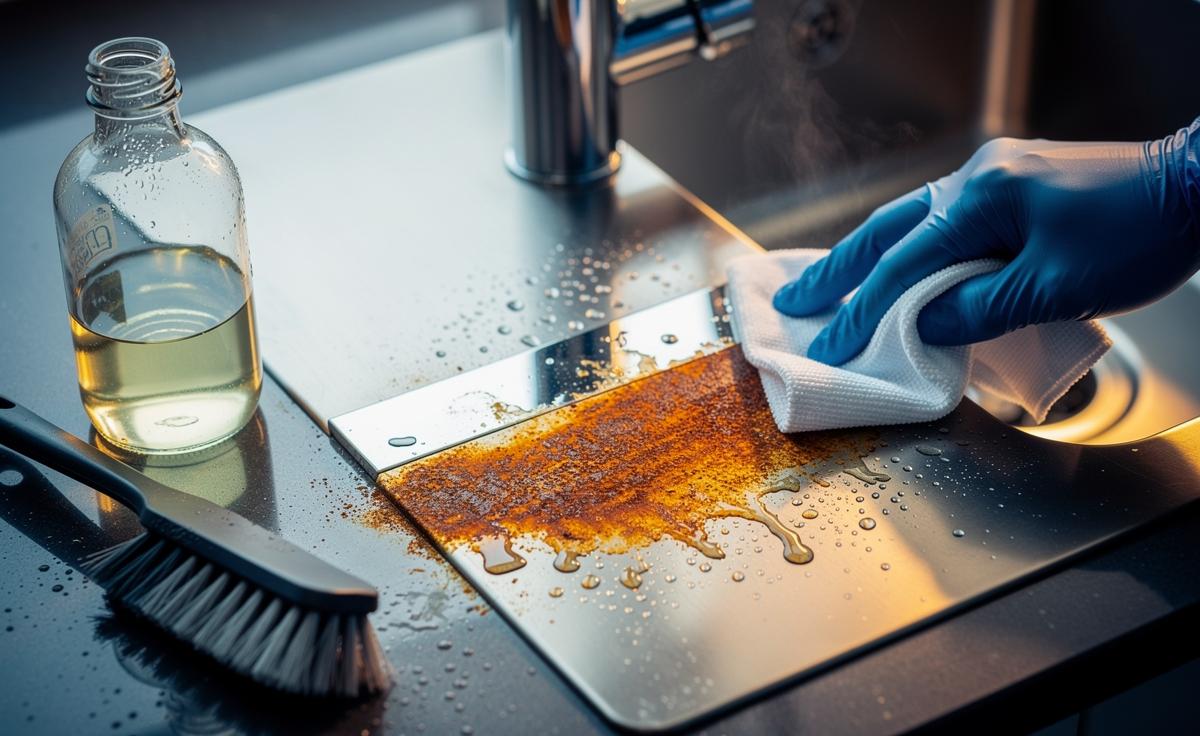
1) Pre-clean: Remove soap scum and dirt with washing-up liquid and warm water; rinse and dab dry. 2) Saturate: Soak a cloth or paper towel in white vinegar and press it onto the stain. For vertical surfaces, use a spray, then cover with cling film to prevent evaporation. 3) Wait: Give it 5–10 minutes. Check at five. If the stain softens or lightens, you’re on track. 4) Agitate: Rub gently with a soft brush or microfibre. For stubborn specks, sprinkle a pinch of table salt on the wet area to add mild abrasion and improve ion exchange. 5) Rinse: Flush thoroughly with clean water. 6) Neutralise and dry: Wipe with a damp cloth containing a teaspoon of bicarbonate of soda in a cup of water, then dry to prevent flash rust.
| Item | Amount | Purpose | Notes |
|---|---|---|---|
| White vinegar (5–8%) | Enough to saturate | Dissolves rust oxides | Distilled is ideal for clarity |
| Cloth/paper towel | 1–2 pieces | Holds vinegar in place | Use cling film to stop drying |
| Soft brush | As needed | Light agitation | Avoid steel wool on chrome |
| Salt (optional) | Pinch | Gentle abrasion | Rinse thoroughly after |
On fabrics, dab vinegar on the spot and leave for up to 10 minutes, then rinse cold and launder. Check colourfastness first. On carbon steel tools, wipe immediately after, dry, and add a thin film of oil to prevent new rust.
Surface Safety and Stain Scenarios
Different substrates react differently to acids. The quick-win rule: harder, glazed, or stainless surfaces usually behave; porous, calcareous, or freshly cured mineral surfaces don’t. When in doubt, test a tiny area. The table below summarises common cases you’ll meet in a UK kitchen or bathroom, plus a note for workshops.
| Surface | Vinegar Safe? | Time Guide | Notes |
|---|---|---|---|
| Stainless steel sink/tap | Yes (brief) | 5–10 min | Rinse and dry; wipe with grain |
| Enamel/ceramic | Yes | 5–15 min | Non-abrasive agitation only |
| Chrome plating | Yes (brief) | 5–10 min | Avoid scratching; no steel wool |
| Carbon steel tools | Yes (very brief) | 3–7 min | Rinse, dry, oil immediately |
| Natural stone (marble, limestone) | No | — | Acid etches and dulls stone |
| Grout/concrete | Use caution | 2–5 min | May etch; neutralise and rinse |
| Painted surfaces | Test first | 3–5 min | Check for softening or colour lift |
| Fabrics | Usually | Up to 10 min | Check colourfastness before |
If a stain persists after two cycles, stop and reassess. Heavy, blackened rust likely needs a longer soak off the item, not on the surface. For knife blades or hand tools, immerse the rusty portion in vinegar for 15–30 minutes, scrub with a plastic brush, then rinse, neutralise, dry, and oil. Prolonged soaking can dull polished finishes, so keep eyes on the clock. For delicate fixtures with sentimental value, consider a specialist rust remover formulated for the substrate.
Beyond the Sink: Preventing Rust from Returning
Prevention starts with moisture control. Rust needs water and oxygen, so deny both. Wipe down wet areas after washing up. Fix weeping traps, slow drips, and splash zones that never quite dry. In the workshop, keep silica gel or a small dehumidifier near tool storage. Apply a whisper-thin coat of light oil to carbon steel and cast iron; for kitchenware, use food-safe mineral oil or re-season cast iron after cleaning. On bathroom fittings, a quick buff with a microfibre leaves less water behind and keeps minerals from spotting.
Material choices help. Stainless steel resists rust, but contaminants from carbon steel wool can seed corrosion—so avoid cross-contamination. Use non-scratching pads. For bicycles and garden tools, a polymer protectant or wax blocks moisture. After any acid treatment, always rinse, neutralise with a bicarbonate solution, and dry thoroughly. Consider barrier mats where metal meets damp stone or concrete. If your water is hard, limescale can trap iron particles; periodic descaling with appropriate, surface-safe products reduces future staining and keeps the shine longer.
Vinegar earns its place under the sink by punching above its weight: cheap, accessible, and effective on rust stains in around 10 minutes. Used with care—short contact time, thorough rinsing, quick drying—it dissolves the mess and spares the surface. The chemistry is simple, the results immediate, and the routine easy to repeat. Skip natural stone, respect coatings, and never mix with bleach. With a few prevention habits, you may not need it again soon. What surface will you rescue first, and which small change will you make today to keep rust from returning?
Did you like it?4.5/5 (30)