In a nutshell
- 🔬 Cola’s phosphoric acid (pH ≈ 2.5) and CO₂ form iron phosphate, loosening iron oxide so light rust can disappear in seconds.
- ⚡ Works fast on thin, superficial rust (chrome spots, flash rust); struggles with heavy, pitted corrosion—use aluminium foil or a nylon pad for gentle abrasion.
- 🛠️ Method: soak or press with fresh cola, wait 30–90 seconds, scrub, then rinse thoroughly, neutralise with bicarbonate of soda, dry aggressively, and finish with a light protective oil.
- ⚖️ Compared remedies: white vinegar (faster, can etch), citric acid baths (cleaner rinse), phosphoric gels (convert for painting), and electrolysis (best for intricate parts).
- 🛡️ Safety and caveats: sugar leaves sticky residue, avoid porous surfaces, never mix with bleach, and use cola as a quick diagnostic before escalating to stronger methods.
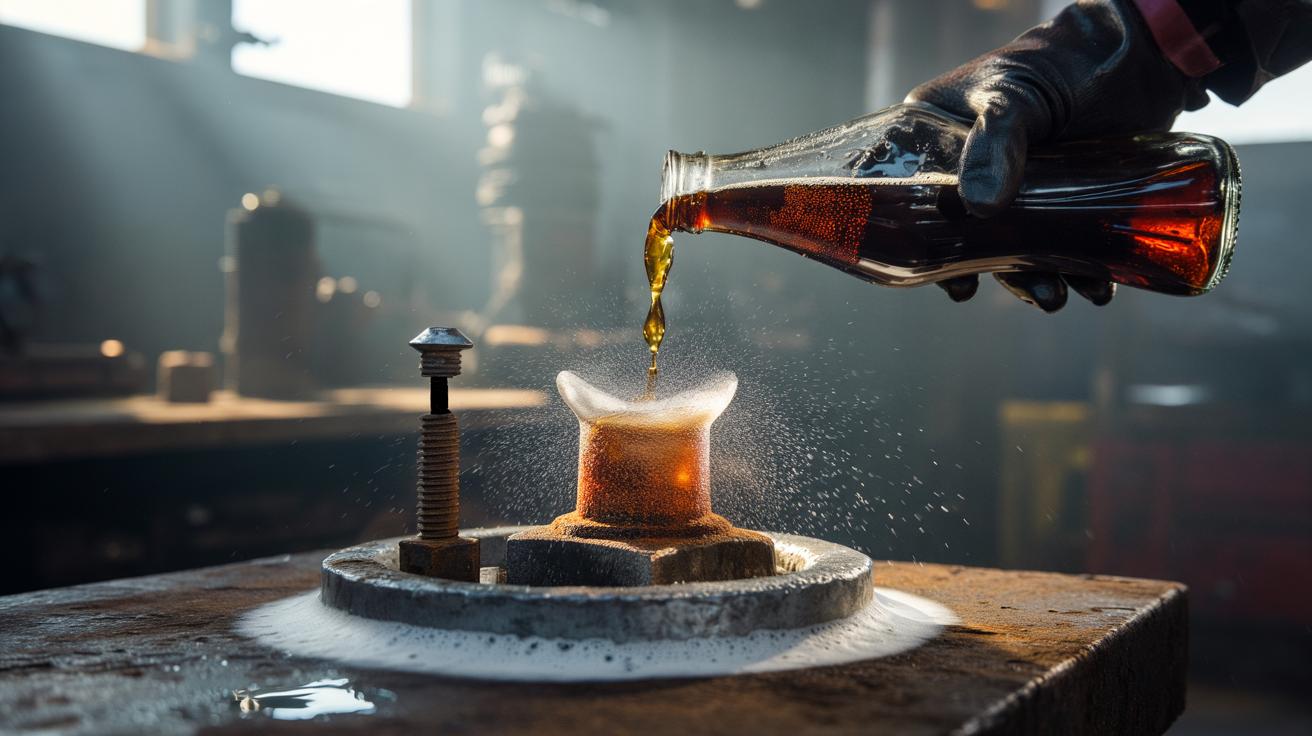
It sounds like urban myth, yet a bottle of cola can lift stubborn rust from metal with surprising speed. The trick isn’t magic, it’s chemistry. This fizzy, acidic drink contains phosphoric acid and dissolved carbon dioxide, which together loosen the grip of iron oxide on steel. For small jobs—think chrome spots or a light film on tools—the effect can begin within seconds. For heavier crusts, patience or something stronger is needed. Either way, it’s cheap, accessible, and oddly satisfying to watch. Here’s how the method works, when it excels, and how to use it without creating sticky messes or new corrosion.
The Chemistry Behind Cola’s Rust-Busting Power
Cola’s secret is its controlled acidity and complexing ability. A typical cola measures around pH ≈ 2.5, thanks to phosphoric acid (H₃PO₄) and carbonic acid from dissolved CO₂. Phosphoric acid reacts with iron oxide (Fe₂O₃) and forms iron phosphate, a more stable compound that can dislodge from the surface or convert into a tight, grey film that wipes away. The bubbles help too: agitation from escaping CO₂ undermines fragile corrosion layers and carries debris off the metal. Sugars add nothing to the reaction, though they can create tacky residue if you don’t rinse.
Cola is milder than dedicated removers, but that’s precisely why it can be handy on plated or delicate finishes. On very light oxidation, tiny orange blooms can lose their grip in seconds. Heavier, scaly rust demands longer contact or mechanical help. There’s also formulation nuance: some colas include trace citric acid, aiding chelation of iron ions; caramel colour may stain porous surfaces if left too long. Used smartly, the drink offers a forgiving balance—acidic enough to work, gentle enough to reduce the risk of pitting.
What Works in Seconds—and What Doesn’t
Cola shines on thin, superficial corrosion. That means chrome spots on bathroom fixtures, light flash rust on kitchen knives, bicycle spokes dulled by damp air, or the orange haze on workshop chisels after a rainy spell. Apply with a soaked cloth, wait 30–90 seconds, then rub with aluminium foil or a nylon pad. The combination of mild acid and micro-abrasion is potent yet controlled. Expect swift cosmetic wins where the rust is only a film. It’s ideal for touch-ups before a photo shoot or sale, and it’s kinder to plating than aggressive acids.
Thick, layered rust is different. On pitted tools, seized bolts, or garden hardware left outdoors for a season, cola becomes a pre-treatment, not a cure. You’ll need extended soaking, repeated scrubbing, and still may fall short of bare-metal clean. In such cases, jump to a stronger option—citric-acid baths, phosphoric-acid gel, oxalic acid for composites, or even electrolysis. Also note: painted surfaces and porous stones can stain; electronics and fine mechanisms hate stickiness. If in doubt, test on an inconspicuous patch. The promise of “seconds” is real for light bloom, not for brown, crusted, structural rust.
Step-By-Step Method for Safe, Effective Use
First, prep the area. Lay down paper towels, gloves on, good ventilation. Degrease the item if it’s oily; the acid works best on clean metal. Decant fresh cola into a shallow tray to preserve fizz. For small parts, submerge; for fixed fittings, saturate a pad and press it to the rust. Wait 30 seconds to a few minutes depending on severity. Then agitate: rub with aluminium foil (gentle on chrome), a nylon brush, or a fine synthetic scouring pad. You’ll see brown run-off—that’s loosened oxide.
Rinse thoroughly with warm water to remove acids and sugars. Always neutralise and dry after treatment: a quick rinse with a teaspoon of bicarbonate of soda in a cup of water helps quench residual acidity. Dry aggressively—heat gun on low, hairdryer, or sunlight. Finally, prevent recurrence. Wipe with a thin coat of light oil or a corrosion inhibitor. Do not mix cola with bleach or chlorine-based cleaners; harmful gases can form. Avoid porous fabric, unsealed stone, and lacquered wood where staining is a risk. Used carefully, the method is tidy, reversible, and quick.
Comparing Cola With Other Rust Remedies
Cola is the opportunist’s rust remedy—cheap, ubiquitous, gentle. But it sits on a spectrum. White vinegar (acetic acid) cuts rust faster but can etch steel and leave a darkened surface. Citric acid powders dissolve corrosion efficiently in warm baths and rinse cleaner than sugary cola. Phosphoric-acid gels convert rust and leave a primable iron phosphate layer, ideal before painting. Oxalic acid is effective for stains on composites and timber but requires stricter safety. And electrolysis preserves metal detail on heritage parts with minimal abrasion, though it needs kit and time. Choose the least aggressive option that reliably meets your deadline.
| Method | Main Agent | Typical Time | Best For | Watch Outs |
|---|---|---|---|---|
| Cola | Phosphoric acid, carbonic acid | Seconds to minutes | Light rust, chrome touch-ups | Sticky residue; rinse and dry |
| White Vinegar | Acetic acid | 1–12 hours | Small steel parts | Can etch; strong odour |
| Citric Acid Bath | Citric acid | 1–6 hours (warm) | Tools, hardware | Needs thorough rinsing |
| Phosphoric Gel | Phosphoric acid | 30 mins–overnight | Pre-paint conversion | Read curing instructions |
| Electrolysis | Electrical reduction | Hours to days | Intricate/antique parts | Setup and safety care |
In practice, cola doubles as a diagnostic: if fizz and a minute’s rub shift the bloom, stick with it; if not, escalate without delay. Its big advantage is accessibility. If you’re roadside or between jobs, it buys you time and sometimes a photo-ready finish.
Used thoughtfully, cola is a clever chemistry hack—an acidic nudge that frees light rust, fast, without specialised gear. The key is discipline: controlled contact, gentle agitation, diligent rinsing, and a protective oil film to prevent flash rust. Manage expectations and you’ll avoid disappointment. It won’t resurrect a pitted spanner, but it will rescue a bike bell, brighten bathroom chrome, or revive a screwdriver before a house viewing. With a bottle in the cupboard and these steps in mind, what metal surface in your home or workshop are you tempted to put to the fizz test next?
Did you like it?4.5/5 (30)