In a nutshell
- 🧼 Soap scum forms when hard-water minerals bind with fatty residues, creating insoluble salts that cling to glass, tiles, and taps—thickening over time and locking in limescale.
- 🧪 Baking soda works via gentle abrasion plus mild alkalinity, cutting through build-up without scratching glass or ceramic and avoiding harsh chemicals or fumes.
- 🧽 Method: dampen surface, apply a baking soda paste, rub in slow circles, let it dwell, then rinse and dry; optionally mist with white vinegar to fizz away minerals—but never premix and store.
- 🛡️ Safety: test delicate plastics, coated glass, and brushed steel; use soft cloths, rub with the grain, avoid green scourers; on natural stone, use bicarbonate only and rinse well.
- 🚿 Maintenance: weekly light cleans, post-shower squeegee, airtight storage for bicarbonate, and smart pairings (washing-up liquid or peroxide for grout) help in UK hard-water homes.
Bathroom glass that ought to sparkle often wears a cloudy film. That stubborn film is soap scum, a blend of minerals and fats that clings hard to tiles, screens, and taps. You can blitz it without bleach or choking fumes. Reach instead for baking soda. Its gentle, gritty texture provides controlled abrasion that scrubs through build‑up while sparing most finishes. No harsh chemicals, no eye-watering smell—just a clean you can see and feel. Used right, it restores clarity, lifts residue from grout lines, and leaves chrome bright. Here’s how its micro-sized grains do the heavy lifting, and how to put them to work in a British bathroom that faces hard water every day.
What Soap Scum Is and Why It Sticks
Soap scum is not simply “dirt”. It’s a stubborn compound formed when true soaps meet hard water. The calcium and magnesium in British mains bind with fatty acids from soap, body oils, and shampoo to create insoluble salts. Those salts glue themselves to microscopic texture on glass, ceramic glaze, and metal, mixing with shed skin cells and talc to form a waxy, grey-white scale. Left alone, it thickens, traps odours, and grabs more grime each shower. The longer it sits, the harder it sets.
Surfaces matter. Textured shower trays grip residue more readily than mirror-smooth glass. Warmth accelerates the chemical wedding of minerals and fats, while evaporating water leaves behind additional limescale that locks the deposit in place. Household cleaners that rely only on surfactants can slide over this composite film. Acids can attack mineral content but ignore oily components. That’s why a precisely matched mechanical action—fine, predictable abrasion—breaks the bond. Remove the top layer and you release the rest, like lifting brittle icing from a cake.
Why Baking Soda Works: Gentle Abrasion and Chemistry
Baking soda (sodium bicarbonate) is mildly alkaline, with a pH around 8.3 in solution. That slight alkalinity helps loosen fatty residues, while its tiny crystalline particles deliver gentle abrasion. On the Mohs scale, those particles sit far below the hardness of glass and fired ceramic, so they scour residue rather than scoring your shower screen. Used with water to form a paste, it becomes a precision tool: gritty enough to cut through build-up, soft enough to spare sound surfaces. It’s fragrance-free, food-safe, and won’t off-gas. Crucially, it gives you tactile feedback—the moment scum yields, the drag under your cloth eases—so you can stop before you overdo it.
Other cleaners take different routes. White vinegar dissolves mineral components but offers no scrub. Cream cleansers combine surfactants with abrasives, yet can be too coarse on delicate plastics. The sweet spot is often bicarbonate plus patience. Work small areas. Let the paste dwell. Then rinse to carry loosened solids away, because lingering grains can cause unintentional micro-scratches if you keep rubbing after the job is done.
| Option | Primary Mechanism | Best For |
|---|---|---|
| Baking soda | Gentle abrasion + mild alkalinity | Glass, ceramic tiles, chrome taps |
| White vinegar | Acid dissolves minerals | Fresh limescale, final rinse |
| Cream cleaner | Stronger abrasives + surfactants | Heavily textured trays (test first) |
Step-by-Step Method for Tiles, Glass, and Taps
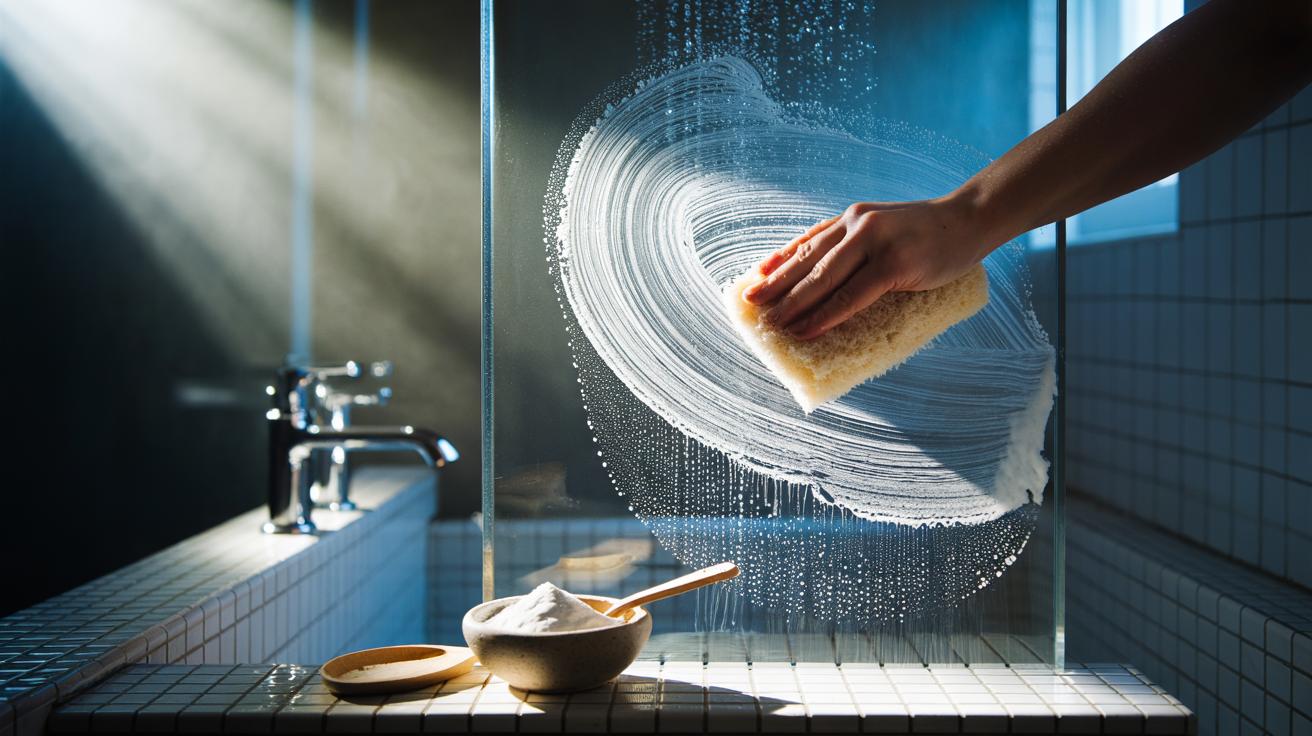
Start simple. Dampen the surface with warm water to soften the scum. Sprinkle baking soda onto a soft, non-scratch sponge or microfibre cloth and add a trickle of water to form a paste. Press and glide in slow circles. You’re polishing the residue, not the substrate. If you feel grit under the cloth, it’s the scum surrendering. For vertical glass, spread a thin slurry and let it dwell for three to five minutes; keep it from drying by misting lightly.
On taps and fittings, cup your hand to hold the paste in place, nudging it into seams where gunk hides. For grout, use a soft-bristled toothbrush loaded with paste and brush across, not along, the joint to avoid dislodging material. Rinse well with warm water, then squeegee or buff dry to prevent fresh limescale. If a hazy patch remains, repeat once more rather than scrubbing harder. Here’s a smart pairing: apply baking soda paste, work it in, then mist with white vinegar to fizz away the mineral fraction. Rinse promptly. Never premix and store vinegar with bicarbonate—carbon dioxide pressure builds and the mixture neutralises itself to uselessness.
Safety, Surfaces to Avoid, and Smarter Pairings
Most bathroom hard surfaces tolerate baking soda well, yet a little caution pays. Acrylic shower screens, soft plastics, and some anti-glare coatings can mark if you grind too aggressively. Always test a discreet corner first, use a soft cloth, and let the paste do the work. On brushed stainless steel, rub with the grain to avoid visible swirls. Natural stone like marble or limestone reacts badly to acids, but bicarbonate alone is typically safe; rinse thoroughly to remove residue that might dull a honed finish. When in doubt, test, rinse, and inspect in good light.
Boost performance by pairing bicarbonate with a drop of washing-up liquid to cut skin oils, or with hydrogen peroxide for a once‑a‑month grout refresh (spot test, ventilate well). Avoid green scourers, which can gouge plastics and soften sealants. Frequency matters: light weekly passes take minutes and prevent the concrete-hard build-up that demands elbow grease. Finish every shower with a quick squeegee and a wipe of chrome; depriving scum of water and time is half the battle. Store your baking soda airtight so it stays free-flowing and ready for the next blitz.
Bicarbonate is unshowy, cheap, and effective. It respects the surfaces we live with, yet it dispatches the daily film that makes bathrooms feel drab. Small, regular scrubs beat heroic seasonal battles every time. The method is tactile and satisfying, and the absence of harsh fumes makes it family-friendly. If your water is very hard, add a vinegar rinse at the end, then dry diligently to keep glass bright. Ready to retire the caustic cleaners and reclaim a gleam with a cupboard staple—where will you try baking soda first, and what result do you want to see most?
Did you like it?4.5/5 (28)