In a nutshell
- 🫖 Baking soda neutralises tea tannins by raising pH, loosening stain bonds, then capturing pigments via absorption/adsorption—overnight dwell boosts results.
- 🧼 Practical steps: make a thin paste for mugs and worktops, a 2 tbsp/L soak for cotton fabrics, cover to prevent drying, then wipe and rinse—repeat gently if needed.
- 🔬 Science: distinguishes absorption from adsorption, adds micro‑abrasion without bleaching; rinsing removes deprotonated chromophores for a clean finish.
- ⚠️ Safety and mistakes: avoid immediate vinegar (it cancels alkalinity), don’t over‑scrub glossy surfaces, patch‑test, and keep off unsealed stone, raw aluminium, wool, and silk.
- 🧪 Stubborn cases: pre‑treat milky stains with washing‑up liquid, follow with oxygen bleach on whites/colour‑safe fabrics, or use enzymes/citric acid/dye removers—prefer gentle, repeated cycles.
The rings on your mug. The shadow on your counter. The faint halo on a favourite shirt. Tea stains are stubborn because tannins bind tightly to surfaces and fibres, deepening with every brew. Yet there’s a low-cost fix sitting in your cupboard: baking soda, or bicarbonate of soda. It doesn’t just scour; it shifts chemistry. By raising pH and drawing pigments out, it lets time do the heavy lifting. Leave it to work overnight and you’ll often wake to a clean, pale surface. Below, we explain how absorption and a touch of abrasion combine to neutralise tannins, offer a step-by-step method, and show when to try alternatives for a perfect finish.
Why Baking Soda Neutralises Tea Tannins Overnight
Tea stains resist casual washing because tannins—polyphenolic compounds—form stable interactions with ceramic glaze micro-pores, polymer coatings, and fabric fibres. Baking soda shifts the balance. As a mild alkali, it raises the local pH, disrupting hydrogen bonds and ionic interactions that make tannin complexes cling. In plain terms, it loosens the stain’s grip while its fine particles sit on the surface, ready to pull colour away. Time amplifies this effect, which is why an overnight rest outperforms a quick scrub.
There’s a second action at play: absorption and its sibling, adsorption. Bicarbonate’s porous particles offer a large surface area where released chromophores can lodge. Think of it as a dry sponge for colour molecules. The powder doesn’t bleach; it rebalances and draws out. And because sodium bicarbonate crystals are micro-abrasive rather than harsh, they lift residues without gouging most glazes or damaging cotton weaves. Used patiently—dampened, pasted, or as a soak—baking soda clears the way for rinsing to carry tannins off for good.
Step-by-Step Method for Cups, Fabrics, and Worktops
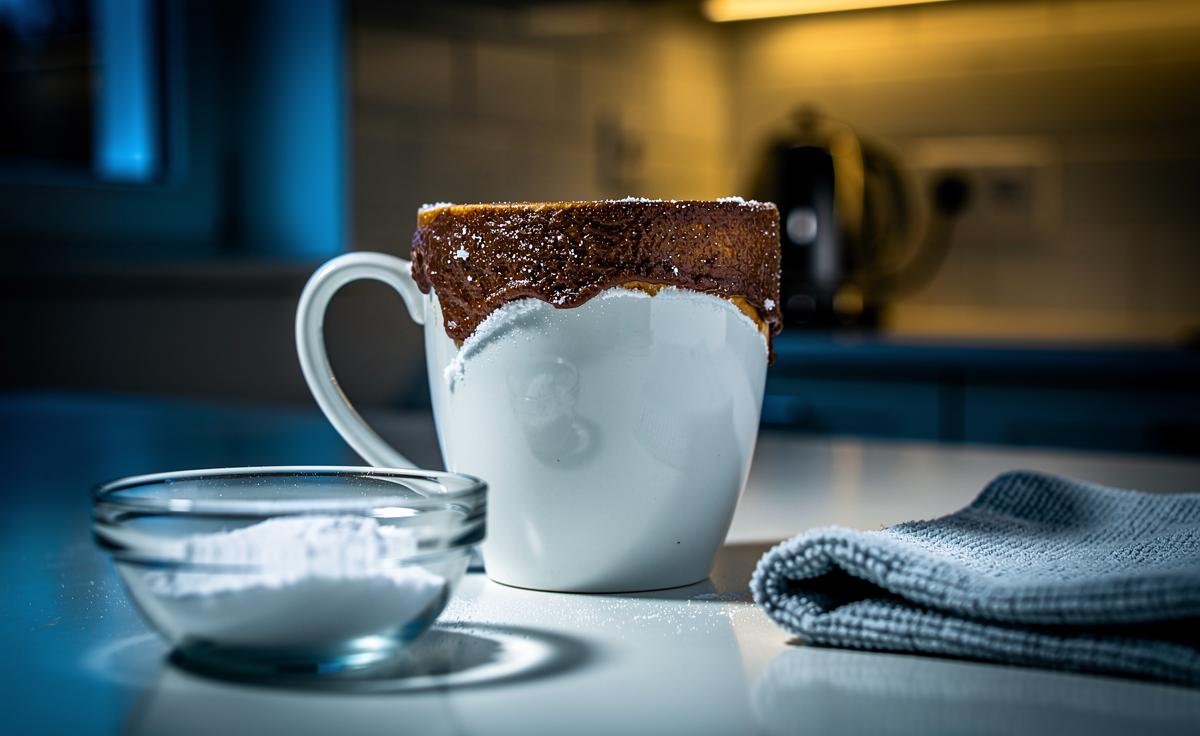
Ceramic mugs and teapots: Rinse, then sprinkle 1–2 teaspoons of baking soda around the ring. Add just enough hot (not boiling) water to form a spreadable paste. Swirl or brush it to cover the stain. Leave overnight with the paste resting on the mark. In the morning, wipe with a soft cloth and rinse. For heavy build-up, repeat or add a splash of white vinegar only at the end to fizz away residue.
Fabric and linens: Mix a slurry—1 tablespoon baking soda in 250 ml warm water—and dab onto the spot. For whites or colour-fast items, soak the area in a basin with 2 tablespoons per litre for 8–12 hours. Rinse, then launder as usual. Always patch-test on an inconspicuous area. Avoid wool and silk, which dislike alkalinity.
| Surface | Ratio/Method | Dwell Time | Notes |
|---|---|---|---|
| Ceramic mug | Dry sprinkle + few drops water (paste) | Overnight | Gentle wipe; repeat if needed |
| Cotton fabric | 2 tbsp/L soak | 8–12 hours | Launder after; check colour-fastness |
| Laminate/worktop | Thin paste, no scrubbing | 1–3 hours | Test first; avoid thick grit |
Worktops and appliances: Make a thin paste and lay it on the stain without rubbing. Cover with cling film to slow drying. After a few hours, lift and wipe clean. On stainless steel, rub with the grain only. Avoid unsealed stone and raw aluminium; for these, use a neutral pH cleaner instead.
Science Corner: Absorption, Adsorption, and Mild Abrasion
We often say “absorption,” but stains leave by two routes. Absorption is bulk uptake into a material; adsorption is surface capture. Baking soda’s fine, irregular crystals are excellent adsorbers, providing countless nooks where loosened tannin molecules settle. This surface-level capture is why a static, overnight application can outperform vigorous scrubbing.
Alkalinity matters too. Tea’s tannins can act as weak acids. Raising the pH with sodium bicarbonate helps deprotonate these molecules, reducing their affinity for surfaces, especially organic fibres. At the same time, bicarbonate supplies micro-abrasion—tiny mechanical action that dislodges the outer layer of the stain without cutting into substrates. Crucially, there’s no chlorine or peroxide here, so colours aren’t bleached and odours aren’t harsh. When you rinse, suspended chromophores and buffered residues wash away. The outcome isn’t magic; it’s the combined effect of pH shift, adsorption, and gentle friction guided by patience rather than force.
Common Mistakes, Safety Notes, and When to Use Alternatives
Too much elbow grease can haze glossy glazes or dull soft plastics. Let chemistry work first. Apply, wait, then wipe. Another misstep is adding vinegar immediately: the fizz is satisfying but neutralises alkalinity on contact, cutting cleaning power. Use acid rinses only at the end to lift mineral traces. Don’t leave pastes on unsealed stone, raw aluminium, or lacquered wood; choose a pH-neutral cleaner or a peroxide-based stain remover instead.
If the stain includes milk, you also have proteins and fats. Pre-treat with a drop of washing-up liquid (surfactants) before the baking soda rest. For aged, deep-set textile stains, follow the overnight bicarbonate soak with an oxygen bleach cycle on whites or colour-safe fabrics. Herbal infusions with turmeric or hibiscus may need targeted agents—enzymatic detergents for proteins, citric acid for mineral rings, and dedicated dye removers for stubborn chromophores. Always test first, and remember: repeated, gentle cycles beat one aggressive hit.
Used with a little patience, baking soda restores mugs, shirts, and counters to honest, everyday clean without fumes or fuss. The secret is simple: raise the pH, park the paste, and let adsorption do the quiet work while you sleep. In the morning, a quick wipe tells the story. It’s a small ritual that pays off again and again. What’s your most persistent tea stain—ceramic, fabric, or countertop—and which overnight method will you try first to put the tannins in their place?
Did you like it?4.3/5 (25)