In a nutshell
- 🔥 Heat frees trapped moisture: A hair dryer gently warms the finish so vapour escapes, clearing white water rings without sanding.
- 🛠️ Step-by-step method: Use low to medium heat, hold 10–15 cm away, keep constant motion in 20–30 second passes, and let the surface cool between cycles.
- ⚠️ Settings and safety: Test in a hidden spot, avoid high heat on antiques and veneers, never “spot heat,” and stop if gloss shifts or resin odour appears.
- 🧪 When heat won’t work: Black stains signal deeper damage—consider oxalic acid, re-waxing, careful ironing through cloth, or professional refinishing.
- 🛡️ Aftercare and prevention: Light buff, optional paste wax, and everyday defences—coasters, felt pads, and periodic polish—to deter future rings.
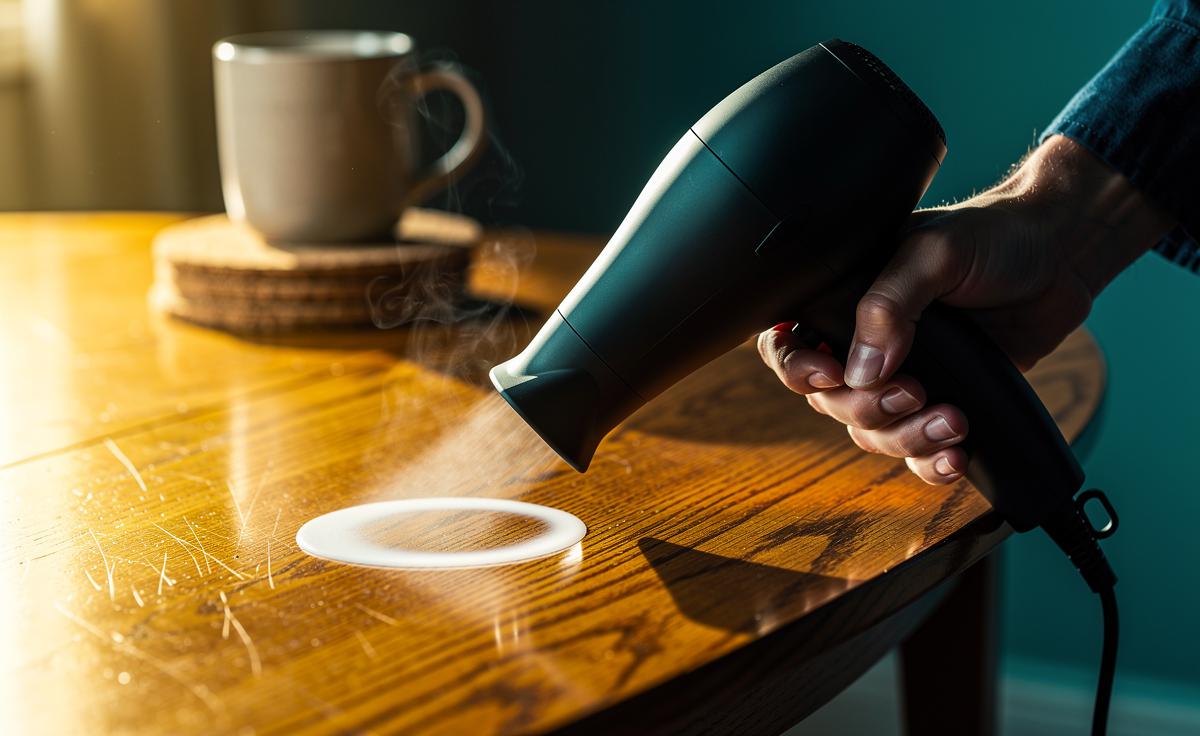
White halos on oak. Ghostly rings on walnut. The culprit is usually condensation from a mug or vase, leaving trapped moisture beneath the surface sheen. The fix can be quicker than brewing another cup. With a household hair dryer and a steady hand, you can coax those water rings out of a wood finish in minutes, restoring clarity and lustre without sanding. Heat encourages the finish to open microscopically, releasing vapour that causes the cloudy mark. It’s simple, but it’s not a free-for-all. Control, distance, and patience matter more than power. Here’s how and why the technique works, plus when to stop and try something else.
Why Water Rings Appear on Wood
The pale, milky halo most people call a water ring is actually moisture trapped in the topcoat, not the timber itself. It’s common with lacquer, shellac and older varnishes, which can temporarily turn cloudy when humidity infiltrates the film. The moisture refracts light, producing the telltale white haze. In this scenario, gentle heat from a hair dryer lets vapour migrate back out, the finish relaxes, and the clarity returns. That’s why heat works: it speeds evaporation within the coating rather than “drying” the wood. By contrast, modern polyurethane is tougher to penetrate, but even it can bloom after a cold glass sits too long.
Not all marks are equal. White rings suggest moisture in the finish; they usually respond quickly. Black stains indicate a deeper chemical reaction—water reaching the wood fibres and reacting with iron or tannins. Heat won’t fix that; removal often involves oxalic acid, re-staining, or professional refinishing. Waxed or oiled surfaces can also appear foggy if the wax has bloomed. In those cases, heat can help, but you may need to refresh the wax after the ring clears. If the mark darkens during treatment, stop—deeper damage may be present.
The Hair Dryer Method, Step by Step
First, dust the area and gently wipe with a slightly damp microfibre cloth; grit scratches when heated. Plug in a hair dryer and set it to low heat, medium airflow. Hold the nozzle about 10–15 cm from the surface. Start the air moving before you aim at the ring. Keep the dryer in constant motion, sweeping across and around the blemish like you’re painting with warm air. Work in 20–30 second passes, pausing to assess. Do not park the nozzle or “spot heat” a single point. That’s how finishes blister.
Watch the ring. Often the white haze fades from the edges inward. If progress is slow, step up to medium heat, still at 10–15 cm. Never jump to high on antiques or thin veneers. As the cloudiness lifts, stop and let the piece cool naturally. You can repeat a few cycles, but give the finish time to settle between rounds. A light buff with a soft cloth brings back shine; a whisper of paste wax or furniture polish can replenish protection once you’re satisfied the mark has gone.
If you smell resin or see gloss change rapidly, back off at once. That signals the topcoat is softening too far. The art here is using enough warmth to mobilise moisture without remelting the finish. Less is more.
Settings, Timing, and Safety
Every finish and timber behaves differently. Conservative settings avoid trouble while still delivering results. Here’s a quick guide to calibrate your approach on common surfaces, from shellacked sideboards to modern poly tables. Treat these as starting points, not absolutes; adjust to the piece in front of you. Always test in an inconspicuous area first.
| Surface/Finish | Heat Setting | Nozzle Distance | Pass Duration | Risk Notes |
|---|---|---|---|---|
| Shellac/Lacquer | Low to Medium | 12–15 cm | 20–30 sec, repeat | Softens quickly; keep moving |
| Oil Varnish | Low | 10–12 cm | 30–45 sec, gentle | Slower response; be patient |
| Polyurethane | Medium | 10–15 cm | 30 sec passes | Tough film; avoid high heat |
| Waxed/Oiled Wood | Low | 15 cm | 15–20 sec | Re-wax after treatment |
Mind the edges and inlays. Thin veneers and marquetry are vulnerable; adhesive lines can creep if overheated. Keep cords clear, and avoid directing heat at open joints or lifting corners. Don’t combine heat with solvents; vapours can trap beneath the film. For stubborn white rings, alternate a warm pass with a minute’s rest, up to 5–6 cycles. If nothing changes after that, heat is likely not the answer. Know when to quit—overworking risks blooming or gloss shifts that require refinishing.
When Heat Won’t Work and What to Try Next
Sometimes the haze laughs off your dryer. That’s your cue to switch tactics. On waxed surfaces, remove superficial bloom with a small amount of mineral spirits on a cloth, then re-wax. For persistent white rings, a warm household iron (no steam), applied over a clean cotton cloth for 5 seconds at a time, can deliver slightly deeper, more even heat. It’s riskier, so stay light and mobile. A dab of petroleum jelly or a dedicated furniture restorer can also displace residual moisture in the film. If the mark turns grey or black, you’re beyond heat-only territory.
Black stains need a different plan: oxalic acid to reduce iron/tannin reactions, careful sanding, then colour and topcoat repair. On old shellac that’s gone cloudy across a wider panel, professionals sometimes “reamalgamate” with alcohol, which briefly softens and relevels the surface. Veneer that has lifted should be re-glued, not cooked. And if the table is a family heirloom with brittle finish, consult a restorer. Heat is a brilliant first aid, but it’s not universal. The skill lies in diagnosis as much as technique.
Used wisely, a common hair dryer can erase water rings from wood in the time it takes to empty the dishwasher. It’s quick, minimal, and delightfully low-tech. Gentle heat, steady movement, and sensible limits protect the finish while clearing the haze. Then, defend your win: use coasters, add felt pads to vases, and refresh wax or polish periodically so moisture meets a barrier, not bare film. If a ring returns, you now know the drill—and when to escalate. What piece in your home is first in line for a careful, warm-air rescue?
Did you like it?4.5/5 (21)