In a nutshell
- 🔥 Aluminium foil works as a mild micro-abrasive, lifting char without harsh chemicals; ideal for stainless steel and bare cast iron, but avoid non-stick, enamel, and tin-lined copper.
- ⏱️ Five-minute method: simmer hot water with bicarbonate of soda, crumple a loose foil ball, scrub in gentle circles on a wet surface, then rinse and dry; reseason cast iron after cleaning.
- 🧤 Safety first: check manufacturer guidance, spot-test on an inconspicuous area, wear light gloves, apply even pressure; use white vinegar post-scrub to clear rainbow heat tints on stainless.
- 🪵 Smart alternatives: wooden scraper for flakes, bicarb + hydrogen peroxide for caramelised sugars, dissolved dishwasher tablet for trays, and nylon brush for enamelled cookware.
- 💡 Prevention and pay-off: preheat before oiling, match flame to pan, react at first smoke; this method is low-cost, quick, and chemical-light, rescuing pans without damage when used correctly.
Every cook has scorched a supper. The result: a pan freckled with stubborn blackened crust that laughs in the face of suds and elbow grease. Here’s the quick, thrifty, and oddly satisfying fix: a loose ball of aluminium foil, a splash of hot water, and gentle scrubbing. In as little as five minutes, you can lift the worst of the char without heavy chemicals or specialist tools. The trick isn’t brute force, but touch and timing. Let the foil do the micro-abrasive work while you steer patiently. Done right, you’ll reclaim your pan and your evening—no shame, no scratches, just a clean, serviceable base ready for tomorrow’s dinner.
Why Aluminium Foil Works on Burnt Residue
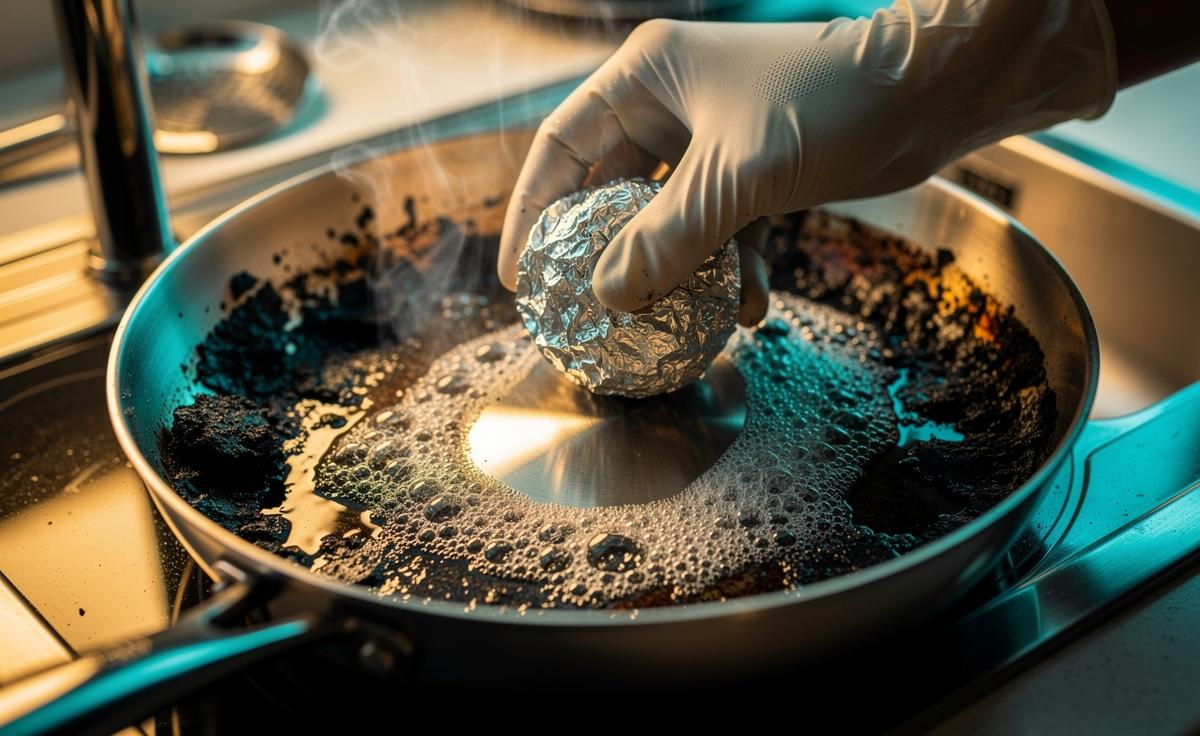
Think of a balled-up sheet of aluminium foil as a bespoke scouring pad. The crinkled surface creates thousands of tiny contact points that behave like a mild abrasive, brisk enough to disrupt carbonised food yet forgiving compared to steel wool. As you rub with a film of hot water—or a slurry of bicarbonate of soda—the foil’s peaks skim over the high spots of char, shaving them down without gouging most metals. It’s controlled abrasion, not punishment. The heat helps loosen polymerised oils; the alkali in bicarbonate adds a nudge against acidity and burnt sugars.
Material matters. On stainless steel and bare cast iron, the foil’s hardness sits in a sweet spot: tough on residue, kind on the substrate. Coated or soft surfaces are different stories. Do not use foil on non-stick (PTFE) or delicate enamel, where even light scuffing ruins performance and appearance. Likewise, soft tin linings inside vintage copper pans can smear or pit. Used judiciously, though, foil excels as a fast, low-cost rescue method, especially when you’ve caught the mess the same day and the char hasn’t fully crosslinked into a black glaze.
Step-by-Step: Five-Minute Foil Rescue
1) Deglaze the disaster. Add a centimetre of hot water and a teaspoon of bicarbonate of soda. Simmer for 60–90 seconds to soften the crust. 2) Pour off most liquid, leaving a slick. 3) Crumple a palm-sized ball of aluminium foil—not too tight; edges should be uneven. 4) With gentle pressure, scrub in small circles, moving across the worst char. Keep the surface wet. 5) Wipe, rinse, inspect. Refresh the foil ball once it smooths out. 6) For corners, pinch the foil into a point and glide lightly. 7) Finish with a drop of washing-up liquid, rinse hot, then dry. If you see grey streaks or bright scratches, stop and reassess compatibility.
| Item | Purpose |
|---|---|
| Aluminium foil ball | Mild, shapeable abrasive for targeted scrubbing |
| Hot water | Softens polymerised oils and residue |
| Bicarbonate of soda | Alkaline boost against acidity and burnt sugars |
| Time | About five minutes active scrubbing for typical burns |
| Suitable surfaces | Stainless steel, bare cast iron |
| Avoid | Non-stick (PTFE), enamel prone to scuffing, tin-lined copper |
Two final touches: for cast iron, reheat to dry thoroughly and apply a whisper of oil to refresh the seasoning. For stainless, a quick pass with a cream cleaner restores shine. The goal is restoration, not perfection—stop when the cooking surface is smooth and safe.
Safety, Compatibility, and Smart Alternatives
Start with the label. If the manufacturer warns against abrasives, skip foil. When in doubt, test inside a rim or on the pan’s underside. Wear light gloves if you have sensitive skin; crumpled foil can have sharp facets. Keep pressure even—let the water and chemistry carry half the load. For stainless steel with rainbow heat tints, use white vinegar after scrubbing to lift oxides, then rinse thoroughly. With cast iron, avoid prolonged soaking; water invites rust, and you’ll be seasoning anyway.
Not every burn needs foil. A wooden scraper lifts large flakes with zero risk. A paste of bicarbonate of soda and a little hydrogen peroxide tackles lacquered-on sugar syrups. Dishwasher tablets (dissolved) can shift caramelised residues in stainless roasting trays. For enamelled cast iron, switch to a nylon brush and a soapy soak; patience beats scratches. Prevention is cheaper: preheat before adding oil, match flame size to the pan, and don’t walk away at the first whiff of smoke. If you hear aggressive crackling and smell acrid notes, cut the heat and add water immediately—rescue starts before the burn sets.
In the end, a crumpled ball of aluminium foil is an unlikely hero—simple, recyclable, and ruthlessly effective against everyday kitchen catastrophes. Used with a light touch, it can revive stainless steel and cast iron in minutes, saving both money and a favourite pan. Keep a roll near the hob, remember the “gentle circles” mantra, and choose safer alternatives for delicate coatings. A small technique upgrade today avoids a big scrub tomorrow. What’s your go-to rescue move when dinner goes from golden to blackened in a blink—and which pans in your cupboard are begging for a five-minute foil revival?
Did you like it?4.5/5 (24)