In a nutshell
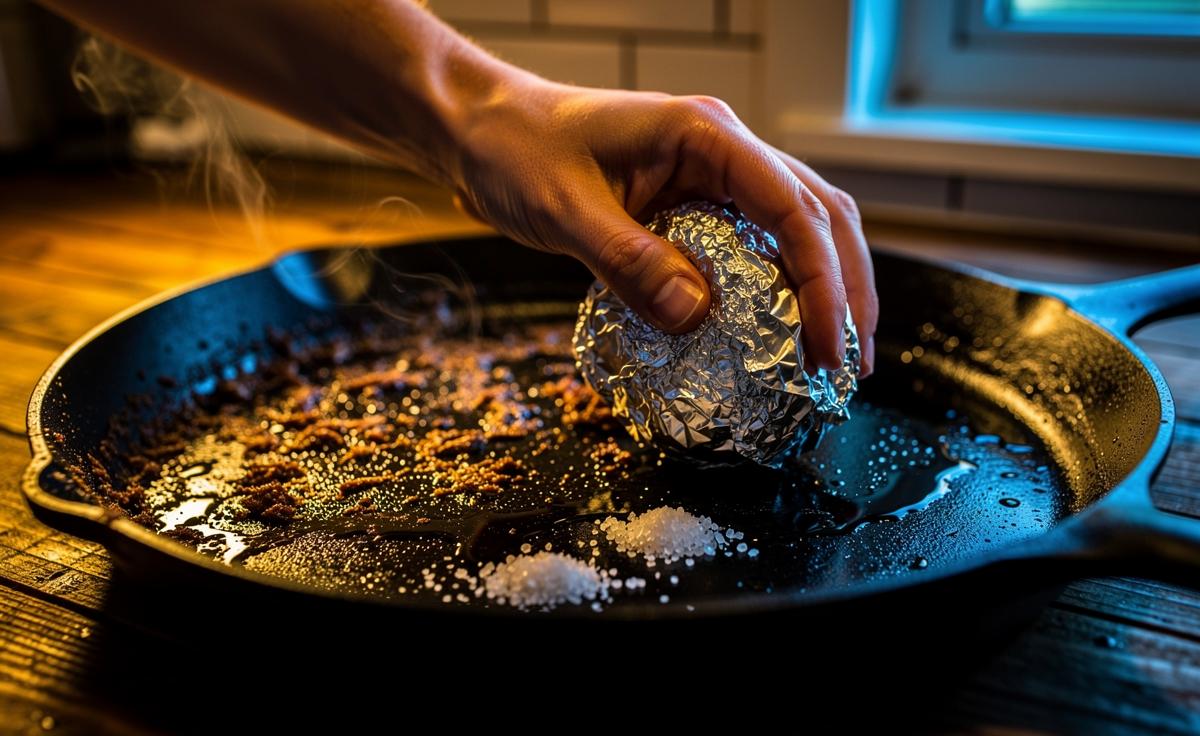
- 🧽 A crumpled aluminium foil ball lifts grime without stripping seasoning, delivering controlled abrasion that’s softer than cast iron.
- ⏱️ 5-minute method: warm pan, add hot water, scrub with foil; optional coarse salt or neutral oil; rinse, dry on heat, finish with a thin oil coat.
- 🔬 Why it works: the tough polymerised oil layer resists gentle scuffing; avoid steel wool and harsh detergents that can erode it.
- 🛠️ Troubleshooting: soften stubborn residues with heat/steam; clear flash rust using foil + oil; re-season dull grey patches at 200°C if exposed.
- 🧺 Maintenance: thorough drying, a light oil buff, airflow in storage, and periodic foil spruce-ups preserve the pan’s patina and non-stick performance.
It sounds like a hack you’d see on social media and scroll past. Don’t. A crumpled ball of aluminium foil can rescue a grimy, sticky cast iron pan in five minutes, without scraping off that hard-won seasoning. The trick lies in controlled abrasion and a splash of heat, not brute force. In British kitchens where pans span generations, this is the quick fix you reach for after a long roast or a high-heat sear. It’s cheap, recyclable, and genuinely effective. Used correctly, foil will lift residue while leaving the polymerised oil layer intact. Here’s how the method works, and why it’s kinder than you think.
Why Aluminium Foil Won’t Strip Your Seasoning
The black, satin sheen on a well-loved skillet is not paint; it’s polymerised oil, a thin, incredibly tough film created by heat. To ruin it, you need a harsh alkali, aggressive detergents, or abrasives harder than the iron underneath. Aluminium sits lower on the hardness scale than cast iron, so a crumpled foil ball acts like a soft, conforming scrub pad. It scuffs off brittle, burnt-on bits but glides over the seasoned surface. That’s the key. Gentle abrasion removes residue while preserving the protective layer you’ve built up.
Add a little hot water and you amplify the effect: steam softens sugars and proteins, while the foil’s folds concentrate pressure on high spots without sanding the pan flat. Contrast this with steel wool or harsh scouring powders, which can chew through seasoning in seconds. Salt is optional; a pinch of coarse salt boosts grip for stubborn patches, though most day-to-day grime yields to the foil alone. The result? A surface that’s clean, not raw. It’s the difference between maintenance and a full reset.
The 5-Minute Foil-Ball Method: Step-by-Step
Heat the empty pan over a low flame for 60–90 seconds, just until warm to the touch. Off the heat, pour in a few tablespoons of hot water—enough to moisten, not flood. Never shock a hot pan with cold water. Crumple a square of aluminium foil into a tight ball with a textured surface, about the size of a golf ball. That texture is your micro-scrubber. Working in small circles, scrub the sticky areas first, then sweep across the whole surface. You’ll see browned residue lifting and the water turning cloudy.
For stubborn spots, sprinkle a teaspoon of coarse salt or add a drop of neutral oil to create a slick, non-sudsing slurry. Wipe with a paper towel, then repeat briefly if needed. Rinse with hot water, dry thoroughly on a low flame until every last bead of moisture is gone, and finish with a thin film of oil (rapeseed, groundnut, or grapeseed). Buff until it looks dry. If the pan feels tacky, you’ve used too much oil—wipe again. You’re done in minutes, and your seasoning remains intact.
| Item | Why It Helps |
|---|---|
| Aluminium foil ball | Soft, conforming abrasive that won’t gouge seasoning. |
| Hot water | Loosens sugars/proteins; reduces force needed to scrub. |
| Coarse salt (optional) | Adds bite for stubborn patches without harsh chemicals. |
| Neutral oil | Reconditions and seals after cleaning; prevents flash rust. |
Troubleshooting Stubborn Gunk and Light Rust
If sticky varnish won’t budge, warm the pan slightly longer, then scrub with the foil ball and a teaspoon of salt or a dab of oil. Let time and heat do the softening. Avoid heavy detergents, which can undercut seasoning at the edges. For sugar-based crusts (post-dessert disasters), add a spoon of hot water and loosely cover for two minutes to steam, then scrub again. Baked-on protein? Short, firm strokes with the foil’s roughest ridges usually dislodge it without drama.
Light orange flash rust can appear if water lingers. Don’t panic. Rub it away with the foil ball and a drop of oil; the soft metal polishes the high points without thinning the protective layer. If you uncover large dull-grey patches, that section of seasoning has gone. Clean, dry, then apply a very thin coat of oil and bake at 200°C for an hour to rebuild. If you can see bare metal, re-season that area rather than scrubbing harder. Reserve vinegar baths for serious rust only—they’re a reset, not maintenance.
Care After Cleaning and Long-Term Prevention
Post-clean, the drying step is non-negotiable. Set the pan over low heat until it’s bone dry, then swipe on the thinnest possible film of rapeseed oil and buff with a clean towel. You’re aiming for a satin glow, not a glossy coat. Store with the lid off or a paper towel tucked under the rim to prevent trapped moisture. Never store cast iron damp. Between uses, a 60-second warm-up before cooking helps repel sticking and extends the life of your seasoning.
Every few weeks, assess the surface: if it looks patchy or feels slightly rough, a quick foil-ball spruce-up followed by a light oil buff keeps it honest. Avoid long soaks, dishwashers, and caustic cleaners. If stacking pans, slip a paper liner between them to shield the cooking surface from nicks. For daily upkeep, think small and frequent. A minute here saves an hour later. Keep a square of aluminium foil in the drawer and you’ll rarely need anything harsher than heat, water, and patience.
There’s satisfaction in reviving cookware with nothing more than a crumpled foil offcut and a little heat. It’s tactile, quick, and it respects the patina you’ve cultivated meal after meal. Clean doesn’t have to mean stripped. In five minutes, you can go from gummy to pan-ready, with seasoning intact and flavour assured for the next fry-up or roast. Ready to test the method on your grimiest skillet tonight—and what dish will you cook first to celebrate the rescue?
Did you like it?4.4/5 (25)