In a nutshell
- ✨ Olive oil revives dull wood by filling micro-scratches, enhancing grain and reflectivity for a subtle, protective sheen—use very little and buff thoroughly.
- 🧪 Prep matters: clean the surface, identify the finish (sealed, oil/wax, or bare), and perform a careful patch test; refined olive oil is discreet for indoor use.
- 🧰 Method: apply micro-dabs along the grain, allow 2–5 minutes to dwell, then vigorous buffing to a satin glow; fix streaks by rebuffing with a fresh cloth.
- 🧴 Blends: pair olive oil with beeswax for longer-lasting lustre, with white vinegar to lift grime, or with lemon for scent—always apply sparingly and buff.
- ⚠️ Limits and safety: avoid floors, stair treads, and food-contact blocks; don’t flood pores; for high-value antiques, consult a conservator and maintain with regular dry dusting.
From sideboards that have lost their glow to heirloom chairs that look parched, the solution might already be in your cupboard. A small drizzle of olive oil can revive dulled timber, lending warmth, depth, and a soft lustre. It’s quick. It’s low-tech. It’s satisfyingly thrifty. Used judiciously, olive oil nourishes wood fibres, enhances the grain, and creates a subtle, protective sheen without synthetic gloss. Applied correctly, it can transform tired surfaces in minutes while respecting the character of the wood. Here’s how the oil works, when to reach for it, and the simple method professionals use to restore shine with minimal fuss.
Why Olive Oil Revives Dull Wood
Wood dries, oxidises, and collects micro-scratches that scatter light. Olive oil slips into these tiny abrasions, levelling the optical surface so it reflects more consistently. The result is a gentle, attractive sheen that highlights the figure and colour. Olive oil doesn’t cure like a hard-drying finish; it remains supple, sitting within the surface and in the shallow pores. That’s its charm and its limitation. Because it stays mobile, you must use very little and buff thoroughly to avoid residue. Done right, the wood looks lively rather than greasy.
Composition matters. Olive oil is rich in oleic acid triglycerides, offering light conditioning and a mild hydrophobic effect that helps repel everyday moisture. It won’t reverse deep damage or replace damaged lacquer, but it will soften the dryness that makes furniture look chalky. Think of it as a facial oil for timber: it plumps and revives. On closed-grain woods—maple, cherry, beech—the effect is restrained. Open-grain oak and ash may darken slightly as pores accept the oil. Always anticipate a touch more warmth in tone after treatment.
There’s also psychology at work. When reflectivity increases, surfaces read as cleaner and better kept, even if the underlying finish hasn’t changed. That’s why a tiny application goes a long way. The trick is restraint, patience, and consistent buffing. Too much oil invites dust; just enough makes the timber sing.
Preparation, Patch Testing, and Safety
Success starts with a clean slate. Lightly dust the piece, then wipe with a barely damp cloth to lift grime. If there’s built-up polish or sticky residue, a gentle pass with a cloth misted in warm water and a drop of mild soap will help; dry immediately. Identify the finish: sealed (varnish, shellac, lacquer), oil/wax, or bare wood. Olive oil sits best on sealed or previously oiled furniture and many waxed pieces. Do not apply to floors or stair treads—slip risk is real. For valuable antiques or museum-quality surfaces, consult a conservator.
Now the patch test. Choose an inconspicuous spot under a shelf or behind a leg. Apply a pinpoint of oil with a cotton bud, wait five minutes, then buff. Check for uneven darkening, tackiness, or odour. Refined olive oil has lighter colour and a subtler scent than extra virgin, making it a safer, discreet option indoors. Testing protects you from surprises and sets expectations on sheen and tone.
Gather tools: two soft, lint-free cloths (a microfibre cloth and an old cotton T-shirt work well). Decant a teaspoon of oil into a small dish to avoid over-pouring. Remove jewellery that could scratch. Work in good light so you can see when the surface stops absorbing and starts reflecting. Preparation reduces product use, improves results, and keeps the finish uniform across panels and edges.
Step-By-Step Conditioning Method
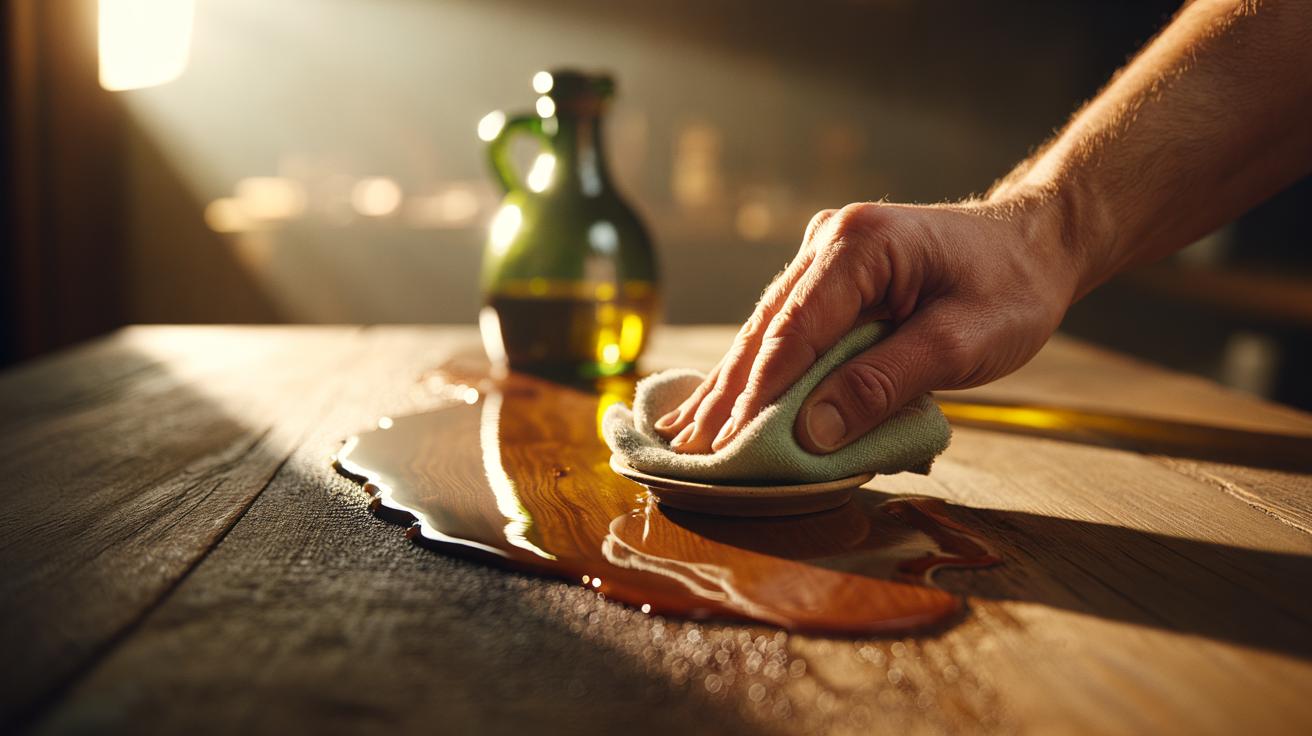
Start with the smallest quantity imaginable. Touch the application cloth to the dish and dab off excess. You want a whisper, not a slick. Work in sections the size of a place mat. Massage the oil along the grain with light, overlapping strokes. Watch for dry patches drinking the oil faster than adjoining areas. If a panel looks thirsty, add a second micro-drop, not a second teaspoon. The goal is to feed, not flood.
Allow a brief dwell—two to five minutes—so the surface can absorb. Then switch to the clean, dry cloth and buff briskly. Keep buffing until the sheen turns from wet to satiny and the cloth glides without drag. This is where transformation happens. Buff edges, handles, and seams to avoid tide marks. If the lustre feels uneven after ten minutes, repeat the lightest possible application and buff again. Multiple featherweight passes outperform one heavy-handed coat.
Troubleshooting is simple. Streaks signal excess oil: buff harder with a fresh cloth. Slight cloudiness? Leave longer between application and buffing, then polish off. If odour lingers, you used too much; wipe with a barely damp cloth, dry, and rebuff. Maintain with a dry dusting routine and repeat oiling only when the surface looks thirsty—often every few months for frequently handled pieces, annually for display items. Less is more.
Blends, Finishes, and When to Avoid
Pure olive oil is elegant on maintained furniture, but blends can help specific scenarios. A classic quick-clean mix pairs olive oil with a little white vinegar to lift light grime while restoring sheen. For deeper conditioning and longer-lasting protection, combine olive oil with melted beeswax, creating a soft paste that buffs to a firmer glow. Citrus additions, such as a drop of lemon, offer a fresh scent and slight solvent action on smudges. Always mix small test batches and trial in a hidden area first. Avoid olive oil on sticky, heat-blushed finishes, raw kitchen worktops, or pieces exposed to strong sun where migration and dust attraction are likely.
Use the guide below to match blend to purpose. Ratios are starting points, not commandments. Stir or shake before each use, apply sparingly, and buff thoroughly. If the surface stays tacky after ten minutes, you’ve gone too heavy—remove and start lighter.
| Surface/Finish | Recommended Treatment | Typical Ratio | Wait Time |
|---|---|---|---|
| Sealed furniture (varnish/lacquer) | Light olive oil refresh | Neat oil, micro-dabs | 2–5 minutes before buff |
| Oiled or waxed wood | Olive oil + beeswax polish | 3 parts oil : 1 part wax | 5–10 minutes, then buff |
| Grimy but sound finish | Olive oil + white vinegar | 2 parts oil : 1 part vinegar | 1–2 minutes, then buff |
| Fragrant quick spruce-up | Olive oil + lemon | 10 parts oil : 1 part lemon | 2–3 minutes, then buff |
Do not use olive oil on flooring, stair rails, or food-contact butcher blocks without a hard-drying finish. It can become slick or attract crumbs. For rare, high-value antiques, professional conservation trumps DIY. And remember: sunlight, damp, and dust control do more for long-term appearance than any polish. Treat the room and the routine, not just the table.
A bottle of olive oil won’t replace a fresh coat of varnish, but used sparingly it restores warmth, clarifies grain, and gives tired wood a quietly luxurious glow. The method is simple, the cost minimal, and the results immediate. Keep a pair of clean cloths in a drawer, decant a spoonful, and in ten minutes your furniture can look newly cherished rather than newly bought. Restraint and buffing are the entire secret. When you next glance at a dull side table or a scuffed chair arm, will you reach for high-gloss sprays—or try the gentler touch that lets the timber speak?
Did you like it?4.6/5 (24)