In a nutshell
- ✨ A light rub of olive oil fills micro-scratches, smooths collagen fibres, and deepens colour, delivering instant, natural-looking shine when used sparingly.
- 🧴 Follow the method: clean the surface, do a patch test, apply 1–2 drops on a cloth (not the leather), work in small circles, wait 10 minutes, then buff to a dry finish—less is more.
- ⚠️ Know the risks: potential darkening, seepage into stitching or linings, and rare odour over time; never use on suede or nubuck, and avoid heavy applications.
- 📋 Suitability snapshot: smooth full-grain and finished leathers respond well to an occasional light rub; vintage dry pieces may darken; patent doesn’t need oil; suede/nubuck—do not use.
- 🧰 Practical wisdom: it’s a quick cosmetic refresh, not restoration; keep dedicated leather conditioner for nourishment and use the olive oil trick sparingly between deeper treatments.
Here’s a trick hiding in plain sight: the bottle of olive oil in your kitchen can revive tired leather in minutes. A light rub, done correctly, restores a natural sheen, softens stiff patches, and lifts the colour without fancy kit or specialist fees. It’s not magic. It’s chemistry and care. Use sparingly and with intent, because leather is skin, and too much oil suffocates it. Done right, the effect looks instant, tactile, and quietly luxurious—ideal for boots before a dinner, a bag before a meeting, or a vintage belt that needs to look alive again.
Why Olive Oil Works on Leather
Leather is a network of collagen fibres. Those fibres thrive on balanced moisture and a whisper of natural fats, which keep them supple, reduce surface haze, and help scatter light in a way our eyes read as shine. A trace of olive oil acts like an emollient, slipping into the microscopic valleys created by wear and buffing down flaky dryness. The result is a smoother surface that reflects more evenly. That’s why a gentle pass of oil can make an old strap or jacket look suddenly well kept.
There’s a second reason: optics. When a film of oil fills micro-scratches, it lowers contrast between peaks and troughs, so the colour appears deeper and more even. The trick is restraint. It’s a quick cosmetic fix, not a deep treatment. Think of it as a journalist’s polish before a photo call rather than full restoration in a studio. For nutrition, a proper leather conditioner still earns its place on the shelf.
Crucially, this is about timing and touch. A small amount, well distributed, warms under your fingers, travels evenly with a soft cloth, and buffs to a confident glow. Heavy applications saturate fibres and can cause long-term darkening.
Step-by-Step: The Light Rub That Restores Shine
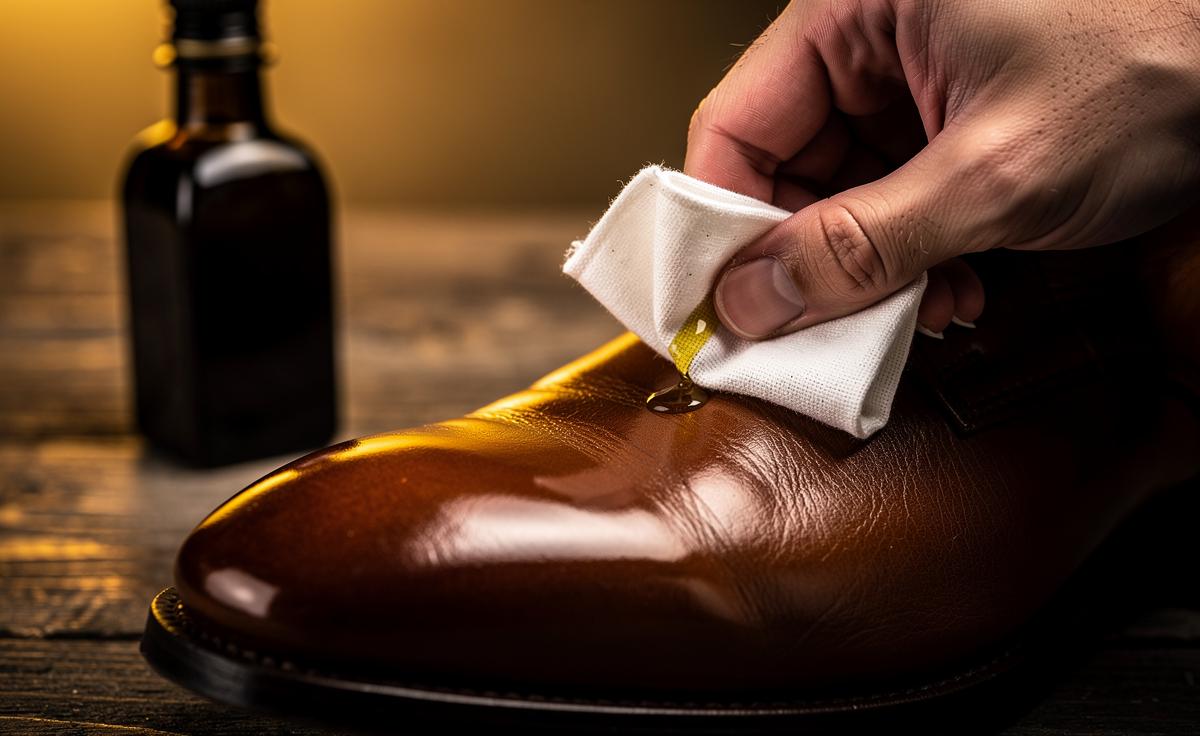
Start clean. Wipe off dust and grit with a dry, lint-free cloth; a damp cloth if there’s grime, then let it air-dry fully. 1) Do a patch test on a hidden area and wait ten minutes to check for darkening. 2) Place a single drop or two of olive oil—extra-virgin is fine—on a soft cotton cloth. Not on the leather. 3) Using small circles, work the oil across the surface with almost no pressure. You’re aiming for whisper-thin coverage.
Pause for ten minutes. The leather will draw what it needs. Then 4) buff with a clean, dry cloth until the surface feels dry to the touch and the sheen looks even. If you can see wet patches, you used too much; keep buffing to lift the excess. 5) Repeat only if the test spot still looks parched. Less is more, and patience is part of the shine.
Practical limits matter. Avoid seams where oil can wick into stitching. Skip absorbent linings; they stain. Never apply on suede or nubuck, which will blot and darken permanently. Frequency? For quick refreshes before an outing, once every few months is ample for belts and bags, while shoes might appreciate a dab between polishes in bleak winter weather. Always patch-test in a hidden spot.
Risks, Myths, and When to Avoid It
Let’s keep the romance honest. Olive oil is a household helper, not a universal cure. It can darken pale leather, creep into foam backing, and leave a halo if overapplied. In rare cases, residual oil may develop an odour over very long periods, especially in warm cupboards. That said, a tiny, well-buffed application used infrequently is a pragmatic hack for real life—event dressing, last-minute interviews, rainy commutes. If in doubt, skip the oil and reach for a dedicated conditioner.
| Leather Type | Olive Oil Suitability | Risk Level | Pro Tip |
|---|---|---|---|
| Smooth full-grain | Occasional light rub | Low–moderate | Patch-test; buff thoroughly to a dry finish. |
| Corrected-grain/finished | Works for quick sheen | Low | Use minimal oil; factory finish resists saturation. |
| Vintage dry leather | Careful, may darken | Moderate | Prefer conditioner; oil only as last resort. |
| Patent leather | Not needed | Low | Clean and buff; the glaze provides shine. |
| Suede/Nubuck | Do not use | High | Brush with a crepe brush; avoid oils entirely. |
Myth-busting is healthy. No, oil won’t “repair” cracks; it can only soften edges visually. No, you shouldn’t drench a jacket to “feed” it; that invites stains and sag. The smart play is a light, rare, and well-buffed application, reserved for smooth leathers that just need their confidence back.
Used with restraint, olive oil delivers a swift, believable sheen that reads as care, not gloss. It’s the kind of low-effort, high-impact ritual that keeps daily pieces looking editorial between deeper treatments, especially in a British climate that flips from drizzle to downpour. Remember: tiny amounts, long buff, visible results. That’s the formula. So, what leather item in your wardrobe deserves a light rub tonight—and how will you capture the before-and-after to prove the difference to yourself?
Did you like it?4.5/5 (22)