In a nutshell
- 🧺 The problem isn’t ruined fabric but detergent residue, fabric softener build-up, body oils, and hard water minerals that coat fibres, flatten loops, and trap odours.
- ✨ The fix: a warm-water baking soda rinse after a normal wash (2–3 tbsp small load, 1/4 cup medium, 1/3 cup large), added to the drum; do not mix with vinegar.
- 🌬️ Dry right: spin hard, tumble with clean tennis balls or shake well on the line; expect instant softness, revived loops, and better absorbency—repeat monthly in hard water areas.
- ⚠️ Safe and smart: gentle on cotton, HE-safe and colour-safe; avoid heavy dosing, skip liquid softeners, use oxygen bleach if needed (not chlorine), and keep wool/silk on delicate care.
- 🇬🇧 Big payoff: perfect for UK limescale challenges, this rinse costs pennies, clears odours, and restores a hotel-plush feel without buying new towels.
They’re clean, yet they scratch. Old towels can betray you like that—fresh from the wash, still stiff, still musty. The fix rarely sits in a flashy bottle. It’s in your cupboard. A simple baking soda rinse resets fibres, sheds clingy residues, and brings back that hotel-plush feel. In the UK, where hard water is common, mineral build-up and detergent films can smother loops, leaving towels flat and unfriendly. This quick, refreshing rinse often restores noticeable softness in a single cycle. It’s inexpensive, gentle, and surprisingly scientific. Here’s why it works, how to do it properly, and what to avoid if you want lasting loft without splashing out.
Why Towels Go Stiff and Musty
Towels don’t become abrasive because cotton suddenly “goes bad”. The culprits are detergent residue, fabric softener build-up, body oils, and hard water minerals that cement fibres together. Over time, microfibres mat down and loops lose spring. Drying then bakes the problem in. That flat, cardboard feel? It’s residue, not ruin. Odours also linger when a damp towel hosts odour-causing bacteria and residues trap moisture. Lower-temperature washes, popular for saving energy, can leave more films behind. When fibres are coated, they can’t absorb properly and they feel rough to the touch.
Enter baking soda (sodium bicarbonate). It’s mildly alkaline, so it helps loosen acidic grime and encourages soils and leftover surfactants to release from cotton. It can also buffer wash water, nudging pH to a range where residues dissolve more readily. In hard-water areas from Kent to Cumbria, it helps keep minerals from binding to threads, reducing stiffness linked to limescale. Unlike many softeners, it doesn’t add a new layer. Instead, it strips the old ones back. The result is honest: revived loops, truer absorbency, and a softness that feels like new rather than perfumed.
The Baking Soda Rinse: Step-by-Step
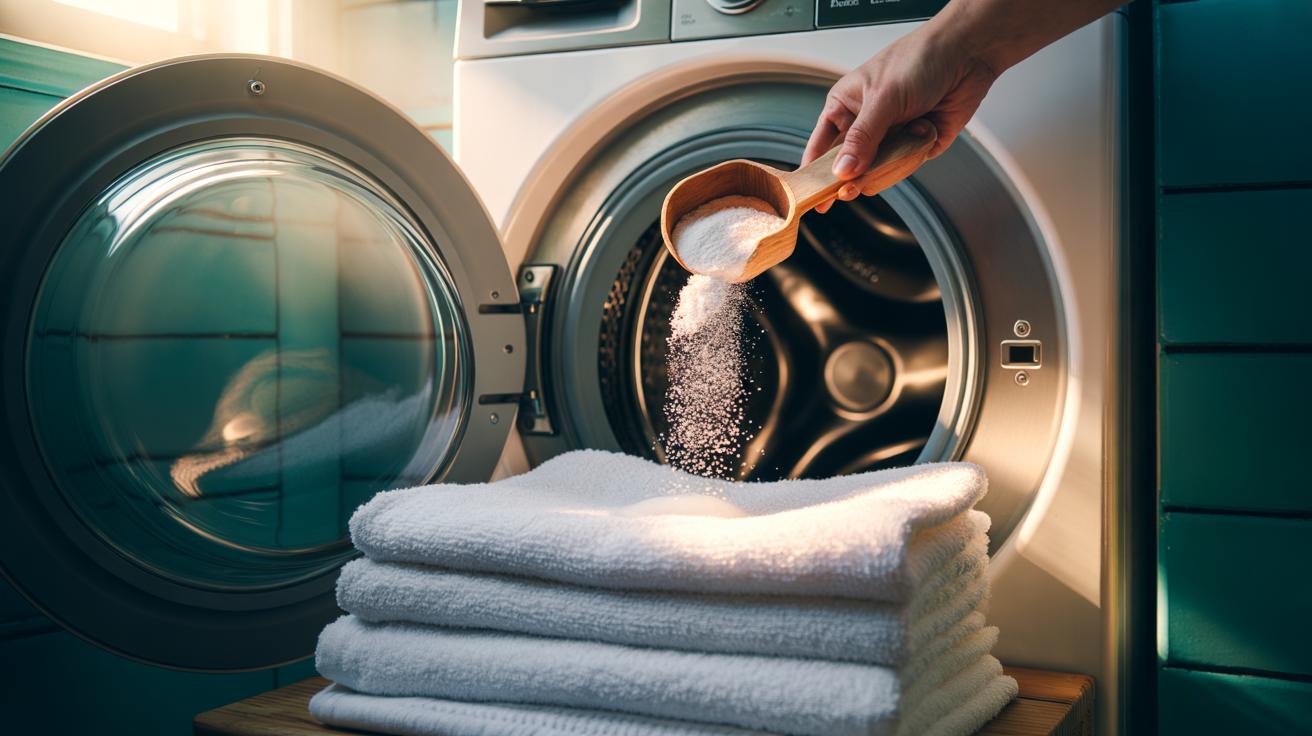
You’re aiming for a rinse-only refresh that liberates trapped films without over-washing. First, wash towels as normal (skip fabric softener). Then set a second rinse or short cycle with warm water, and add baking soda. Front-loader? Sprinkle directly into the drum before you add towels, not the dispenser. Top-loader? Dissolve the powder in a jug of warm water and pour around the drum to avoid clumping. Do not mix baking soda and vinegar in the same rinse; they neutralise each other and blunt the cleaning benefit.
| Load Size | Baking Soda Amount | Water Temperature | Cycle | Notes |
|---|---|---|---|---|
| Small (2–3 bath towels) | 2–3 tbsp | Warm (30–40°C) | Rinse or short wash | Great for a quick reset |
| Medium (4–5 bath towels) | 1/4 cup (60 ml) | Warm (40°C) | Rinse or short wash | HE-safe dose |
| Large (6+ bath towels) | 1/3 cup (80 ml) | Warm to hot (40–60°C) | Rinse or short wash | Use if odours are stubborn |
Spin thoroughly and dry with space—heat plus airflow re-fluffs loops. A few clean, dry tennis balls in a tumble dryer help lift pile. For line-drying, give towels a vigorous shake before and after to loosen the nap. Repeat monthly in hard-water areas or whenever towels feel heavy and dull. Cost per treatment is pennies, and the lift is immediate. This simple tweak can make a tired stack feel guest-ready without buying new.
Safety, Fabrics, and Common Myths
Used sensibly, baking soda is gentle on cotton. It’s colour-safe for most dyed towels and fine for HE machines. Avoid overuse: repeated heavy dosing can push pH higher than needed and may fatigue elastics on bound edges over time. Stick to the amounts above. Wool, silk, and embellished towels are exceptions—keep them on delicate detergents and cool water only. If you love fragrance, add a few drops of essential oil to dryer balls rather than the rinse; perfume doesn’t equal softness, and it can add fresh residue.
Myths persist. No, baking soda won’t scour fibres like a scrub; at rinse concentrations it’s not abrasive. Yes, you can pair it with oxygen bleach on a wash cycle, but skip combining it with chlorine bleach to avoid unpredictable chemistry. And don’t chase softness with liquid softeners: they coat and compress the very loops that deliver absorbency. If you’re battling severe hard water, consider a periodic maintenance wash at 60°C and a machine descale. The goal is to free fibres, not mask them, so keep the chemistry light and the rinsing thorough.
Reviving towels shouldn’t demand a new laundry lexicon or a luxury budget. A measured baking soda rinse tackles the real cause of stiffness—build-up—so cotton loops spring back, odours fade, and drying performance improves. It’s a subtle change in routine with an outsized result, especially in UK homes wrestling with limescale. Try it once, feel the difference, then schedule it every few weeks to stay ahead of residue. Your cupboard staple doubles as a spa treatment for terry. When you run your next load, will you give those tired towels the bicarbonate reset and see how instantly their softness returns?
Did you like it?4.5/5 (22)