In a nutshell
- 🧪 Alcohol kills germs fast by disrupting lipid envelopes and denaturing proteins; highly effective on enveloped viruses and many bacteria, but not sporicidal.
- ⏱️ The sweet spot is 70–80% alcohol with 30–60 seconds of wet contact time; re-wet surfaces if evaporation is rapid.
- 🧼 Clean first, then sanitise: remove grime so alcohol can reach microbes; ensure full coverage, including edges, corners, and textured areas.
- 🔧 Apply safely on everyday items: use a cloth for electronics, avoid soaking ports; alcohol suits stainless steel and glass but can damage unsealed wood and some plastics.
- ⚠️ Prioritise safety: ventilate, keep away from flames, do not mix with bleach or ammonia, store sealed, and schedule regular high-touch disinfection.
Few household staples punch above their weight like rubbing alcohol. Reach into a cupboard, uncap a bottle, and you’ve got a fast-acting ally against unwanted microbes. In busy homes, shared offices, and community spaces, its speed matters: it gets in, dismantles germs, and evaporates cleanly. That makes it a favourite for high-touch points, from door handles to phone screens. The trick is knowing how and when to use it for best effect. Precision counts. So does patience. Used properly, isopropyl alcohol or ethanol can help create a noticeably safer environment. Let the surface stay visibly wet for long enough and the chemistry does the rest.
Why Alcohol Works Against Germs
Alcohol-based sanitisers act quickly because they attack the very structures that allow microbes to function. Enveloped viruses carry a fatty membrane; alcohol disrupts it. Proteins inside bacteria and many viruses are folded in fragile ways; alcohol denatures those proteins, collapsing essential machinery. That’s why a correctly used 70% solution can achieve impressive reductions in microbial load in under a minute. Speed matters, but so does contact. Evaporation is fast, particularly on warm metal or glass, so ensuring a proper wet film is vital. Coverage and dwell time determine success far more than how hard you scrub.
There are limits. Alcohol is not reliably effective against bacterial spores, and heavy organic soil—grease, food residues, skin oils—can shield organisms. Pre-clean first with detergent, then apply alcohol to disinfect. In plain terms: clean, then sanitise. Compared with bleach, rubbing alcohol is less likely to corrode stainless steel or leave residues, and it airs off without rinsing. That makes it ideal for electronics exteriors and high-touch fixtures. Used judiciously, it reduces risk swiftly, without the lingering smells or surface damage associated with harsher oxidisers.
Choosing the Right Concentration and Contact Time
Not all alcohol solutions behave the same. Counterintuitively, 99% isn’t better for surface disinfection. The presence of water slows evaporation and helps alcohol cross cell membranes, so 70–80% typically performs best against the organisms we worry about most in everyday settings. Time on surface matters just as much as strength. For many enveloped viruses and common bacteria, 30–60 seconds of wet contact is the sweet spot. In cooler rooms or on porous textures, go longer. When in doubt, re-wet the area and let the film sit rather than buffing it dry.
| Alcohol Type | Recommended Concentration | Target Organisms | Typical Wet Contact Time | Notes |
|---|---|---|---|---|
| Isopropyl alcohol (IPA) | 70–80% | Enveloped viruses, many bacteria | 30–60 seconds | Fast drying; good for metals and glass |
| Ethanol | 70–80% | Enveloped viruses, many bacteria | 30–60 seconds | Comparable efficacy; common in hand rubs |
| 99% IPA/ethanol | Use diluted to 70–80% | Less effective neat | Dries too quickly | Add sterile/distilled water for best results |
Remember: alcohol isn’t sporicidal and struggles with heavy grime. Pre-cleaning raises success rates dramatically. On non-critical surfaces in homes and workplaces—keyboards, taps, handles—the 70% benchmark offers a practical balance of efficacy and material compatibility. If labels specify a dwell time, follow it; manufacturers validate those timings in tests. And be realistic about coverage: edges, corners, and textured grips need deliberate passes to ensure every millimetre receives the same germ-killing attention.
Safe, Smart Application on Everyday Surfaces
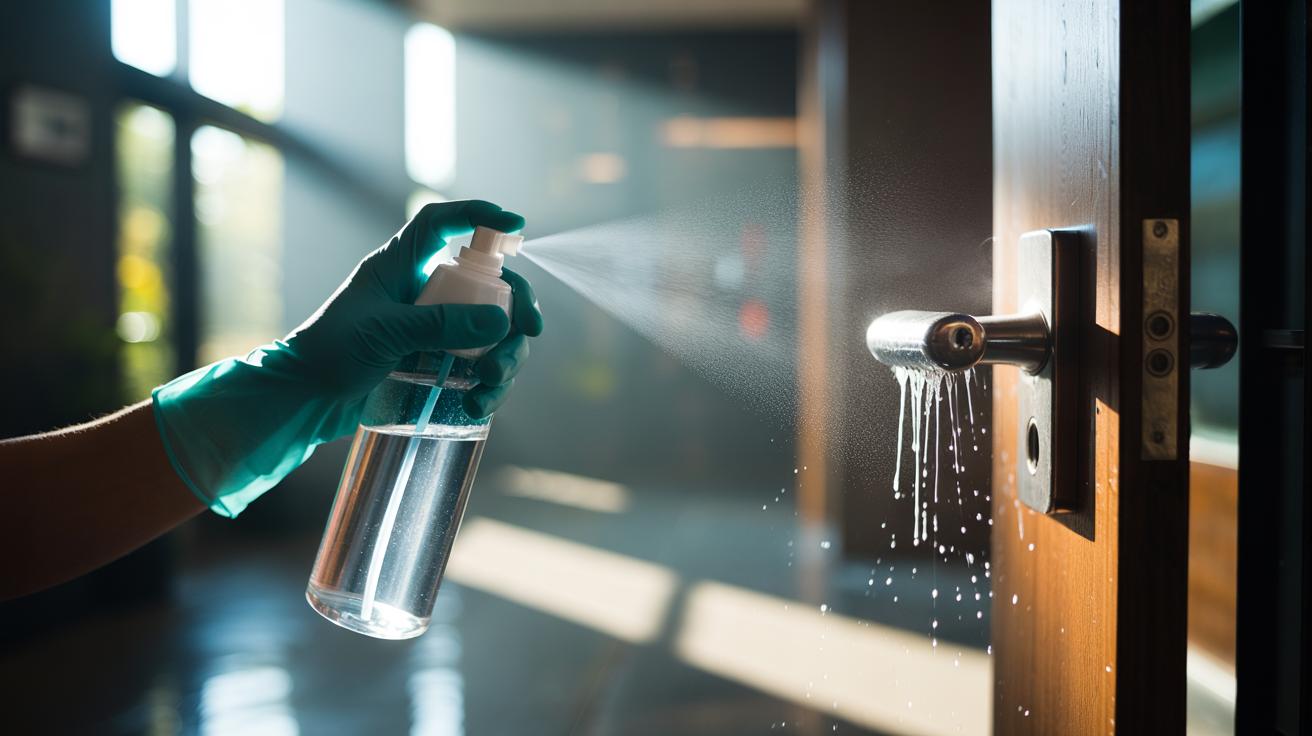
Start with the basics: remove dust and residues with a detergent wipe, then switch to rubbing alcohol for disinfection. Apply with a clean microfibre cloth or a fine mist sprayer until the surface is uniformly wet but not streaming. Work in overlapping strokes. Resist the urge to buff dry; let it evaporate. On phones, tablets, and keyboards, power down first and apply to the cloth, not directly to ports or speaker grilles. Stainless steel, glass, and sealed laminates tolerate alcohol well. Unsealed wood, shellac finishes, and some plastics—especially acrylics and polycarbonates—may cloud, craze, or soften.
Ventilation is your friend. Alcohol vapour builds quickly in tiny rooms. Keep away from flames, hot plates, and sparks—alcohol is highly flammable. Wear light gloves if your skin is sensitive, and store bottles tightly capped, upright, and out of direct sunlight. Don’t mix chemicals. Never combine alcohol with bleach or ammonia-based cleaners. The result can be irritating vapours and wasted efficacy. For high-traffic spots, schedule regular passes: lift contamination after the morning rush, then again mid-afternoon. Consistency converts a good intention into a measurable reduction in risk. Dispose of used cloths responsibly, and rotate clean ones to avoid cross-contamination.
Rubbing alcohol earns its reputation because it’s quick, accessible, and—when used with care—reliably effective. The science is straightforward: right strength, full coverage, enough time, minimal interference. In a world where shared surfaces define our daily routines, that simplicity is powerful. Choose 70–80%, keep it wet long enough, and respect the material you’re treating. The result is a space that feels fresher and tests cleaner. What will you change in your own cleaning routine this week to make every touchpoint safer without adding fuss or fumes?
Did you like it?4.5/5 (21)