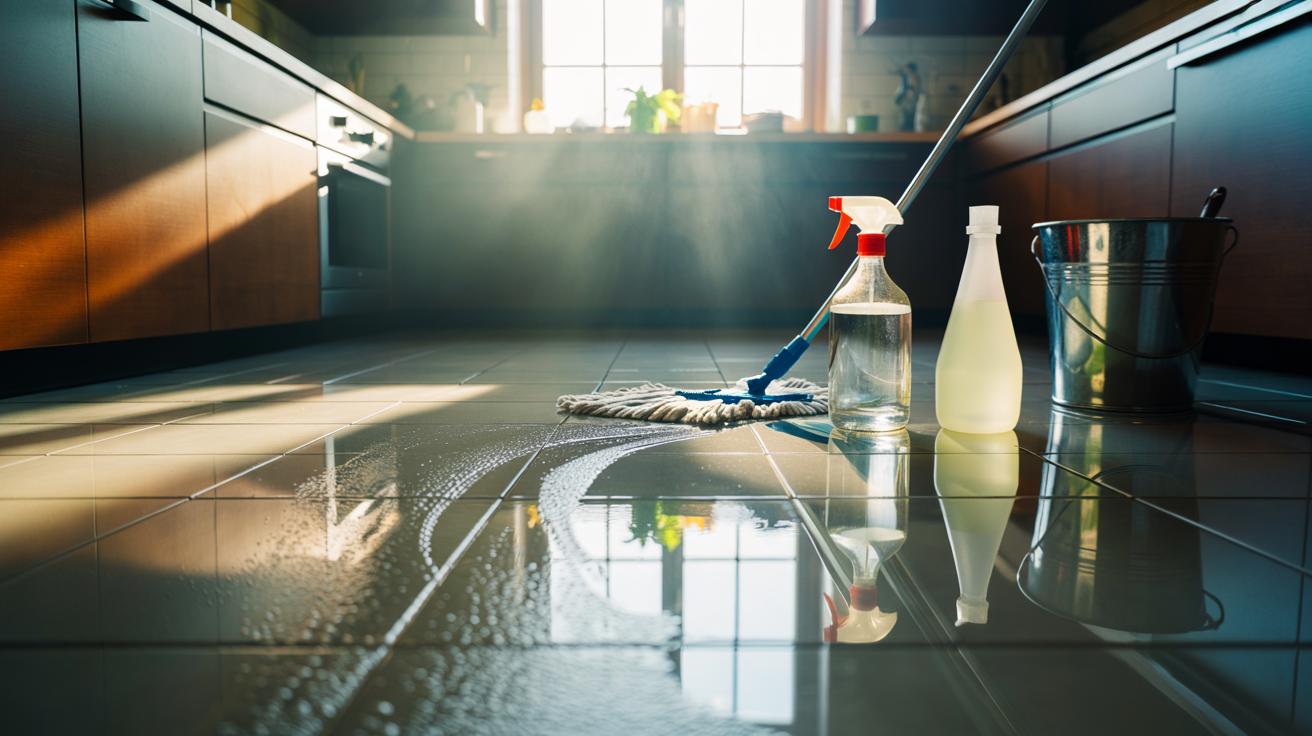
In a nutshell
- 🧪 Chemistry: white vinegar (≈5% acetic acid) neutralises alkaline grime and dissolves mineral films for a residue-free shine on sealed floors; avoid natural stone that can etch.
- ⚖️ Dilution: Everyday 1:10, heavy films 1:8, delicate finishes 1:15–1:20; use warm water and microfibre; if the smell is strong, it’s too concentrated.
- 🧹 Method: Dry sweep first, mix ~100 ml vinegar per 1 L water, mop damp in small sections, brief dwell on spots, rinse the mop often, ventilate and buff—aim for clean, not coated.
- 🚫 Safety: Never mix vinegar with bleach; label sprays; patch test on sealed wood/laminate; do not use on marble, limestone, or travertine; avoid soaking edges and waxed/oiled floors.
- 🔧 Troubleshooting: For streaks use deionised water, reduce strength, add a drop of mild detergent then rinse; brief 1:8 tackles porcelain grout haze; fast-drying, low-cost, odour-cutting clean.
Britain’s floors cop a daily battering from wet shoes, pet paws, and the fine grit that rides in on a gusty day. When time is tight, the quiet hero in the cupboard is white vinegar. Its gentle bite cuts through dulled films and leaves a fresh, quick-drying sheen. No waxy residues. No heavy perfumes. Just clean. There’s chemistry behind that snap-back shine: a mild acid meets everyday alkaline grime and wins. Used correctly, vinegar delivers a fast, low-cost route to a spotless, streak-free surface, especially on sealed hard floors. Here’s how the acidity works, what to avoid, and the precise mix that turns effort into results.
Why White Vinegar Works on Floors
The magic is in acetic acid, the active component of white vinegar at roughly 5% strength with a pH around 2.5. Many soils on floors are mildly alkaline: detergent residue, hard-water films, salt from winter pavements, even fine construction dust. When an acid meets those alkaline traces, it neutralises them, loosening their grip on the surface and allowing a microfibre to lift them away. Vinegar also dissolves mineral deposits that bead water and make floors look streaky. That’s why a diluted wash often dries to a residue-free shine.
Unlike surfactants, vinegar doesn’t foam or lay down films; it simply reacts, then evaporates with water. Always dilute to protect finishes and avoid etching. Think of it as targeted chemistry, not brute force. Its mild antimicrobial effect cuts odours without masking them, useful in busy kitchens or hallways. Yet the acid that helps on ceramic can harm stone. Marble, limestone, and travertine contain calcium carbonate, which acid attacks. The same caution applies to waxed, oiled, or aluminum-trimmed floors. Respect the material, and vinegar repays you with speed and clarity.
Optimal Dilution Ratios and Tools
The right mix matters more than elbow grease. Start with clean microfibre, warm water, and distilled vinegar. For everyday maintenance on sealed ceramic, vinyl, and laminate, aim for roughly 1:10 (one part vinegar to ten parts water). Heavy films or salty winter residues may need 1:8. For delicate finishes, widen the margin to 1:15 or 1:20. If you can smell strong vinegar while mopping, it’s usually too concentrated. Warm water speeds reaction and evaporation, reducing streaks. A flat microfibre mop head covers corners quickly, while a spray bottle gives precise, light application—less liquid, faster drying, cleaner grout.
| Floor Type | Suggested Dilution | Dwell Time | Notes |
|---|---|---|---|
| Sealed Ceramic/Porcelain | 1:8 to 1:10 | 1–2 minutes | Lift mineral haze; rinse optional. |
| Luxury Vinyl/Laminate | 1:10 to 1:15 | No dwell | Light mist; avoid soaking edges. |
| Sealed Hardwood | 1:15 to 1:20 | No dwell | Test first; use barely damp mop. |
| Natural Stone (Marble, Limestone) | Do not use | — | Acid can etch stone. |
If you battle limescale from hard water, consider mixing with deionised water to prevent fresh mineral spotting. A few drops of mild, dye-free detergent in the bucket can help lift greasy kitchen films, but keep it scant to avoid residue. Less liquid, better cloths, smarter chemistry—that’s the winning trio.
Step-by-Step Method for a Spotless, Fast Finish
Preparation first. Dry sweep with a microfibre dust mop to remove grit that causes swirls. Mix your solution—say 100 ml white vinegar in 1 litre warm water for general grime—then wring your mop until just damp. Excess water is the enemy of a streak-free finish and can swell vulnerable floorboards. Work in small sections from the room’s far corner, edging toward the exit to avoid footprints.
Mist or lightly mop the floor, allowing 60–90 seconds on stubborn patches. Agitate with modest pressure; microfibre’s split fibres grab loosened soils without scouring. For heel marks, a dab of the solution on a cloth rubs them out quickly. Rinse the mop head often. Dirty solution simply redeposits muck, causing the hazy look people blame on vinegar. In high-traffic lanes, a second pass at 1:8 can restore clarity fast.
Finally, let it flash-dry. Open a window, nudge the heating on low, or run a fan for two minutes. If you spy any faint streaks, buff with a dry microfibre. The shine isn’t polish; it’s the clean base revealed. That’s the point. Clean, not coated.
Safety, Compatibility, and Troubleshooting
Respect the acid. Never mix vinegar with bleach or products containing chlorine—dangerous gases can form. Avoid combining strong oxidisers and acids in the same container, and label spray bottles clearly. For finishes you’re unsure about—sealed wood, matte laminate—do a patch test in an inconspicuous spot at the weakest ratio. If the sheen dulls or the surface feels tacky, stop and rinse with plain water.
Streaking? Two common culprits: hard water and overuse. Switch to deionised water and reduce vinegar to 1:15. Greasy kitchen films lingering after cooking may need a single drop of mild detergent in the bucket, followed by a quick plain-water pass. Grout haze on porcelain responds well to 1:8, but keep contact brief and rinse; porous, unsealed grout can darken if over-wetted. Do not use on marble, limestone, or travertine—acid etches these stones. Waxed or oil-finished floors can lose their protective layer; stick to manufacturer-recommended cleaners. Pets and children? Ventilate. The smell fades fast, but fresh air speeds it along and keeps the routine pleasant.
Used intelligently, white vinegar is a nimble, low-cost ally for floors that need a fast reset from dull to bright. Its acidity dislodges the films that make surfaces look tired, and a good microfibre finishes the job without drama. The result is a crisp, residue-free sheen that dries quickly and holds up to daily traffic. Keep the mix mild, the mop damp, and the passes light, and you’ll avoid the pitfalls people blame on the product rather than the process. Where could a sharper, simpler routine save you the most time at home, and what surface would you test first?
Did you like it?4.4/5 (28)