In a nutshell
- 🔬 Science that works fast: Vinegar’s acetic acid dissolves mineral scale and detergent film, clearing haze in seconds; a quick vinegar dab test distinguishes removable deposits from permanent etching.
- 🧼 Proven method: Wash, then apply white distilled vinegar (1:1 with water or neat for heavy buildup) for 10–30 seconds up to 10 minutes, wipe with microfibre, hot-rinse, steam briefly, and buff dry for a streak-free gleam.
- 🧪 Right supplies: Choose 5% white distilled vinegar for most jobs; use 6–8% cleaning vinegar cautiously; avoid cider/malt due to colour/odour; pair with microfibre cloths, bottle brush, and test decorated or antique glass first.
- ⚠️ Safety essentials: Never mix vinegar with bleach, limit contact on lead crystal and gilded rims, protect natural-stone surfaces, wear gloves if sensitive, and ventilate; if clarity doesn’t return, the glass is likely etched.
- 🔁 Troubleshooting and prevention: Tackle hard water at the source—maintain dishwasher salt and filters, use low-residue detergent, run a monthly vinegar cycle, or add a vinegar splash to the final handwash rinse to prevent new deposits.
Hard water leaves a dull veil on treasured wine glasses, tumblers, even decanters. The culprit is mineral scale and detergent film, not grime. The fix sits in most kitchen cupboards. Vinegar. This unassuming liquid cuts through the cloudiness at speed, restoring sparkle without scratching or perfume-heavy chemicals. It’s cheap, green, and brilliantly effective. In many cases, clarity returns in seconds. Here’s the science behind the shine, a precise routine that works first time, and the safety notes professionals follow when they polish to publisher-ready perfection.
Why Vinegar Dissolves Cloudy Residue
Most cloudy glass is the result of hard-water minerals—chiefly calcium carbonate—bonding to the surface during washing or air-drying. Acetic acid, the active ingredient in vinegar, reacts with carbonates, converting stubborn scale into soluble salts and releasing carbon dioxide. That reaction is fast. It appears almost like a magic trick because the invisible chemistry is immediate where the acid touches the film.
There’s another frequent offender: a whisper-thin layer of detergent residue or rinse-aid. Vinegar’s acidity disrupts these residues too, loosening surfactant films so they rinse clean. If the haze vanishes after a swipe with vinegar, you’re dealing with deposits rather than dirt. That distinction matters for what you do next and how gentle you can be with heirlooms.
However, not all haze is removable. Long exposure to heat, alkaline detergents, or gritty abrasion can cause etching—microscopic pits that scatter light permanently. Quick diagnostic: dab a drop of vinegar on a small patch for 30 seconds. If the spot turns clear, it’s scale. If it stays matte, it’s etched, and no acid will fix it. Polishing can improve the look, but chemistry cannot rebuild glass.
Step-By-Step Method for Crystal-Clear Glassware
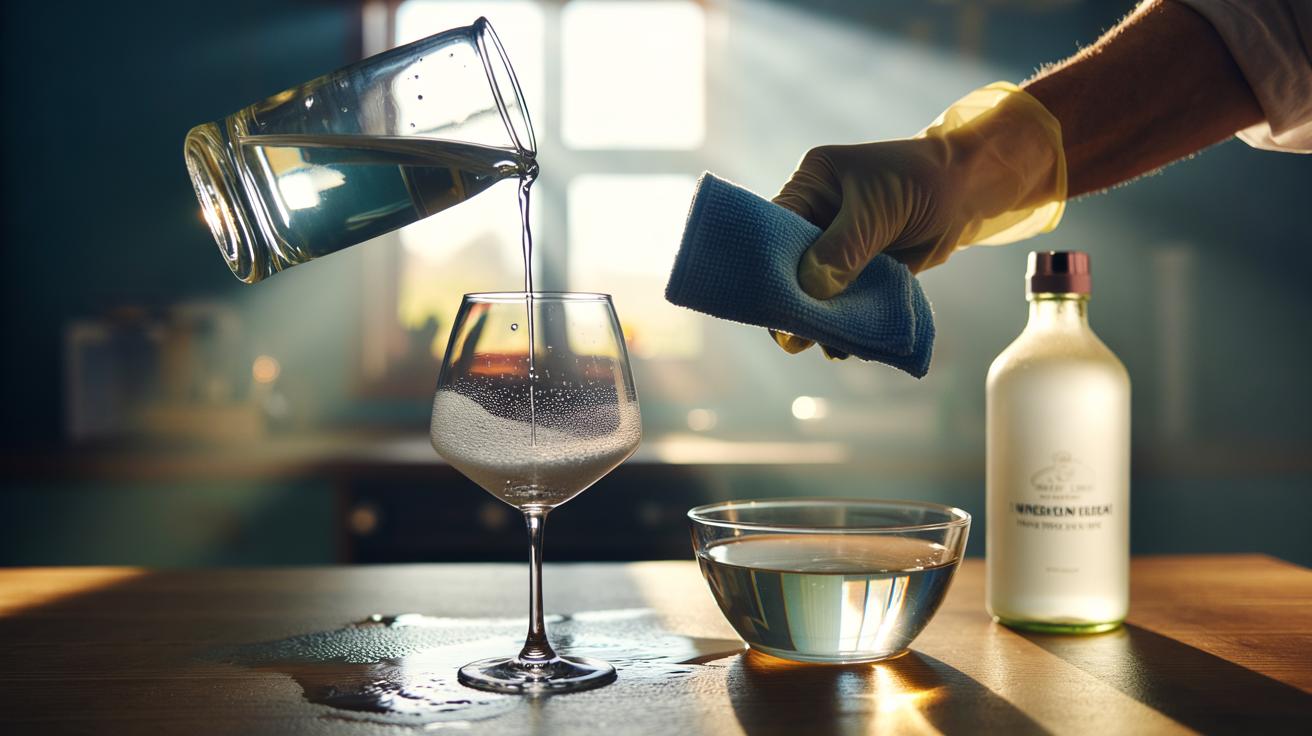
Start simple. Wash each piece in warm water with a fragrance-free detergent to remove loose grime. Rinse. Then choose your strength: for routine cloudiness, mix equal parts white distilled vinegar and water; for stubborn scale, use vinegar neat. Light haze often clears within 10–30 seconds of contact. For heavy build-up, submerge for 5–10 minutes. Agitate gently to dislodge bubbles and expose every surface.
Now wipe. Use a soft microfibre cloth or a non-scratch sponge, running from rim to base to avoid fingerprints and streaks. A bottle brush reaches narrow stems and decanters; a soft toothbrush tackles seams. Rinse thoroughly with hot water to carry away dissolved minerals and any lingering acidity. Shake off excess and place the glass upside down on a clean rack. For a flawless finish, steam briefly over a kettle and buff with a dry, lint-free towel. This evaporates moisture swiftly and leaves a gallery-bright gleam. Store glasses upright once fully dry to prevent trapped humidity from inviting new deposits.
Choosing the Right Vinegar and Tools
For clarity without side effects, reach for white distilled vinegar at around 5% acetic acid. It’s colourless, cheap, and leaves minimal odour after a good rinse. Cleaning vinegar (6–8%) works faster on heavy scale but demands care with delicate decorations. Cider and malt vinegars bring colour and aroma; they can impart a faint tint or scent. Keep them for chips, not crystal. Pair your vinegar with the right kit: microfibre cloths, a soft bottle brush, nitrile gloves for sensitive skin, and a non-metal bowl for soaking.
Use dilution to match the mess. A 1:1 mix is perfect for dishwasher film or light limescale. Neat vinegar bites through stubborn deposits, though it should only touch etched or decorated glass briefly. Always test on an inconspicuous spot if the piece is painted, gilded, or antique. The goal is speed and precision, not a long acid bath.
| Vinegar Type | Acetic Acid % | Typical Soak Time | Pros | Watch-outs |
|---|---|---|---|---|
| White Distilled | 5% | 30 sec–10 min | Colourless, reliable, low odour | Rinse well to avoid faint smell |
| Cleaning Vinegar | 6–8% | 15 sec–5 min | Faster on heavy scale | Test on delicate finishes |
| Cider/Malt | ~5% | 45 sec–10 min | Easily available | Colour and odour transfer risk |
If odour lingers, a final rinse with hot water and a short air-dry cures it. Never mask with scented detergents; remove the cause instead. Your glasses should smell of nothing at all.
Troubleshooting, Safety, and Pro Tips
If deposits return, look upstream. Hard water is relentless. Check your dishwasher’s salt and filter, switch to a low-residue detergent, and choose a longer hot rinse. Add a monthly maintenance clean: run an empty dishwasher with a bowl of vinegar on the top rack. For handwashing households, finish with a vinegar splash in the final rinse to prevent new limescale from forming as glasses dry.
Handle special pieces with respect. Lead crystal or gilded rims dislike prolonged acidity; keep contact brief and rinse immediately. Painted or printed decorations can be fragile—test first. Never mix vinegar with bleach or chlorine-based cleaners; toxic chlorinated gases can form. Keep vinegar away from natural stone worktops, which can etch; work over a tray or in a plastic basin instead. Wear gloves if your skin is sensitive, and ventilate the area.
Pro polishers swear by two finishing touches. First, heat: warm rinse water speeds evaporation and reduces spotting. Second, a final buff with a dry microfibre cloth, holding the bowl and stem separately to avoid torsion. If etching is the issue, no acid will cure it, but you can disguise it slightly with a cerium-oxide polish or, more practically, reserve those glasses for sparkling water where bubbles distract the eye. Clarity shouldn’t require force; the right chemistry does the heavy lifting.
Vinegar earns its pedestal because it’s fast, safe on most glass, and devastatingly effective against the mineral films that dull everyday brilliance. A minute of contact, a careful wipe, and a hot rinse transform cloudy stems into centrepiece sparkle with minimal effort. The method is repeatable, the supplies are modest, and the results feel expensive. Once you’ve watched the haze lift in seconds, you’ll never scrub blindly again. Ready to put it to the test this week—and which glass in your cupboard deserves the first reveal?
Did you like it?4.5/5 (20)