In a nutshell
- 📰 Using old newspapers delivers a streak-free, lint-free finish by combining cellulose absorption with trace ink transfer that subtly polishes glass.
- 🔬 The science: cellulose fibers wick moisture while carbon-black pigments act as a micro-polish, smoothing micro-defects and sharpening reflections.
- 🧰 Method: Light mist of a vinegar-water solution (with a little washing-up liquid; optional alcohol for quick drying), clean with one sheet, then buff with a dry sheet using S-shaped strokes.
- ⚠️ Caveats: Avoid glossy magazines, coloured inserts, direct sun, porous frames, and test on Low‑E or coated glass; replace paper as it softens.
- ♻️ Sustainability: Repurposing newsprint cuts waste and chemicals, offering a cheap, eco-friendly alternative to microfibre and disposable wipes.
Across Britain, the old newspaper on your doorstep might be the brightest tool in your cleaning arsenal. Long before microfibre cloths filled the aisles, households swore by newsprint for polishing glass with minimal fuss and maximum clarity. The method still works, and not just out of nostalgia. It’s chemistry, physics, and a touch of thrift. As the ink meets glass, it transfers in microscopic amounts, levelling out imperfections and wicking away moisture. The result is a fast, streak-free finish without lint or cloudy residue. Done properly, it’s cleaner, cheaper, and kinder to the planet. Let’s unpack how the ink behaves—and how to make the most of it.
Why Newspaper Leaves Glass Gleaming
Glass seems smooth but holds tiny pits and grooves that trap moisture and surfactant. The humble newspaper addresses this in two ways. First, its cellulose fibre structure is remarkably absorbent, pulling away the water film before it dries into streaks. Second, newsprint ink—often soy- or mineral-oil-based with carbon black—transfers in trace amounts to fill micro-defects, leaving a uniform sheen. On non-porous glass, that ultra-thin deposit acts like a polish rather than a stain. It’s the same principle you see in ultra-fine automotive polishes: tiny particles, huge difference.
The trick is control. Too much liquid dilutes the ink and makes sludge. Too little, and friction wins. Use a light mist, not a soak. Avoid glossy supplements or magazine stock; the coatings smear. Stick to ordinary, matte newsprint. If you’re sceptical, try a half-pane test and watch how reflections sharpen, edges crisp, and the grey haze vanishes. No lint. No fibres. No tell-tale drag marks. That’s the quiet science at work.
| Element | Purpose | Notes |
|---|---|---|
| Newsprint Cellulose | Absorbs moisture film | Low lint; conforms to glass |
| Ink Pigment (Carbon Black) | Micro-polish effect | Transfers in trace amounts only |
| Vinegar Solution | Cuts mineral haze | 1:1 with water works well |
| Isopropyl Alcohol | Speeds evaporation | Use 5–10% for cold, damp days |
Step-By-Step: The Classic Newsprint Method
Start with a simple mix: half distilled white vinegar, half water, plus two drops of washing-up liquid per litre. For winter windows or bathroom mirrors, add 5–10% isopropyl alcohol to speed drying. Decant into a fine-mist spray. Never clean glass in direct sun—evaporation outruns you and bakes streaks in place. Lay towels along the sill to protect paintwork.
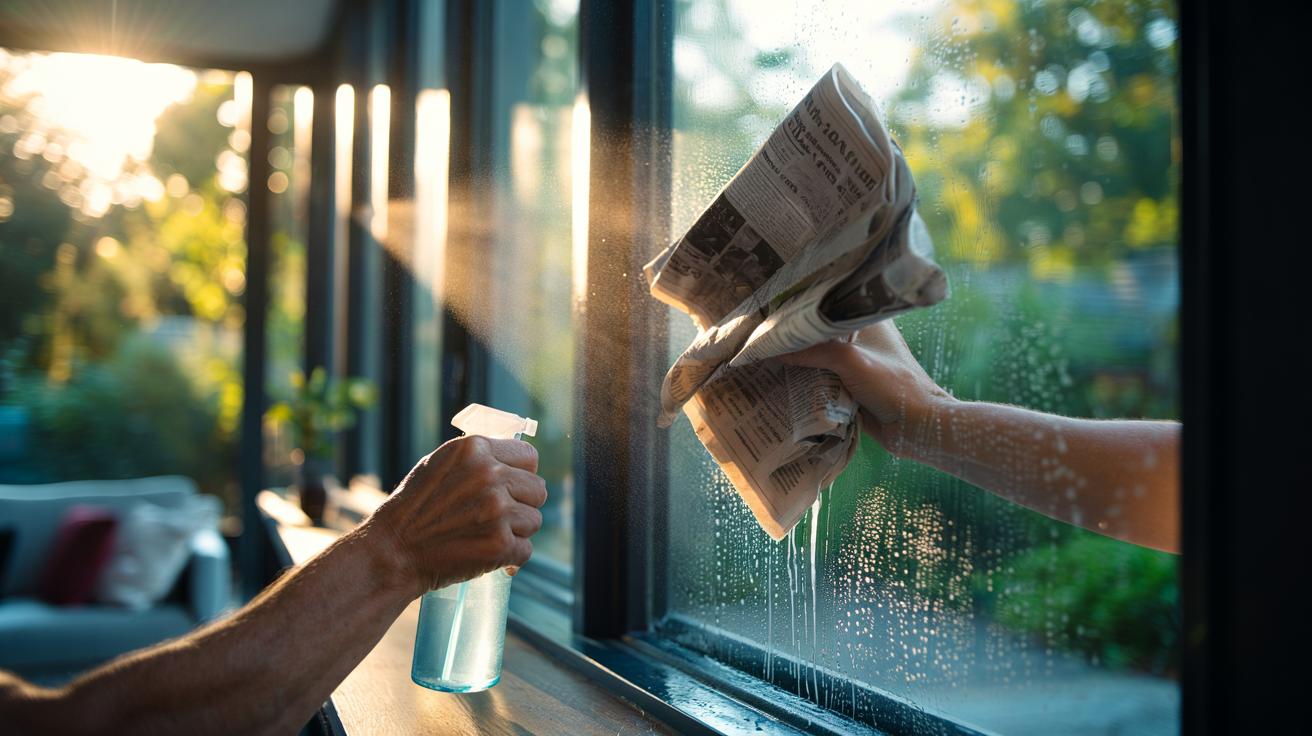
Scrunch a full broadsheet page into a loose ball. Spray the glass lightly. Work in deliberate S-shapes from top-left to bottom-right, keeping a wet edge. Replace the paper the instant it softens or darkens. A second, dry sheet is your polisher: glide it over the damp pane to lift the final film. For edges and corners, twist a strip of paper into a point and trace the frame line, then finish with your dry sheet. If you see smears, you’re either using too much solution, too little pressure, or a coated paper insert. Adjust accordingly.
For greasy fingerprints, pre-spot with a microfibre and a dab of methylated spirits, then switch back to newspaper for the polish. Two newspapers, two roles—one to clean, one to buff—keeps the finish consistent. The last pass should be feather-light. Look across the glass at a sharp angle; a uniform reflection means you’re done.
Safety, Sustainability, and When Not to Use It
Modern UK news inks are generally low in volatile solvents and heavy metals under EU and British standards, making the method safe for household use. Still, common sense matters. Wear thin gloves if you’re tackling a full conservatory—ink can mark skin and white frames. Avoid rubbing newsprint onto porous uPVC seals, raw timber, or limewash; pigment can migrate. Test a bottom corner if you suspect a specialist coating, such as Low‑E or self-cleaning glass. On those surfaces, the ink’s micro-polish can mute optical coatings.
From an environmental angle, this is a quiet win. You’re upcycling a product that’s already circulated, skipping synthetic wipes, and using a simple, low-tox solution. When finished, bin the inky paper with general waste if local rules advise, or recycle if clean enough—check council guidance. Steer clear of glossy magazines and colour supplements; the clay coats and waxy finishes smear and leave drag marks. If you’ve applied aftermarket tint film, consult the manufacturer before using vinegar solutions or any abrasive action, even micro-scale. And for heritage sash windows with flaking lead paint, keep the glass method but vacuum and mask frames first.
When the method is matched to the right surface, the blend of capillary absorption and pigment-level polishing is hard to beat. It’s frugal. It’s fast. And it’s satisfyingly old-school.
In a disposable age, newsprint window polishing endures because it works, not because it’s quaint. The cellulose absorbs; the ink refines; the vinegar dissolves haze; the alcohol chases moisture. Results arrive in minutes, even on big panes. There are caveats—no glossy inserts, avoid direct sun, protect frames—but the pay-off is crisp reflections and that silent “wow” as the room brightens. Ready to try it on your kitchen windows, a bathroom mirror, or the conservatory doors—and which pane will you test first to see the streak-free difference?
Did you like it?4.4/5 (21)