In a nutshell
- 🧪 Vinegar reveals, not adds, shine: acetic acid dissolves alkaline film and mineral haze so the existing finish reflects light, restoring a natural gloss.
- 🧹 Quick mop method: vacuum first, then use 1/4 cup (60 ml) vinegar per 1 gallon (4–5 L), a well-wrung microfibre mop, work with the grain, and buff dry for results in seconds.
- ✅ Safe-use rules: ideal for sealed hardwood/laminate; avoid drenching, keep pads damp, and never mix with bleach for a clean, streak-free finish.
- 🧰 Tools and ratios: choose distilled white vinegar (5%), swap dirty pads, refresh solution often, and consider a touch of isopropyl alcohol for faster drying.
- ⚠️ Limits and fixes: not for waxed or oil-finished wood or unsealed boards; if you see streaks, rinse or replace the pad, and tackle heavy grime with a neutral pH cleaner before a light vinegar pass.
There’s a quiet magic in watching dull boards wake up and glow. A quick pass of a mop, a whisper of distilled white vinegar, and suddenly the grain jumps, the room brightens, and the floor seems younger than yesterday. This isn’t about coating wood with gloss; it’s about revealing what’s already there by stripping away residue that masks clarity. The method is fast, frugal, and friendly to busy homes. Used correctly, a diluted vinegar solution can cut film in seconds and leave a crisp, natural sheen. Here’s the science, the step-by-step, and the safety notes that keep the shine effortless and the wood protected.
The Science of Vinegar and Wood Shine
The shine you admire isn’t “added” by vinegar. It’s the finish—usually polyurethane—doing its job, reflecting light without interference. Over time, alkaline residues from soap, hard water, and tracked-in dust scatter light and dull that reflection. Enter acetic acid, the mild star in household vinegar. At around 5% acidity, it neutralises alkaline film and dissolves mineral haze, so the sealed surface can gleam again. The goal is not to strip the finish, but to free it from what’s dimming it.
On sealed hardwood, a properly diluted solution works quickly because the finish is non-porous, allowing grime to release with minimal effort. Microfibre adds gentle mechanical action, lifting particles without scratching. Hard water area? Expect even bigger gains—vinegar breaks the calcium carbonate responsible for those telltale streaks. Still, concentration matters. Too strong and you can soften certain coatings over time. Too wet and water creeps into seams. Always test in a low-traffic corner and keep the mop damp, not dripping. Treat the chemistry with respect and it rewards you with a clean, sharp, and authentically natural gloss.
Step-by-Step Quick Mop Method
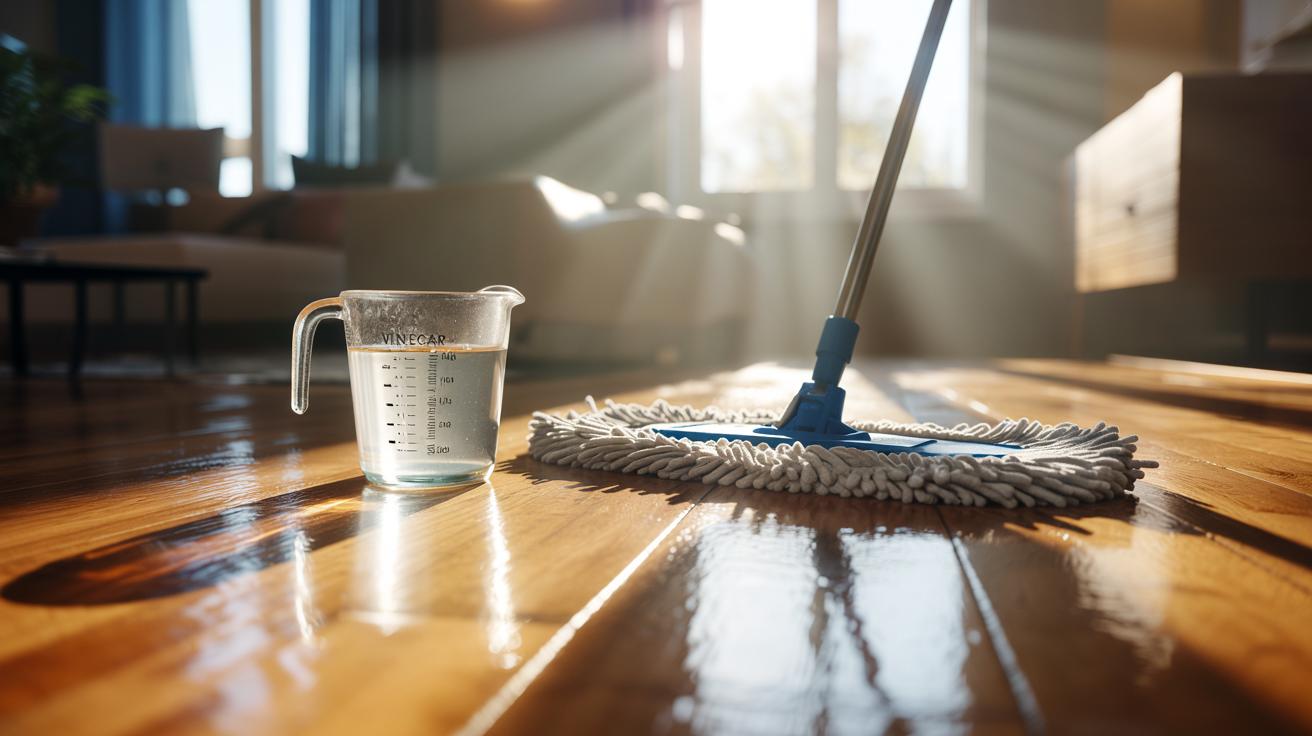
Start by vacuuming or sweeping. Loose grit scratches; shine hates scratches. Mix your solution: about 1/4 cup (60 ml) vinegar per 1 gallon (4–5 L) of warm water. This 1:80–1:100 range is strong enough to cut residue yet gentle on modern finishes. Some pros add a teaspoon of isopropyl alcohol to speed drying, especially in humid flats. Optional, not essential.
Now wring. Really wring. Standing water is the enemy of wood. Use a flat microfibre mop, damp only, and work with the grain in smooth, overlapping passes. The first run lifts the haze. A second light pass—freshly rinsed and wrung—polishes what remains. Move briskly. Open a window if possible. For extra pop, follow with a dry microfibre pad and buff high-traffic lanes in quick, short strokes. It takes seconds. The effect is immediate. No sticky residue, no perfume cloud, just a crisp, clean reflection that looks like effort but wasn’t. If you see streaks, your pad is overdue for a rinse.
Ratios, Tools, and Safe Surfaces
Not all floors, not all finishes. Get the match right and the method sings. Choose distilled white vinegar—it’s consistent, cheap, and leaves no sugar or fragrance film. Keep dilution generous; stronger isn’t better. Microfibre does the heavy lifting, while the acid handles chemistry. Frequency? Weekly or after mess-heavy days is typical for bustling households. When in doubt, reduce concentration and increase buffing.
| Item | Recommendation |
|---|---|
| Vinegar Type | Distilled white, 5% acidity |
| Dilution | 60 ml per 4–5 L water (approx. 1:80–1:100) |
| Mop/Pad | Flat microfibre, well wrung, plus a dry pad for buffing |
| Sealed Hardwood / Laminate | Safe when damp; work quickly; buff dry |
| Waxed or Oil-Finished Wood | Not recommended; vinegar can cloud or strip wax |
| Unsealed Wood | No; water can swell fibres |
| Stone/Marble Nearby | Avoid overspray; acid etches stone |
| Frequency | Weekly or as needed; spot-clean between |
Never drench the floor, never mix vinegar with bleach, and always change dirty solution before it re-deposits film. Respect these basics and the shine stays honest, bright, and quick to achieve.
Troubleshooting and Myths
Seeing streaks? Your pad is overloaded or the solution is grimy. Swap pads mid-clean, especially after kitchen runs where grease builds. Smell lingering? Use hotter water, better ventilation, or a second pass with plain damp microfibre; the odour flashes off as it dries. If the floor feels sticky, it’s not the vinegar—it’s leftover soap; repeat with fresh mix and a clean pad.
Heard that vinegar “ruins” hardwood? Context matters. Heavy, frequent, high-acid cleaning can stress certain finishes, yes. But a properly diluted, damp-application routine on modern, sealed floors is a different story. It lifts haze rather than attacking the finish. It won’t fix scratches or sun fade—no cleaner can. It will not add plastic shine, only reveal true clarity. Have prefinished boards with aluminium-oxide topcoats? Many tolerate damp mopping just fine, but check guidance. When the job is heavy—paint, tar, construction dust—use a neutral pH cleaner first, then a light vinegar pass to clarify. Keep it simple, keep it sparse, and let microfibre do the glamour work.
The charm of this method lies in its honesty: a fast, light clean that restores what your floor already owns—a stunning natural gloss. It’s budget-friendly, low on chemicals, and easy to fold into a Saturday sweep. Test small, dilute well, wring hard, and buff quickly; the routine soon becomes muscle memory. Clean clarity beats artificial shine every time. Ready to try a quick mop and see the grain pop under your feet—and if you do, which room will you revive first, and what dilution works best in your water?
Did you like it?4.5/5 (21)