In a nutshell
- 🧪 Acetic acid softens fabrics by neutralising alkaline detergent residue and dissolving hard-water minerals, restoring natural drape and reducing static in minutes.
- 🧼 Use distilled white vinegar (5%) in the rinse cycle: 60–120 ml for standard loads, 30–60 ml for small loads, or 1 tbsp per litre for hand-washing; odour dissipates as clothes dry.
- ⚠️ Safety first: Never mix vinegar with chlorine bleach, avoid pouring it neat on garments, and patch-test delicate dyes or trims; keep contact to the rinse, not long soaks.
- 🧺 Targeted fixes: revive stiff towels, reduce static cling in synthetics, clear residue from microfibre, and soften denim without waxy build-up—especially effective in hard-water areas.
- 🌍 Cost and eco edge: skip quaternary-ammonium softeners, cut packaging and fragrance load, and spend pennies per wash while maintaining towel absorbency and machine-friendly rinses.
Put simply, white vinegar is the quiet hero of the laundry cupboard. A dash in the rinse can turn board-stiff towels into plush loops and tame static-ridden synthetics without perfumes or residue. The secret is acetic acid, a gentle, food-grade acid that rebalances pH and dissolves the mineral build-up that makes fabrics feel scratchy. Results are quick. One rinse cycle. Minutes, not hours. It’s a thrifty, low-waste alternative to commercial softeners that often flatten fibres and reduce absorbency. Used properly, it’s safe for most everyday loads. Use distilled white vinegar only, and stick to the rinse stage for best results.
The Chemistry Behind Acetic Acid Softening
Why does acetic acid make laundry feel supple? Chemistry, not magic. Detergents and hard water leave alkaline residues and microscopic mineral deposits on fibres. That residue stiffens cotton, traps odours, and encourages static. Vinegar lowers the rinse water’s pH, neutralising leftover alkalinity so fibres release trapped surfactants. Simultaneously, acetate ions convert scale into more soluble salts, loosening calcium and magnesium from the yarn surface. Once those deposits rinse away, the fabric’s natural drape returns.
There’s also a charge effect. Slight acidity alters the surface charge of fibres, which helps reduce static cling in synthetics and allows water to sheet off more cleanly. Towels benefit twice: no waxy softener film to block loops, and no minerals to make them crunchy. The process is fast because it happens at the interface of fibre and water during the rinse cycle. A few minutes of contact is enough. Do not pour neat vinegar directly on garments; always dilute in the machine’s dispenser or rinse water.
Expect subtlety, not perfume. The faint vinegar note evaporates as fabrics dry, leaving no lingering scent or residue. On colourfast everyday cottons and blends, the effect is reliably soft, springy, and clean-feeling. For very delicate dyes or specialist finishes, test first.
How to Use Vinegar in Modern Washing Machines
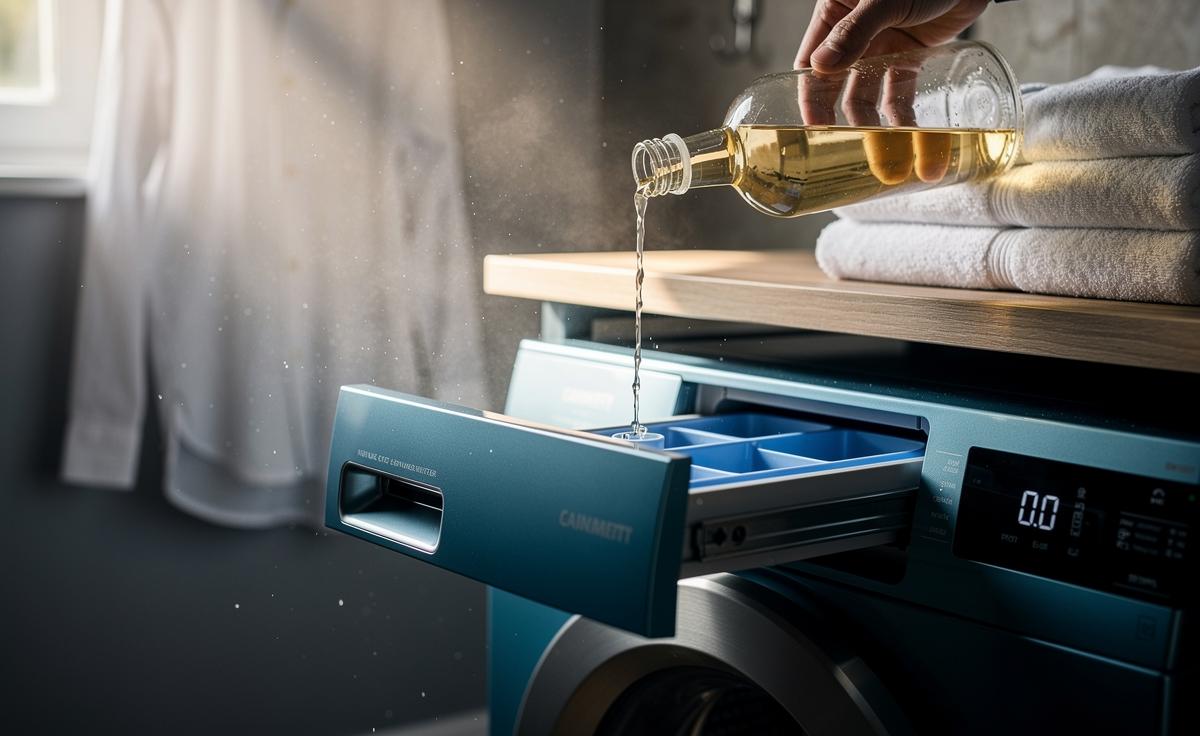
The method is simple. For a standard 7–9 kg UK load, add 60–120 ml of distilled white vinegar (5% acetic acid) to the fabric softener drawer. The machine will release it in the final rinse. That’s the sweet spot: low enough for safety, strong enough to neutralise residue and dissolve mineral films in minutes. For compact loads, 30–60 ml often suffices. Front-loaders prefer the drawer; top-loaders can take vinegar added just as the rinse begins, ensuring even dilution.
Hand-washing a few items? Mix 1 tablespoon per litre of cool water for a five-minute swish, then a quick clean-water rinse. Athletic kit with embedded detergent? Use the higher end of the range and select an extra rinse. Worried about odour? It dissipates on drying. Want a hint of freshness? Add 2–3 drops of laundry-safe essential oil to the dispenser, not the drum. Never mix vinegar with chlorine bleach; the combination can release hazardous chlorine gas.
Use the table below to match scenarios and amounts quickly.
| Laundry Scenario | Vinegar Amount | When to Add | Notes |
|---|---|---|---|
| Everyday cottons/towels | 60–120 ml | Final rinse via softener drawer | Softens without reducing absorbency |
| Sportswear/synthetics | 90–120 ml | Final rinse | Helps with static and trapped odours |
| Hand-wash delicates | 1 tbsp per litre | 5-minute rinse soak | Patch-test dye stability first |
| Hard water areas | Up to 120 ml | Final rinse | Improves feel in London/East Anglia |
Targeted Solutions for Common Fabric Problems
Stiff towels? That crunchy feel comes from hard water scale and detergent residues fusing at the loop tips. Run a hot wash with your usual detergent, then add 120 ml vinegar in the rinse. Dry thoroughly. They spring back. Microfibre cloths losing bite? Skip softeners entirely and use 60 ml vinegar in the rinse to clear residue so fibres can grip again. For athleisure that smells “clean” yet stale, the culprit is trapped surfactant. Choose a cool wash, low-suds detergent, then 90–120 ml vinegar in the rinse to reset pH and release films.
Static cling in leggings or linings responds well to a vinegar rinse because it boosts surface conductivity. Dark denim feeling cardboard-stiff? Inside-out wash, minimal detergent, then 60–90 ml vinegar; it softens without the waxy feel that can mute texture. Baby clothes and muslins benefit too: soft, residue-light, and unscented. Avoid prolonged vinegar soaks on garments with acetate trim, fragile elastics, or metal embellishments; keep contact to the rinse window and test inconspicuous areas.
For stubborn limescale build-up on machine internals, run an empty maintenance cycle with machine cleaner as per the manufacturer. Then resume vinegar in the rinse for normal loads. Vinegar is for the rinse, not for descaling heating elements unless your manual explicitly allows it.
Sustainability and Cost: Why Households Are Switching
Households in the UK’s hard-water belt are moving to vinegar for two reasons: performance and footprint. Commercial softeners rely on quaternary ammonium compounds and heavy fragrance to mask stiffness, but these can reduce towel absorbency and persist in waterways. Vinegar avoids that film. Packaging is lighter, refill options abound, and the per-wash cost is low: a typical 750 ml bottle at supermarket prices delivers 6–12 rinses. That’s pennies per cycle for genuinely softer fabric in minutes.
There’s also the machine-friendly angle. A clean rinse cuts residue, helping fabrics dry faster and feel fresher without extra heat. Fewer additives, simpler chemistry, less build-up. In normal household dilutions, vinegar in the rinse cycle is gentle on seals and hoses because it’s immediately diluted in several litres of water. Keep it measured, not glugged. Stick to food-grade distilled white vinegar at 5% acidity; higher strengths are unnecessary for laundry. The result is consistent: soft hand-feel, better drape, and no cloying scent clouding the airing cupboard.
For a humble pantry staple, acetic acid works hard: it neutralises residue, loosens mineral deposits, reduces static, and restores the natural movement of cloth in a single rinse. The method is quick, cheap, and friendly to towels that need to stay absorbent. When used thoughtfully, it dovetails with modern machines and hard-water realities across the UK. Measure, add in the rinse, and never mix with bleach. Ready to reclaim the soft feel of your favourite fabrics without the perfume parade—what load in your laundry basket will you try it on first?
Did you like it?4.6/5 (20)