In a nutshell
- 🧪 Toothpaste brightens grout thanks to mild abrasives (hydrated silica, calcium carbonate) and foaming surfactants (SLS); the paste clings to joints, lifting film without harsh chemicals.
- 🪥 Method: start dry, dab white, non-gel toothpaste along lines, scrub with a soft toothbrush, allow 3–5 minutes’ dwell, then rinse thoroughly and buff tiles dry to prevent residue.
- ✅ Product picks: choose white, non-gel; avoid charcoal or dyed gels that can stain porous grout. Hydrogen peroxide “whitening” pastes may lighten coloured grout—test first.
- ⚠️ Limits and safety: not for deep mould, heavy limescale, or efflorescence; avoid use on natural stone surfaces and never mix with bleach. Escalate to specialist cleaners or regrouting when needed.
- ✨ Keep the sparkle: prioritise prevention—ventilation, quick squeegees, weekly microfibre wipes, occasional spot-cleans, and seal grout annually to repel stains and make future cleaning easier.
There’s a quiet cleaning hack hiding in the bathroom cabinet. Ordinary toothpaste can lift dingy film and revive dull grout with surprising ease, leaving a fresh, minty scent behind. The trick isn’t magic. It’s chemistry and gentle abrasion working together. When used correctly, this humble paste can cut through soap scum, hard-water haze, and cosmetic residue that cloud otherwise lovely tiles. It’s inexpensive. It’s accessible. And it is kinder to surfaces than many aggressive bathroom sprays. Used judiciously and rinsed thoroughly, toothpaste can be a practical spot-cleaner for grout lines and splash zones, especially between deeper cleans.
Why Toothpaste Works on Grout
Toothpaste blends mild abrasives with light surfactants. Hydrated silica or calcium carbonate provides a fine mechanical scrub that dislodges film without the harshness of scouring powders, while agents like sodium lauryl sulfate (SLS) loosen grime so it can be wiped away. Many formulas sit near neutral pH, which helps protect cementitious grout during short contact times. Add peppermint oils, and you also get that unmistakably clean minty finish. It’s a double act: gentle grit plus foaming lift.
There’s also dwell time. Because toothpaste is a paste, it clings to vertical joints rather than running off, allowing targeted action on the line that most often looks grey. A thin smear across the grout rib can soften residues in minutes. The result: quicker brightening with less elbow grease, and fewer chemical fumes. That said, restraint matters. Brighteners such as peroxide in “whitening” pastes can lighten tinted grout, and dyes in colourful gels may leave a cast. Choose wisely and rinse well.
How to Clean Grout With Toothpaste, Step by Step
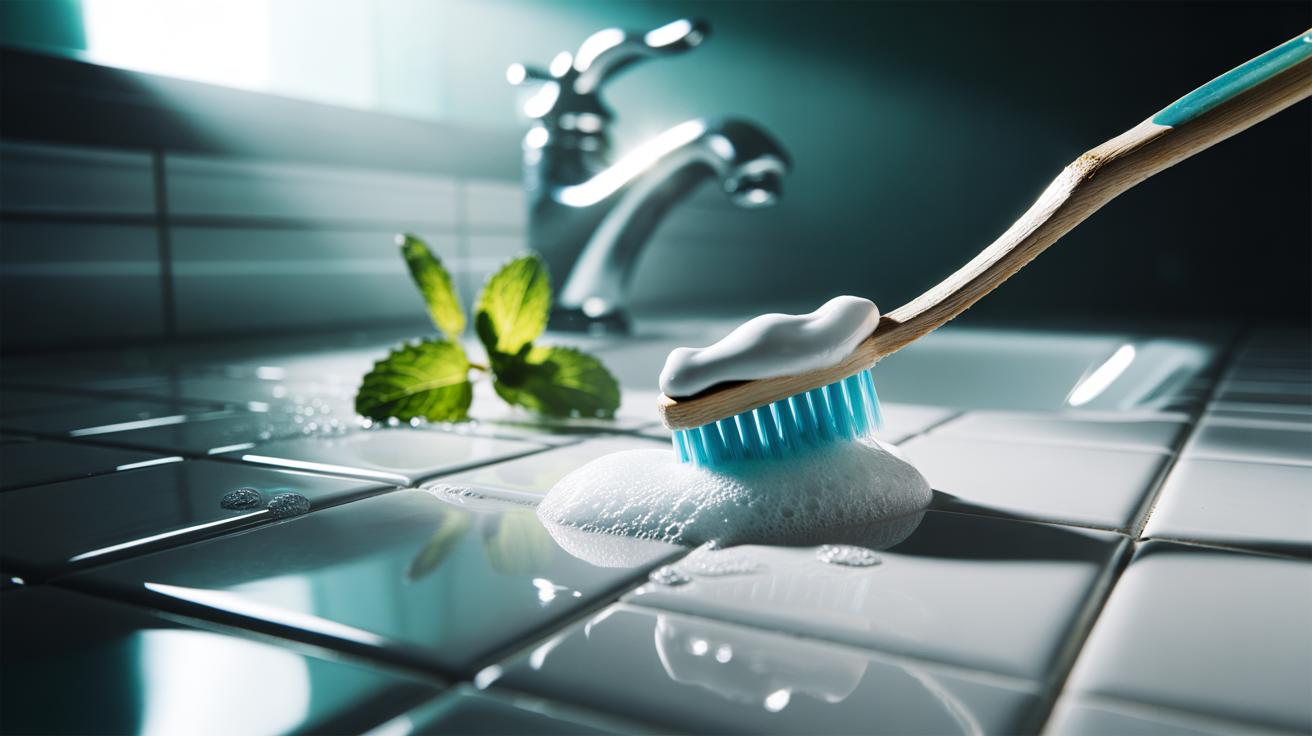
Start dry. Sweep or vacuum grit from the floor, and wipe walls with a dry microfibre cloth so you’re not grinding abrasive particles into the surface. Dab a pea-sized amount of white, non-gel toothpaste every 5–8 cm along a grout line. Work in small sections. A retired soft-bristled toothbrush is ideal; scrub with tight, overlapping circles, keeping strokes mostly along the grout to avoid haze on adjacent tiles. For stubborn spots near taps or soap trays, add a single drop of water to the brush to boost glide.
Let the paste sit 3–5 minutes on tougher grime, then agitate again. Wipe the foam and loosened residue with a damp microfibre cloth. Rinse generously with warm water. Always rinse thoroughly to prevent a sticky film that can attract new dirt. On shiny ceramic and glazed porcelain, a final buff with a dry cloth avoids water spots. If a faint minty shadow remains, another rinse clears it. Ventilate the room, especially if you’re pairing the method with other cleaners—never mix with bleach products.
Safety matters. Wear light gloves if you have sensitive skin; SLS can be drying. Test first in an inconspicuous corner. Do not use toothpaste on natural stone such as marble, limestone, or travertine; the abrasives can dull the surface or breach sealers. For silicone sealant edges, go gently to avoid lifting the bead.
Choosing the Right Toothpaste and What to Avoid
The best pick is simple: white, non-gel, non-whitening toothpaste. It delivers the micro-abrasion and surfactant lift you need without extra colourants that can stain pale grout. Avoid charcoal and heavy-dye gels, which may lodge in pores. Whitening formulas that rely on hydrogen peroxide can be helpful on off-white grout but risky on coloured joints, especially if the pigment is uneven or older. Formulas with fancy sparkles? Pretty in the tube, less clever on porous lines.
| Toothpaste Feature | What It Does | Best For | Caution |
|---|---|---|---|
| White, non-gel | Mild abrasion lifts film | Routine grout brightening | Rinse well to avoid residue |
| Whitening (peroxide) | Slight bleaching action | Lightening off-white grout | May fade coloured grout |
| Charcoal/dyed gels | Colour-rich pastes | Not recommended | Can stain porous grout |
| Sensitive enamel | Very gentle abrasives | Delicate glazed tiles nearby | Less punch on heavy grime |
Check labels for terms like “microcrystalline cellulose” or “hydrated silica” for the scrubbing component, and remember: small amounts go far. Spot-cleaning beats slathering. You want control, not a foamy skating rink.
When Toothpaste Isn’t Enough and Long-Term Shine Tips
Toothpaste excels at light-to-moderate film. It won’t vanquish entrenched mould, efflorescence, or deep rust stains. For mildew, use a bathroom mould remover or a 3% hydrogen peroxide soak, then rinse and dry. Hard limescale ridges? A targeted descaler designed for tiles works faster, but never on natural stone. If grout has dark, oily staining, consider a dedicated alkaline cleaner or a poultice. Severely stained or crumbling lines may need regrouting. Know when to escalate and you’ll save time as well as surfaces.
Prevention keeps the sparkle. Run the extractor fan or open a window after hot showers. Squeegee walls; it takes 30 seconds and stops minerals drying onto tiles. Wipe splash zones weekly with a damp microfibre cloth and a dot of washing-up liquid. Monthly, refresh grout with a quick toothpaste spot-clean where you see greying. Seal cement grout annually if it isn’t epoxy-based; sealed pores stay cleaner longer. Store cosmetics on trays, not directly on ledges, to avoid pigment transfer. Small habits, big shine.
Once you understand the chemistry, the minty trick makes perfect sense: a controlled blend of gentle abrasives, light surfactants, and clingy paste that stays where you need it. It’s cheap, quick, and oddly satisfying, turning a toothbrush into a grout brush with almost no fuss. Used with care—and avoided on stone—it’s a handy tool in your cleaning arsenal, not a silver bullet. Ready to try the toothpaste test on a single grout line this week and see how bright you can get it, or do you have a different low-cost hero that beats the bottle brigade?
Did you like it?4.5/5 (25)