In a nutshell
- ✅ Rubbing alcohol (isopropyl) dissolves oils and fingerprints fast, evaporates quickly, and delivers a streak-free finish on appliances.
- 🧪 Pick the right strength: 70% IPA for routine degreasing and touch sanitising; 90–99% IPA for sticker residue and heavy grease—always spot test plastics.
- 🧼 Follow a safe wipe-down: use a microfibre cloth, apply a light mist, wipe with the grain on steel, damp-cloth only on controls, unplug where possible, and ensure good ventilation (it’s flammable).
- 🚫 Know where it works best: stainless steel, glass, ceramic, sealed stone; avoid or test on acrylic, lacquered wood, delicate paints, and rinse food-contact surfaces with water afterward.
- 💡 Make DIY wipes to save money: mix to 70% IPA, store airtight, refresh regularly, and follow the sequence—remove grit, degrease with IPA, then buff for durable shine.
There’s a secret to a glittering hob, fingerprint-free fridge doors, and a microwave that smells as clean as it looks: rubbing alcohol. Known in the UK as isopropyl alcohol (IPA), it slices through greasy splatters and sticky residues with startling speed. One wipe and the grime simply lifts. It dries fast, leaves little to no streaks, and doesn’t dump a soapy film across your appliances. Used correctly, it’s a nimble, low-cost weapon for daily upkeep and deep cleans alike. Whether you’re restoring stainless steel or refreshing plastic trims, IPA offers control, precision, and pace—ideal for busy kitchens. Here’s how it works, where to use it, and the best ways to keep your appliances spotless with minimal effort.
Why Rubbing Alcohol Cuts Through Kitchen Grime
Grease is stubborn because it repels water. Isopropyl alcohol behaves differently. Its molecules mingle with oils and break them apart, letting you lift films of cooking fat, fingerprints, and adhesive residue in seconds. That’s why a light mist followed by a firm wipe can produce a mirror-like finish without scrubbing. Crucially, IPA evaporates quickly, so it doesn’t sit on surfaces or wick into seams. Fewer streaks, fewer water spots, less time waiting around. It’s also ideal for awkward edges and chrome trims, where residue loves to hide.
Concentration matters. 70% IPA has enough water to slow evaporation, which improves surface contact and helps dislodge grime for a cleaner wipe-down. It’s reliable for general degreasing and touch sanitising. 90–99% IPA excels on sticky labels and heavy grease where rapid solvency is an advantage, though it may flash off too fast for routine cleaning. The simple rule: use 70% for everyday wiping; reach for higher strengths when tackling gluey, baked-on mess. Always spot test on delicate plastics and coatings, as some materials may dull or soften.
Step-by-Step: A Faster, Safer Wipe-Down Routine
Preparation keeps things safe and swift. Start with a microfibre cloth—it grips residues without scratching. Decant 70% IPA into a small spray bottle or pre-dampen a cloth; avoid saturating electronics or seams. Unplug appliances where possible and ensure good ventilation—IPA is flammable and its vapour builds up in confined spaces. Clear crumbs first to prevent smearing, then work top to bottom so drips don’t redeposit dirt.
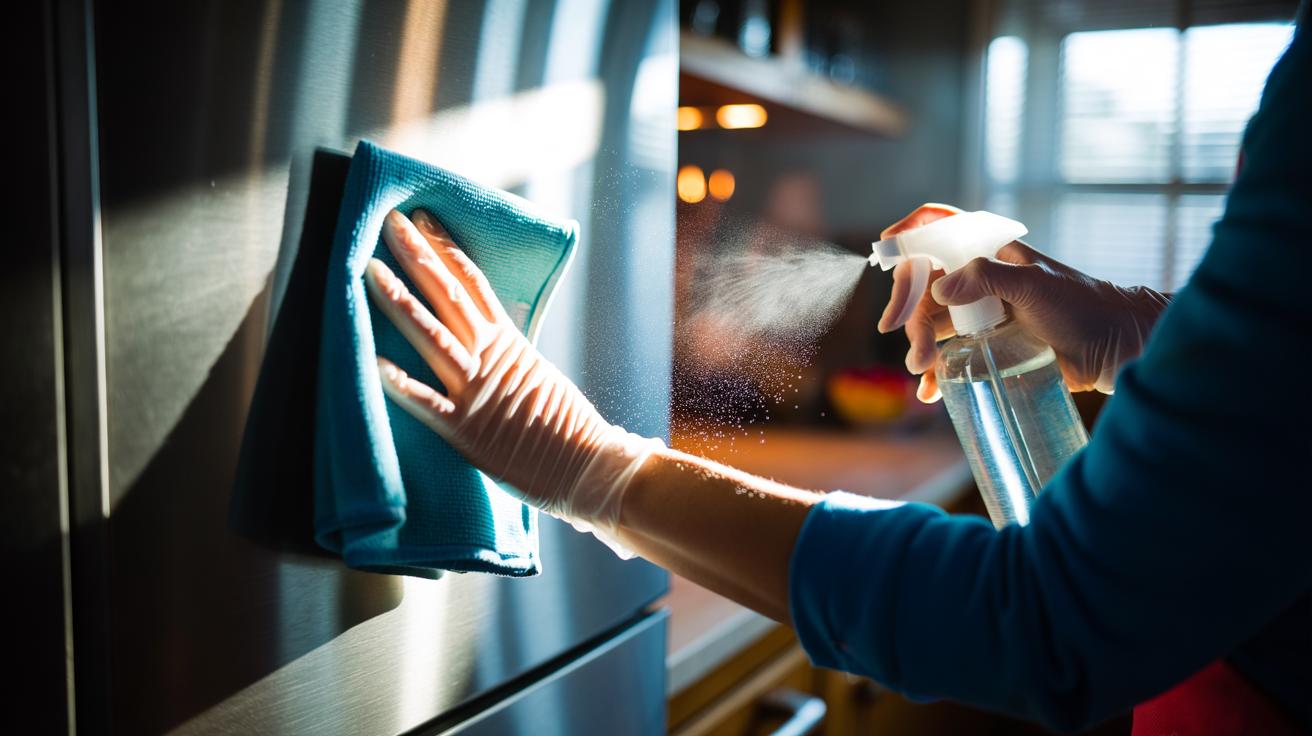
Method is simple. For stainless doors, handles, and hobs, spray a light mist and wipe in the grain’s direction. Allow 20–30 seconds of contact for degreasing before buffing with a dry cloth. For microwaves and fridges, apply to the cloth, not the cavity walls; lift splatters, then follow with a water-damp cloth on food-contact areas. Knobs, touchpads, and switches deserve a light touch—damp cloth only, no pooling. For stubborn patches, reapply, let it dwell for two minutes, then wipe—no force required. Finish with a quick polish pass to chase any faint streaks. You’ll see the steel brighten, plastics de-haze, and glass gleam.
Where It Shines (and Where It Doesn’t)
Rubbing alcohol is brilliantly versatile, yet not universal. It excels on stainless steel, glass, ceramic, sealed stone, and many hard plastics. Think fridge doors, oven fascias, induction hobs, extractor hoods, kettle bases, and coffee machine trays. It’s less suitable for acrylic panels, lacquered wood, and certain painted finishes that can cloud or soften under strong solvents. Never mix IPA with bleach or ammonia, and keep it far from open flames, pilot lights, and hot elements. When in doubt, conduct a patch test on a hidden area.
| Surface/Appliance | IPA Strength | Dwell Time | Notes |
|---|---|---|---|
| Stainless steel doors | 70% | 20–30 sec | Wipe with the grain; buff dry to prevent streaks. |
| Glass oven panels | 70–90% | 30–60 sec | Remove soot/grease haze; avoid hot glass. |
| Microwave interior | 70% | 30 sec | Apply to cloth only; follow with a water wipe on food areas. |
| Plastic trims/knobs | 70% | 15–30 sec | Spot test first; no soaking or pooling. |
| Sticker adhesive | 90–99% | 1–2 min | Loosen, then lift with a card; finish with 70% buff. |
Food-contact surfaces should get a quick water rinse after cleaning to keep things kitchen-safe and taste-neutral. Keep IPA out of reach of children and store it cool and sealed.
Make-Once Cleaning Wipes and Cost-Saving Tips
Homemade wipes turn a faff into a habit. Place folded microfibre cloths in a sealable tub. Mix 70% IPA with a splash of distilled water if using 99% (7 parts alcohol to 3 parts water), then pour just enough to saturate without pooling. Add one tiny drop of mild washing-up liquid if fingerprints are persistent—too much will streak. Label the container, keep it airtight, and replace the solution every few weeks for freshness. Grab, wipe, buff. That’s it. The routine becomes reflexive, especially after cooking.
Stretch your budget with small tweaks. Buy IPA in litre bottles and decant; microfibre cloths outlast paper and leave fewer lint trails. Target the high-touch zones—handles, dials, touchscreens (lightly)—and you’ll reduce full cleans. For limescale halos around taps and kettle bases, clear mineral build-up with vinegar first, then use IPA to lift residual grease and restore shine. Sequence matters: remove grit, degrease with IPA, then buff. You’ll clean faster, use less product, and keep appliances showroom-slick for longer.
Used with care, rubbing alcohol is a lean, modern way to keep kitchen appliances immaculate—fast to apply, quick to dry, and brilliant on the daily build-up that dulls your surfaces. It’s budget-friendly, space-saving, and compatible with most materials you’ll touch in a week of cooking. Respect the basics—ventilation, no flames, patch tests—and it rewards you with reliable, repeatable results. Ready to see your fridge doors lose those fingerprints, your hob regain its gloss, and your microwave shed its mystery splatters—often in a single wipe? Which appliance will you transform first, and what tricky spot are you determined to conquer?
Did you like it?4.4/5 (25)