In a nutshell
- 🚿 A simple vinegar soak dissolves limescale that clogs showerhead jets, restoring strong, even water flow overnight with minimal effort.
- 🧪 Follow the bag-and-band or removal method using 5% acetic acid; soak chrome/ABS for 8–12 hours, delicate finishes for shorter periods—never mix vinegar with bleach.
- 📊 Match ratios and timings to materials: 100% vinegar for chrome/stainless, 50% mix for brushed nickel; protect natural stone, rub silicone jets, and optionally neutralise odour with bicarbonate.
- 🧰 If flow stays weak, clean the inlet filter screen, inspect the hose for kinks, check the flow restrictor, rewrap threads with PTFE tape, and assess valves or cartridges upstream.
- 🌿 Make it routine—monthly in hard-water areas—and consider citric acid as a low-odour alternative; it’s cheap, eco-friendly, and prolongs the life of seals and finishes.
When a shower turns from invigorating cascade to sulky dribble, the culprit is often hiding in plain sight: the showerhead itself. Across hard-water regions, especially much of southern England, minerals quietly colonise nozzles and internal passages. The fix is not a pricey gimmick, but a kitchen staple. A simple vinegar soak dissolves limescale, dislodges grit, and restores pressure while you sleep. It’s low-cost, low-effort, and surprisingly thorough. Leave the head bathing overnight, rinse in the morning, and the transformation can be startling. For renters and homeowners alike, it’s the kind of practical win that turns a chore into a small victory — and it’s kinder to your plumbing than harsh chemical blitzes.
Why Limescale Strangles Your Shower’s Pressure
Hard water carries dissolved calcium and magnesium. When heated or left to dry inside your showerhead, those minerals crystallise as limescale, the chalky film that cakes around the jets and threads. Each grain is tiny. The effect is not. Scale narrows the waterways, roughens the surface so turbulence rises, and nudges droplets off course, so spray feels weak and patchy. Over time, debris from old pipes and tank sediment adds to the blockade, lodging behind filters and spray plates.
Some parts of the UK are infamous for hardness — London, Kent, Essex, and much of East Anglia. If you see white crust on taps or kettles, your showerhead is taking the same beating. Even a thin millimetre of scale can slash flow noticeably and make temperature control erratic. Mineral build-up doesn’t just reduce pressure; it also encourages bacterial biofilm to cling, adding slimy resistance inside narrow channels. Vinegar’s acetic acid unpicks that crust without damaging most common finishes, which is why a patient soak works where frantic scrubbing fails.
The Overnight Vinegar Soak, Step by Step
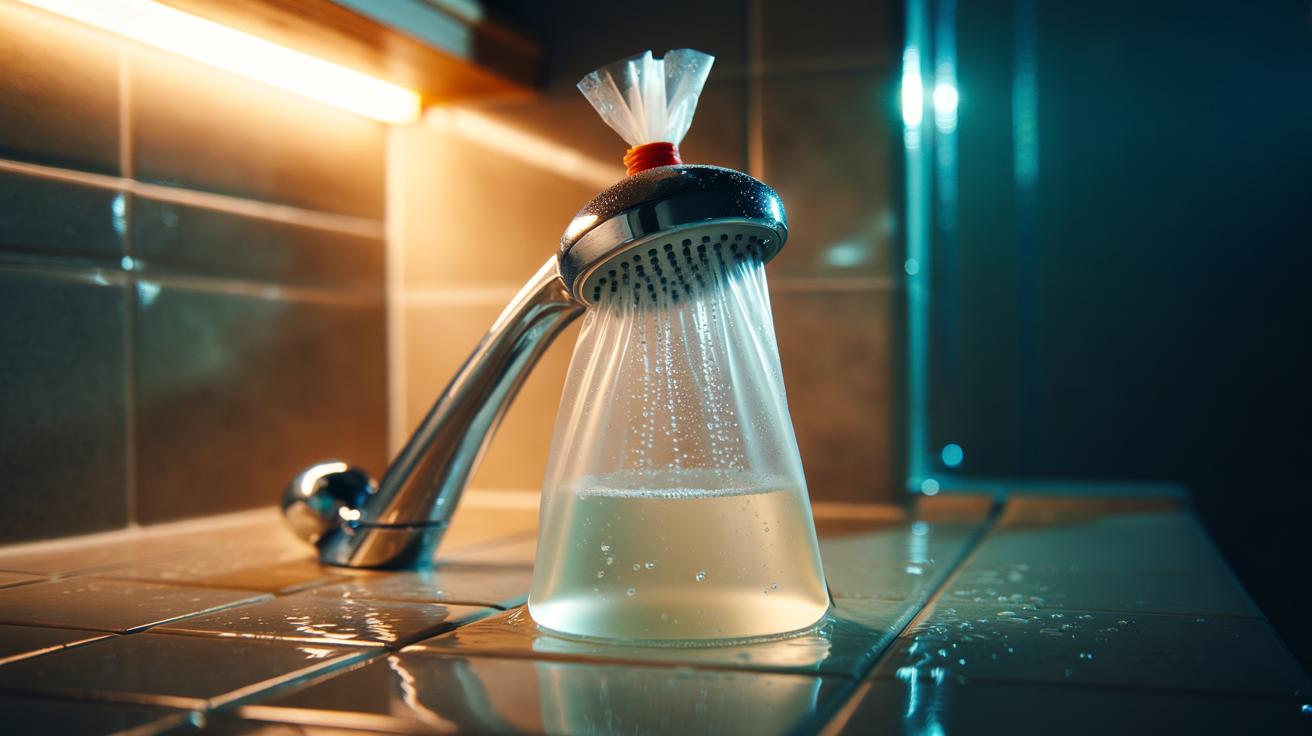
First, decide whether to remove the head. If it unscrews easily, take it off and drop it in a bowl. If not, use the classic bag-and-band method: fill a sturdy freezer bag with enough white vinegar to submerge the nozzles, then secure it around the head with an elastic band or cable tie. Aim for household white vinegar at about 5% acetic acid. For heavy scale, start undiluted; for delicate finishes, try 1:1 vinegar to water. Never mix vinegar with bleach or chlorine cleaners — the combination creates dangerous fumes.
Soak time matters. For chrome or stainless steel faces, 8–12 hours works beautifully. For nickel or oil-rubbed finishes, limit to 30–60 minutes, check, and repeat in short bursts if needed. After soaking, gently scrub the nozzles with a soft toothbrush or rub each silicone jet to crack loose deposits. Rinse thoroughly, run hot water for a minute to flush internal passages, and wipe dry. If you removed the head, inspect washers and the small filter screen behind the inlet; a quick rinse can clear grit that vinegar won’t touch. A patient overnight soak often restores full-bodied spray with almost no elbow grease.
Ratios, Timings, and Materials: What Works Best
Different finishes react differently, and that’s where a quick plan pays off. As a rule, plastic ABS and chrome-faced heads tolerate full-strength vinegar for a night. Brushed nickel, oil-rubbed bronze, and unlacquered brass deserve a lighter touch. Always protect surrounding natural stone (like marble tiles), because vinegar can etch it. Place a cloth barrier, and rinse splashes immediately. If you’re unsure, start diluted and extend time rather than going nuclear in one hit. When in doubt, test vinegar on a hidden edge for a minute before committing.
| Material/Finish | Vinegar Dilution | Soak Time | Notes |
|---|---|---|---|
| Chrome or Stainless Face | 100% vinegar | 8–12 hours | Rinse and gently brush after soak |
| ABS Plastic Body | 100% vinegar | 6–10 hours | Avoid very hot liquids to prevent warping |
| Brushed Nickel | 50% vinegar / 50% water | 30–60 minutes | Repeat short soaks; wipe promptly |
| Oil-Rubbed Bronze | 25–50% vinegar | 15–30 minutes | Spot test; avoid long immersion |
| Unlacquered Brass | 50% vinegar | 20–40 minutes | Rinse, then dry thoroughly to prevent tarnish |
After soaking, a quick neutralising rinse isn’t strictly necessary, but a dash of bicarbonate of soda in water will fizz away any lingering acid smell. Work the silicon jets with your thumb; those flexible nipples are designed to crack off scale. Finally, run the shower hot for a minute. The goal isn’t perfection; it’s free-flowing, even spray that feels instantly better on the skin.
Troubleshooting Persistent Flow Issues After Soak
If your soak hasn’t delivered, don’t despair. Unscrew the head and check the tiny filter screen at the inlet; it traps sand and rust. Rinse it under the tap, or flick debris away with a soft brush. Inspect the hose for kinks, collapse, or internal delamination, which can throttle flow. Peek at the flow restrictor ring often seated behind the spray plate or inlet — clean, don’t drill. Rewrap the threads with fresh PTFE tape when refitting, and make sure the washer sits flat to prevent sneaky air ingress that weakens spray.
Still weak? The fault may be upstream. Diverter valves clog, thermostatic cartridges scale up, and combi boilers or pumps can sag under demand. If pressure drops across the whole house, the showerhead isn’t to blame. In very hard-water postcodes, consider a point-of-use filter or whole-house softening to cut future build-up. For those avoiding vinegar odour, citric acid (a teaspoon per cup of warm water) is an effective, low-smell alternative. Used regularly — say, monthly in hard-water areas — a quick soak keeps problems at bay and extends the life of seals, jets, and finishes.
A spotless showerhead doesn’t need specialist gels or harsh abrasives; it needs time, a bag, and humble vinegar. The overnight soak gently dissolves limescale, clears grit, and restores satisfying pressure at pennies per treatment, while sparing your bathroom from harsh fumes. Make it a routine and the fix becomes maintenance, not rescue. The best part is waking to a shower that feels brand new without spending a pound on new hardware. Will you try the vinegar bag tonight — and what other quiet, cost-saving household tricks deserve a place in your regular care routine?
Did you like it?4.5/5 (21)