In a nutshell
- ♻️ 2026 changes: England’s Simpler Recycling plans in procurement this year (major rollouts 2025–26), Wales’s Workplace Recycling rules live from April 2026, Scotland’s charter upgrades ongoing, and UK‑wide EPR data reporting ramping up for 2025 fees.
- 🏠 Household rules: Core items include paper/card, glass, metals, and plastic bottles/pots/tubs/trays; flexible plastics remain patchy. Rinse, keep lids on, avoid nesting, and separate food waste to cut contamination; never bin batteries or vapes.
- 🏭 Councils & brands: EPR shifts costs to producers, pushing recyclable‑by‑design packaging and cleaner streams. Tech helps, but good set‑out by residents matters. Pros: clarity, fairness, higher capture. Cons: short‑term confusion, transition costs.
- 🧰 Case studies & tips: Cardiff café and London flatshare show quick wins with labelled stations, under‑sink caddies, and “rinse‑as‑you‑go.” Separating ~2 kg food waste weekly keeps ~100 kg/year from refuse—consistency beats intensity.
- 🗺️ What to do now: Watch council comms, prep for food caddies, businesses in Wales must separate streams, and producers refine packaging/submit data; follow simpler, binary labels (Recycle/Do not recycle).
Across the UK, 2026 is the year recycling stops being background noise and becomes a front‑page story. Households are seeing clearer labels, councils are preparing for uniform collections, and businesses in Wales face new duties that could reshape high streets. The headline: simplification—but not without friction. Some bins are changing, contamination thresholds are tightening, and timing differs by nation. As a reporter who has toured sorting lines from Kent to Clydebank, I’ve watched the gears shift: new optical sorters humming, food waste trucks added to routes, and packaging designers nervously redrafting specs. Here’s what’s changing, why it matters, and how to make it work at kerbside level.
What Changes Are Actually Coming in 2026
First, a national pivot towards consistency. In England, the government’s Simpler Recycling policy confirms a standardised materials list for councils, with most rollouts scheduled into 2025–2026. In practical terms, 2026 is a planning and procurement year: mapping routes, ordering caddies, and aligning contracts. Households will see clearer communications even where bins haven’t changed yet. In Wales, the Workplace Recycling (Wales) Regulations 2026 began in April, requiring businesses and public bodies to separate recyclables—bringing commercial waste in line with household norms and tightening contamination control at the source.
Scotland continues with its Charter for Household Recycling and service upgrades, while UK‑wide Extended Producer Responsibility (EPR) is moving forward: 2026 remains a crucial data year for producers, with full fees expected from 2025. Packaging labels are also shifting to simpler, often binary guidance (Recycle / Do not recycle), aiming to cut confusion. Some councils are trialling collections of flexible plastics, but uptake is not universal; check local guidance before kerbside set‑out. Expect more food waste services, tighter messaging, and incremental changes rather than overnight transformations.
| Where | Policy change | When | What to do now |
|---|---|---|---|
| England | Simpler Recycling standardised materials | Planning in 2026; phased rollouts 2025–2026 | Watch council mailers; prepare for food caddies |
| Wales | Workplace Recycling separation rules | In force from April 2026 | Businesses must separate streams or risk penalties |
| Scotland | Charter-led service improvements | Ongoing | Follow local guidance; expect clearer labels |
| UK‑wide | EPR data reporting; fees expected from 2025 | Active in 2026 | Producers refine packaging; households follow labels |
New Household Rules: What Goes in Each Bin
Even with national alignment, your council’s list is still the law. The common core is strengthening: glass bottles and jars, metal cans and tins, plastic bottles, pots, tubs and trays, plus paper and cardboard. Flexible plastics—like crisp packets and film—remain a patchwork: some kerbside trials accept them, many do not. Rinse lightly, keep lids on bottles, and avoid nesting materials (like squashing cans inside bottles) which can fool sorting machines. Food waste, when collected, should go in your caddy—liners are typically permitted, but check for approved types (compostable vs. paper).
Items that almost always trip people up include black plastic trays (many are now detectable, but not all), greasy pizza boxes (tear off the clean lid and recycle that), and batteries (never in the recycling or rubbish bin—use battery collection points or dedicated bags where provided). Contamination is the quiet bin‑emptying culprit: one bag of food‑soaked paper can send a whole load to disposal. If in doubt, follow your council’s app or fridge magnet guide; they’re updated as contracts change.
- Yes, usually: paper, card, cans, aerosols (empty), plastic bottles, pots/tubs/trays, glass bottles/jars.
- Often no: soft plastics at kerbside, coffee cups, textiles, nappies, batteries, vapes.
- Always separate: food waste (if collected), garden waste (if subscribed).
Why These Reforms Matter for Councils and Brands
Behind the wheelie bins, money is moving. EPR shifts more system costs to producers, rewarding packaging that’s genuinely recyclable and penalising the hard‑to‑process. That pushes brands to simplify materials and cut inks, adhesives and dark pigments that baffle sorters. Design choices in boardrooms now ripple to your kerb, determining how many lorry trips and rejects a council must absorb. For local authorities, the prize is cleaner streams and fewer costly rejects at materials recovery facilities.
But there are frictions. Councils must balance new food rounds, driver shortages and depot space, while households juggle caddies in small kitchens. Meanwhile, brands face tight timelines to re‑spec packaging while maintaining shelf appeal and protection. The sorting tech is improving—optical scanners, AI pickers—but it can’t fix a lasagne‑smeared pile of paper. That’s why rinsing and right‑bin choices still matter more than any gadget on the line.
- Pros: cleaner materials, fairer cost allocation, clearer labels, higher capture of food waste for energy/compost.
- Cons: short‑term confusion, service changes, possible fees for businesses, and transition costs for councils and brands.
- Why “more bins” isn’t always better: too many containers can depress participation; better labelling and consistent lists often achieve more.
Case Studies and Everyday Workarounds
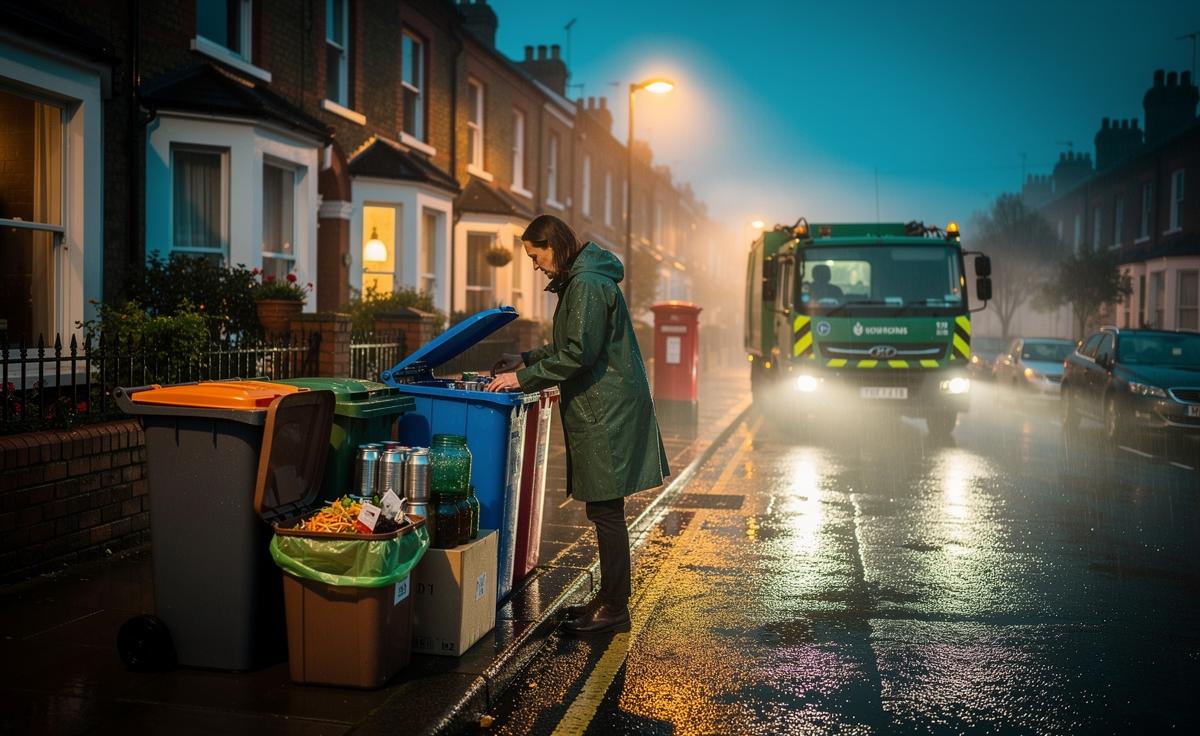
On a damp Tuesday in Cardiff, a café owner showed me their new back‑of‑house set‑up after Wales’s workplace rules kicked in: separate stackable tubs for glass, card, metals, and food. The surprise was speed—staff hit their rhythm within a week once signs matched the tubs and the collection days. In a London flatshare, a simple hack turned the tide: a narrow food caddy tucked under the sink with a tea‑towel on top to tame odours, plus a weekly “rinse‑as‑you‑go” routine during Sunday cooking.
Try this weekly rhythm: decant jars and tins while the kettle boils; tear off clean card from food‑stained boxes; keep a paper bag for “soft plastic to supermarket” if kerbside won’t take it. Families often report fewer overflows once food leaves the general bin—less weight, less smell, fewer fox‑ripped bags. For a quick back‑of‑envelope: separating 2 kg of food waste a week keeps ~100 kg a year out of the refuse stream—small acts, big system effects. Consistency beats intensity: a minute a day is better than a monthly bin‑side panic.
- Label your indoor bins to mirror council colours.
- Batch‑rinse after meals; lids on bottles, squashed cans.
- Store “check locally” plastics in a tote for the next shop trip.
- Set a recurring phone reminder for collection night.
Recycling in 2026 isn’t about memorising arcane codes; it’s about cleaner streams, simpler lists, and smarter design from brands to boroughs. As councils standardise and businesses shoulder more responsibility, households become the crucial hinge that makes the system work. If you make one change, make it food waste: it unlocks cleaner dry recycling and calmer bin days. The rest follows with habit, not heroics. As services evolve through the year, what one tweak would most help you—or your street—recycle more and waste less?
Did you like it?4.5/5 (29)