In a nutshell
- 🍵 The Black Tea Shine Spritz leverages tannins to subtly deepen walnut’s mid-tones, cut fingerprint oils, and revive patina without acting like a stain—ideal for respecting existing finishes.
- 🧪 Recipe & technique: brew 3 bags in 250 ml, cool, fine-mist onto cloth, wipe with the grain, then buff; optional microcrystalline wax top-up; patch-test and discard brew after 24 hours.
- ⚖️ Pros vs. Cons: silicone-free, tone-evening and reversible, but over-wetting can raise grain; strong brews risk tide marks; use a pH-balanced cleaner for heavy grime and avoid pooling.
- 🔬 Field notes: a 1920s sideboard rose from 22 to 34 GU after spritz + wax; best on waxed or shellacked walnut, less impact on catalysed lacquer; beware veneer edges and old glue lines.
- 🗓️ Smart care: dust weekly, spritz monthly, wax every 3–6 months; avoid silicone polishes and food oils; safe with hardwax oil after cure; add felt pads and manage UV to preserve the refreshed sheen.
There’s a quiet alchemy at work when a strong brew of black tea meets walnut furniture. The tradition predates spray polishes and silicone wipes: a simple spritz of tannin-rich tea can lift light grime, reduce finger smears, and coax back that chocolate depth walnut is loved for. Because tannins bond with the wood’s natural compounds, the effect is closer to a gentle reviver than a cosmetic gloss. As a London-based reporter embedded in workshops and auction houses, I’ve watched restorers reach for a teapot before a tin of wax. What follows is a practical, evidence-led guide to the Black Tea Shine Spritz—why it works, where it shines, and where it doesn’t.
How Tannins Wake Up Walnut’s Colour
The science is elegantly simple. Tannins, abundant in black tea, are polyphenols that grab hold of proteins and trace metal ions. Walnut’s heartwood contains its own phenolics, and through light oxidation and handling, surfaces can look fatigued. A light tea spritz reintroduces tannins that subtly deepen mid-tones and even out minor, chalky bloom without loading the surface with heavy oils. Think of it as a tone corrector that respects the existing finish. Because tea is mildly acidic, it also helps cut light oils from fingerprints, reducing that greyish cast on armrests and drawer pulls.
Crucially, the spritz is not a stain—on sealed or well-waxed walnut it acts at the interface, not deep within fibres. On lightly sealed pieces, it may warm the grain a shade, especially where pores are open. You’ll notice the biggest gains on sun-kissed edges and lid tops that have flattened in colour. UV-softened patina often bounces back with a restrained, non-greasy lustre after a careful tea pass and buff.
The Shine Spritz: Recipe, Tools, and Safe Technique
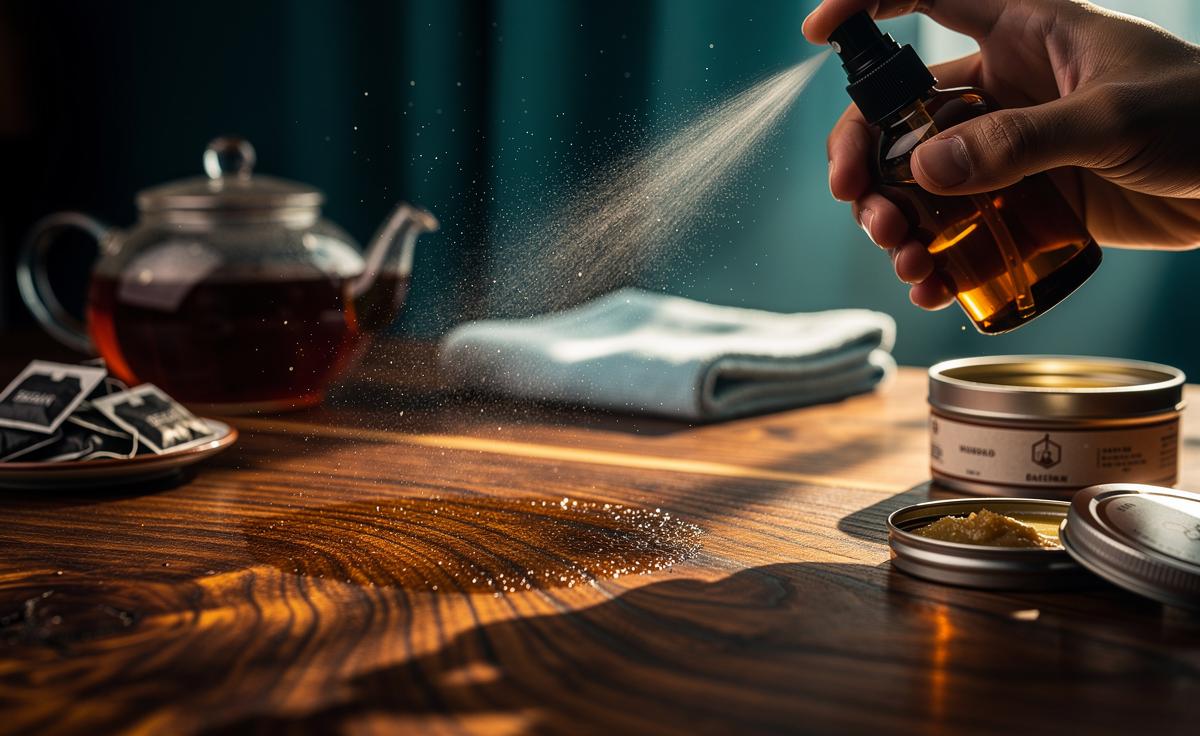
Start with a clean brew: 3 strong black tea bags (Assam or English Breakfast) in 250 ml freshly boiled water, steeped 8–10 minutes. Cool fully and decant into a fine-mist bottle. Never add sugar, milk, or essential oils—purity protects the finish. Assemble: a lint-free microfibre cloth, a soft brush for crevices, and a dry buffing cloth. Lightly dust the piece first. Mist once into the cloth (not directly onto delicate veneers), then wipe with the grain. For table tops, hold the bottle 25–30 cm away and apply a whisper-fine veil; immediately chase with a dry cloth to level and avoid pooling.
Work in small panels, rotating cloth faces to prevent re-depositing grime. Let air-dry two minutes, then buff briskly. If you fancy a richer glow, finish with a palm-warm pass of microcrystalline wax—a pea-sized amount—buffed to clarity. Always patch-test on the back or underside first, especially with shellac or thin old varnish. Refrigerate leftover brew and discard after 24 hours to dodge microbial souring and clouding.
| Brew Strength | Ratio | Intended Effect | Finish Compatibility |
|---|---|---|---|
| Mild | 1 bag / 250 ml | Fingerprints, quick dust | Lacquer, varnish, wax |
| Standard | 3 bags / 250 ml | Colour lift, gentle sheen | Shellac, hardwax oil, wax |
| Strong | 5 bags / 250 ml | Subtle warming on dull areas | Test on porous oil finishes |
Pros vs. Cons: When Tea Wins — and When It Doesn’t
Pros:
- Low-residue, silicone-free clean that doesn’t smear under lamps.
- Gently evens tone on UV-tired walnut, often improving perceived depth.
- Cheap, quick, and reversible; plays nicely under traditional waxes.
Cons:
- Water can raise grain on unsealed edges; avoid saturation and always buff dry.
- On raw or recently stripped walnut, tea may darken unevenly—use a dedicated finish first.
- Strong brews can leave rings if allowed to pool beneath photo frames or coasters.
Why stronger isn’t always better: ramping up tannins boosts short-term warmth, but also increases the risk of tide marks and “tannin bloom” (a faint haze) on high-wax surfaces. Choose the lightest brew that achieves the goal. Avoid on limed or pickled finishes where extra warmth is unwelcome. Modern catalysed lacquers are largely inert; tea there is mostly a fingerprint fix, not a colour treatment. For deep cleaning heavy grime, a pH-balanced wood cleaner remains the safer first step.
Field Notes From a London Restoration Bench
In a Brixton workshop last spring, I observed a 1920s walnut sideboard headed to a Chelsea flat. The top read a matte 22 gloss units (GU, 60°) on a handheld meter. After a standard-strength tea spritz and a thin microcrystalline wax, the same panel measured 34 GU—still period-appropriate, just livelier. The client described it as “like turning up the lamp one notch, but only on the walnut.” A second case: a nest of 1950s tables with water rings. The spritz didn’t erase the rings (that needed steam and re-polish), but it did neutralise greasy halos, making the repair less stark.
What surprised me was the consistency: the technique worked best on waxed or shellacked walnut with gentle wear, less so on heavily polyurethane-coated surfaces. On a French-polished bureau, a feather-light mist followed by a soft muslin buff revived bloom without chasing the polish. The cautionary tale came from a veneer edge where a novice over-sprayed; capillary action lifted a loose corner. Lesson learned: minimal moisture, immediate buffing, and respect for old glue lines.
Care Schedule and Smart Pairings
For a lived-in walnut dining table: dust weekly with a dry microfibre cloth; deploy the Black Tea Shine Spritz monthly or before guests arrive. Every 3–6 months, apply a minimal coat of microcrystalline wax, allowing the tea to act as the light pre-buff cleaner. If your piece wears a hardwax oil, the spritz is fine as a refresher, but avoid heavy use in the first 30 days after oiling. Never pair tea with silicone polishes—silicones create repair headaches and visual smear.
Skip food oils (they go rancid); if you must enrich, a touch of polymerised linseed under wax is safer. Keep a felt pad kit handy: soft feet prevent fresh micro-scratches that dull the glow you’ve just restored. Finally, manage light—UV films and tablecloths reduce the very fading tea aims to mask. In short: clean lightly, spritz sparingly, and let wax carry the final shine.
For all its simplicity, a tea spritz respects walnut’s dignity while restoring a camera-ready sheen. You’re not repainting the past—you’re revealing it. Used judiciously, tannins deliver clarity, warmth, and a finish that feels touched by hand, not factory. And if the day demands more than a spritz, it’s still the gentlest first step before deeper restoration. Which piece in your home would you trust to this centuries-old trick, and what tone are you hoping to coax back into the wood?
Did you like it?4.3/5 (23)