In a nutshell
- 🔬 The science: club soda works via carbonation—bubbles lower surface tension, shimmy into fibres, and lift tannin-based soils, while near‑neutral minerals stay gentle on carpets.
- 🧽 Method that works: Blot—don’t rub, apply chilled club soda outside‑in, wait 30–60 seconds, then blot firmly; keep it cold for protein spills and finish with weighted paper towels to prevent wicking.
- ⚖️ Pros vs. Cons: inexpensive, residue‑light, and fibre‑friendly for fresh stains, but weak on oils, rust, and set turmeric; over‑wetting risks browning and stain rebound.
- 📚 Real cases: rapid Rioja removal succeeded; an aged curry needed an oxidiser; pet accidents required an enzyme cleaner—proof that Timing is decisive and fizz is a first response, not a cure‑all.
- 🛡️ Safety and escalation: be cautious with wool and viscose, always patch test, speed drying with airflow or light extraction, and call a professional for large stains, dye bleed, browning, or lingering odour.
There’s a quiet domestic miracle fizzing in your fridge door. Reach for it when a glass of red sloshes, when muddy paws arc across the hallway, or when coffee dribbles off a desk: club soda. In homes across Britain, cleaners and landlords swear by its swift, sparkling rescue. The secret isn’t magic—it’s chemistry, motion, and timing. Used correctly, the bubbles in club soda can loosen grime before it grips carpet fibres, buying you precious minutes to blot stains away. Below, I unpack why this works, when it doesn’t, and how to use it like a pro—minus myths, plus practical detail you can act on today.
What Makes Club Soda Work on Carpet Stains
The effectiveness of club soda begins with carbonation. Those CO₂ bubbles are tiny agitators: they shimmy into the carpet pile, nudging soil and pigments off fibre surfaces. At the same time, carbonation momentarily lowers the liquid’s surface tension, helping it slip into tight spots that plain water can’t easily penetrate. It’s not the flavour or sweetness that helps—avoid tonic water entirely—but the fizz and mineral profile.
True club soda contains dissolved minerals (often sodium or potassium bicarbonate) that buffer the liquid, keeping it close to neutral pH. That matters because it minimises risk to delicate fibres, especially wool and dyed natural blends. Meanwhile, the mild carbonic acid created by CO₂ in water assists with tannin-based stains (think tea and wine), helping to loosen their grip.
There’s a mechanical story here too. When you pour, bubbles lift micro-particles and rehydrate dried residues, priming them for removal. Add gentle blotting pressure, and you create a controlled “wicking” route from deep in the pile up into your cloth. In short: bubbles mobilise; blotting evacuates. That pairing is why club soda so often outperforms plain water in the first five minutes of a spill.
Step-by-Step Method to Lift Dirt and Spills
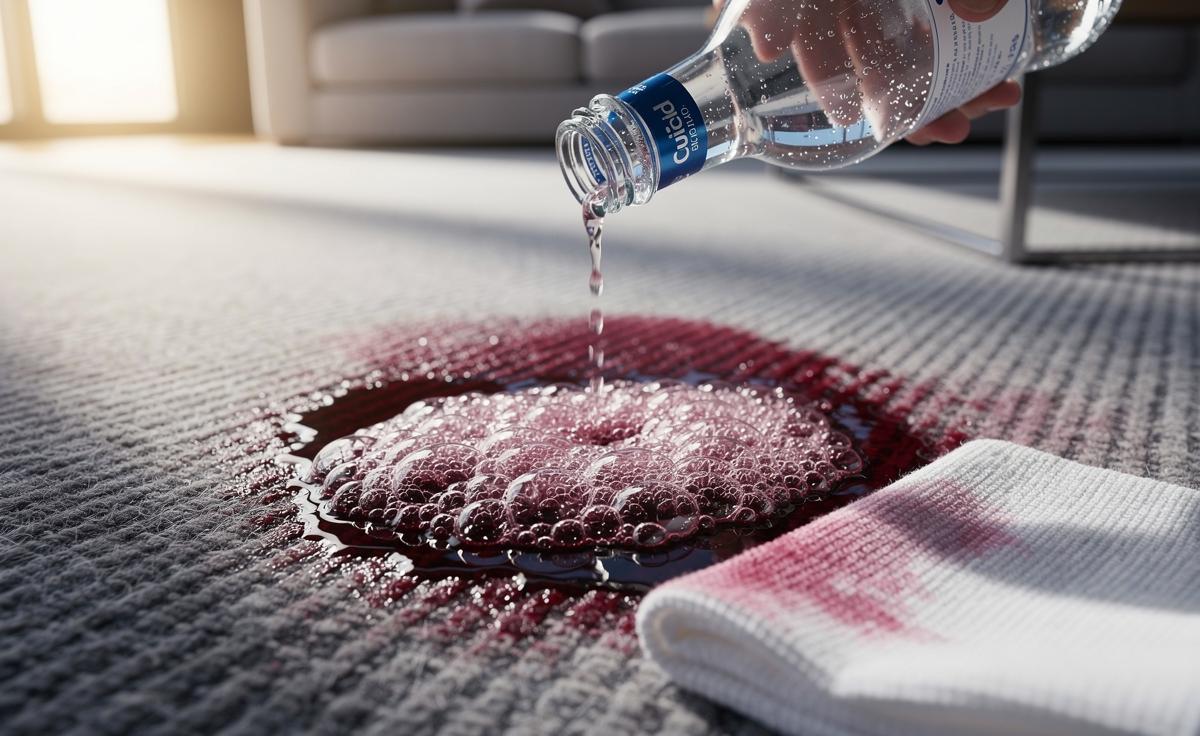
Speed is your friend. First, wick up as much of the spill as you can using a clean white microfibre cloth or plain kitchen roll. Blot—don’t rub—so you don’t drive the stain deeper or fuzz the fibre tips. Once the surface liquid is under control, lightly pour chilled club soda around the outside edge of the stain and work inward. This “outside-in” tactic stops the mark from blooming.
Wait 30–60 seconds to let the bubbles do their loosening work, then blot with firm, even pressure. Rotate to clean sections of the cloth as you lift pigment. For heavier soils, a second application helps—but use restraint: oversaturating can cause backing damage or cause stains to wick back as the carpet dries.
If the mark persists, apply a final light mist of club soda and follow with a damp-cold water blot to neutralise residue. Finish by sandwiching the area with paper towels and a weighted book for 20 minutes. This encourages remaining moisture to wick up into the towel, not back down into the underlay.
- Tools: white cloth, chilled club soda, spray bottle (optional), paper towels, small weight.
- Temperature: cold is safer for proteins (milk, blood) to avoid setting them.
- Tip: never use flavoured or tonic water; sugars set sticky residues.
Pros vs. Cons of the Club Soda Trick
Pros first: club soda is inexpensive, widely available, and fibre-friendly. It carries no perfumes that can clash with existing odours and leaves minimal residue. The effervescence creates gentle agitation without scrubbing, and its near-neutral pH makes it less risky for wool than many alkaline spotters. In landlord inspections, this quick fix often prevents a minor mishap becoming an invoice.
Cons are situational. Oil-heavy stains (makeup, motor oil) need surfactants or solvents; carbonation alone won’t disperse them. Rust requires a chelating agent, not club soda. And sugary spills that have dried (cola, cordial) may re-stick unless you flush thoroughly. More fizz isn’t a silver bullet: over-wetting can cause wicking, browning, and backing separation.
Why “more” isn’t always better: prolonged soaking dilutes stain boundaries and can push pigment deeper. Aggressive rubbing can distort the pile and abrade solution-dyed fibres. A sensible compromise is “short pulses” of application and blotting. If a mark remains visible after two cycles, stop and escalate to a targeted cleaner or a professional.
- Best for: fresh tannins (tea, wine), light soil, mud, water-based inks.
- Use with caution: wool and viscose—minimal moisture, fast dry.
- Not ideal for: oils, rust, tar, set-in curry/turmeric stains.
Real-World Cases: What Works, What Doesn’t
In a Manchester flatshare, a late-night Rioja splash on a light-grey polypropylene carpet looked catastrophic. Within two minutes, chilled club soda, applied outside-in, fizzed the colour lift free. Two blot cycles removed 90% of the crimson halo; a final cold-water blot made it disappear. Timing was everything—the stain never had the chance to bond.
A different story in Bristol: a turmeric-laden curry spill sat for hours. Club soda rehydrated the mark, but the yellow chromophores remained stubborn. Only an oxygen-based spotter shifted the last 30%. Takeaway: carbonation is a first response, not a panacea. For a dog accident in Leeds, club soda helped with initial soil removal, but odour crystals persisted until an enzyme cleaner followed.
Patterns emerge: the fresher and more water-soluble the stain, the higher the win rate. Fibres matter, too. Nylon forgives; wool demands restraint. Viscose/rayon can distort with moisture. If you can’t identify the fibre, test a hidden corner and use minimal liquid. When in doubt, pause the fizz, protect the pile, and call a pro.
| Stain Type | Club Soda Effectiveness | Why It Helps | Extra Step / Avoid |
|---|---|---|---|
| Red wine, tea, coffee (fresh) | High | Bubbles lift tannins; surface tension drop aids penetration | Blot fast; cold-only for proteins in milky tea/coffee |
| Mud and tracked soil | Medium–High | Rehydrates dried particulates for blotting | Let dry and vacuum first if heavily caked |
| Pet urine (fresh) | Medium | Initial dilution and lift | Follow with enzyme odour treatment |
| Makeup, grease, motor oil | Low | Carbonation can’t solubilise oils | Use mild detergent or solvent spotter; avoid over-wetting |
| Turmeric/curry (set) | Low–Medium | Rehydrates but pigments remain | Escalate to oxygen-based cleaner; patch test fibres |
| Ink (water-based) | Medium | Fizz and dilution assist lift | Blot gently; solvent needed for permanent inks |
Safety, Fibres, and When to Call a Professional
Carpets aren’t equal. Wool prefers near-neutral solutions and low moisture; viscose and sisal dislike water altogether. Solution-dyed polypropylene shrugs off many household dyes but can still stain with oil. Before you pour, check fibre type (under-stair remnants, labels, or your tenancy inventory) and always patch test in a corner. Use only unflavoured club soda, and decant into a trigger spray for controlled application.
Drying is as important as cleaning. After blotting, encourage airflow with a fan and keep foot traffic off the damp area. If you own a small wet/dry vacuum, a brief extraction pass after club soda can prevent wicking and speed dry times. Avoid heated drying on protein stains; warmth can set them.
Know your escalation triggers: a stain bigger than a dinner plate, recurring brown edges (browning), dye bleed, or any odour that lingers after 24 hours. That’s your cue to call a certified technician with fibre-safe chemistry and hot water extraction. A timely professional visit often costs less than a deposit deduction or a room replacement.
Club soda won’t replace a full stain-removal kit, but it’s an elegant first responder—a precise burst of fizz that loosens trouble before it takes root. Applied with restraint, blotted with patience, and followed by smart drying, it can spare both your carpet and your weekend. The next time life spills over, will you give those bubbles thirty seconds to work—and what other low-tech tricks deserve a place in your cleaning playbook?
Did you like it?4.5/5 (20)