In a nutshell
- 🧴 Many everyday cleaners and fragrances emit VOCs, quats, and phthalates, with residues settling into dust—small, repeated exposures that quietly add up.
- 🧪 “Forever chemicals” PFAS and formaldehyde-releasing preservatives raise persistence and sensitisation concerns, with higher risks for children, pregnant people, and those with asthma.
- 🏷️ Labels can mislead: “parfum” hides mixtures; watch for CLP pictograms, consult SDS sheets, and track alerts via UK REACH and OPSS.
- 🪟 Prioritise ventilation, simplify products, disinfect only when needed, never mix bleach with acids/ammonia, store high and latched, and seek advice via NHS 111 after exposures.
- 📋 The real hazard is cumulative exposure; switch to fragrance-free, PFAS-free options, use microfibre and mild soaps, and aim for a home that “smells of nothing.”
They sit under the sink, in the laundry basket, by the bedside. Harmless-looking bottles, sprays, candles. Yet researchers and regulators are quietly warning: the air inside our homes can carry more chemical complexity than a city street. From fragranced cleaners to stain-resistant coatings, many everyday products release compounds that can irritate lungs, disrupt hormones, or persist in dust for years. This isn’t scaremongering. It’s a pragmatic audit of routine exposures, and how easily they slip below our radar. Here’s what’s really in play, how it travels through a typical flat or family house, and the smarter choices that reduce risk without sacrificing a clean, welcoming home.
What’s Hiding Under the Sink
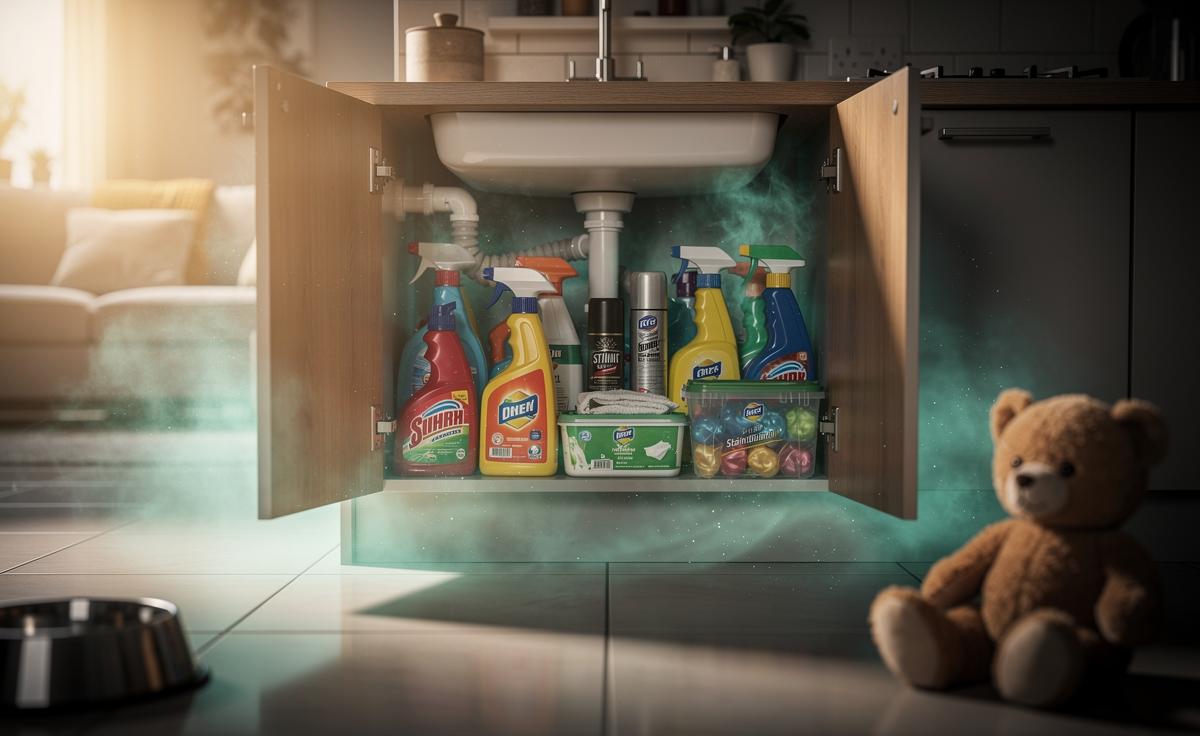
Open the cupboard and you’ll find a cast of usual suspects: multi-surface sprays, disinfectant wipes, oven cleaners, air fresheners. Their labels promise sparkle and “spring” scents. The chemistry is tougher. Aerosol sprays and scented products often emit volatile organic compounds (VOCs) that linger in stagnant corners and soft furnishings. Disinfectants can carry quaternary ammonium compounds (quats), which are effective at killing microbes yet are associated with respiratory irritation in frequent users. Oven and drain cleaners bring high-pH or acid formulations, powerful but risky if splashed or mixed.
Air fresheners and plug-ins release fragrance blends that may include phthalates or potential sensitising allergens, even when the ingredient list reads only “parfum”. Laundry pods concentrate surfactants and dyes in attractive, bite-sized capsules—an ingestion hazard to children and pets, and a cause of chemical eye injuries. Small, repeated doses add up. A spritz here, a wipe there, and residues transfer to hands, tables, toys. Ventilation helps yet doesn’t zero the load; many compounds partition into dust, then re-enter the air as rooms warm or are vacuumed.
Chemicals That Disrupt and Damage
Not all compounds are villains. But a shortlist deserves attention. Formaldehyde-releasing preservatives (such as DMDM hydantoin) keep liquids shelf-stable while steadily emitting a sensitising gas. Quats like benzalkonium chloride deliver hospital-grade disinfection at the cost of potential wheeze and skin irritation, particularly for cleaners and carers with daily exposure. Phthalates and certain synthetic musks are used to make scents last; some have been associated with endocrine activity in lab studies, prompting regulatory limits and reformulations.
Then there are PFAS—the “forever chemicals” found in some stain-resistant textiles, non-stick coatings and certain waterproof sprays. Their extreme persistence means what leaves a can today may circulate in the environment for decades. Persistence is a risk factor in its own right. Even where individual toxicity is debated, long lifetimes magnify exposure. In the UK, product safety is governed by UK REACH and CLP rules, with ongoing scrutiny of PFAS and specific fragrance allergens. Yet gaps remain: compound mixtures, real-life exposures, and vulnerable groups such as children, people with asthma, and pregnant women. That’s where precaution—and good housekeeping—earn their keep.
How Labels Mislead and What to Do
Labels are designed to be friendly. They must also comply with hazard law. The result can be mixed messages. You might see green leaves and “natural” motifs beside a tiny CLP pictogram for respiratory irritation. “Fragrance-free” may hide masking scents; “dermatologically tested” doesn’t mean non-irritant for everyone. In the UK, only certain fragrance allergens must be listed above thresholds, and the catch-all word “parfum” conceals dozens of substances. Absence of a warning symbol is not proof of absence of risk. Especially for aerosols used in small bathrooms or during showers, where steam enhances uptake.
Three quick checks help. Scan for “parfum/fragrance” and long preservative names; frequent users with asthma or eczema may benefit from fragrance-free, preservative-light options. Look for technical documents: many brands host a Safety Data Sheet (SDS), which spells out hazards in plain symbols. Finally, question the necessity: disinfection is for bodily fluids, raw meat areas, or outbreaks—not every wipe-down. For product recalls or safety alerts, the UK’s Office for Product Safety and Standards (OPSS) and local Trading Standards maintain searchable databases you can consult before buying in bulk.
| Product Type | Common Hidden Chemicals | Potential Risk | Safer Switch |
|---|---|---|---|
| Multi-surface spray | VOCs, fragrance allergens | Headache, indoor air pollution | Fragrance-free, pump bottle, diluted soap |
| Disinfectant wipes | Quats | Skin/airway irritation | Soap and water; targeted disinfectant use |
| Air freshener | Phthalates, synthetic musks | Sensitisation, endocrine concerns | Ventilation, cut flowers, essential-oil diffuser used sparingly |
| Stain guard spray | PFAS | Persistence, environmental load | PFAS-free labels; washable covers |
Practical Steps for Safer Homes
Start with air. Open windows wide for short bursts, create cross-breezes, and favour pump sprays or trigger bottles over aerosols. Ventilation is the cheapest control measure. Shift cleaning goals from “kill everything” to “remove grime”. A microfibre cloth plus warm water removes most soils; a small dose of washing-up liquid covers grease. Reserve strong disinfectants for high-risk messes. Never mix bleach with ammonia or acids (vinegar, descaler)—that’s a toxic gas recipe.
Choose simpler formulations: fragrance-free laundry liquid, soap-based cleaners, bicarbonate of soda for scrub, diluted white vinegar for limescale on non-stone surfaces. For scent, open the window or simmer citrus peels; candles should be unscented, well-trimmed, and used sparingly. Store products high and latched; laundry pods in child-resistant tubs. Dispose of chemical leftovers at your local Household Waste Recycling Centre—don’t pour them away. If someone is exposed, follow label first-aid and contact NHS 111 for advice. Keep an eye on OPSS recalls, and when in doubt, buy smaller sizes, test in one room, and note how you feel after use.
The hidden danger in household products isn’t a single smoking gun. It’s cumulative exposure, imperfect labelling, and habits that overuse chemistry where elbow grease would do. The fixes are practical, affordable, and compatible with a busy British household—clear the air, simplify the toolkit, disinfect sparingly, and store smartly. Your home should smell of nothing in particular. That’s the scent of safety. Which products will you rethink this week, and what small change could make the biggest difference in the way your home feels to breathe?
Did you like it?4.5/5 (23)