In a nutshell
- 🔬 Distinguish the culprits: hard-water deposits (removable scale) vs etching (permanent micro-pitting); use the breath and vinegar tests to diagnose—etching is irreversible.
- 🧂❄️ Apply the salt and ice polish: add coarse salt and ice, swirl 30–60 seconds to create controlled friction and gentle micro‑abrasion, then rinse, optional vinegar splash, and polish dry.
- ⚙️ Understand the science: a tribological polish where ice cushions pressure, salt lifts mineral haze, and brine lubricates; abrasiveness self‑limits as crystals round, reducing scratch risk.
- ✅⚠️ Pros vs Cons: fast, low-cost, chemical‑light and mid‑service friendly, but it won’t fix etching, needs care with soft crystal, and demands vigilance against thermal shock.
- 🛡️ Troubleshoot and prevent: run a patch test, try alternatives (vinegar/citric; oxalic with caution), and prioritise prevention—gentler detergents, tuned rinse aid, cooler cycles, hand‑drying, and periodic audits.
Cloudy wine glasses are the quiet villains of a dinner table: they scatter light, mute aromas, and suggest neglect where there’s only hard water and haste. A simple, surprisingly elegant fix has been doing the rounds in British kitchens and bars—the salt and ice polish. It pairs coarse crystals with cubes to create controlled friction that buffs away mineral haze. Unlike harsh chemicals, it’s swift, cheap, and oddly satisfying. In a week spent shadowing a barback in Manchester, I watched it turn fogged stems into gleaming showpieces between service rushes. Used correctly, it restores clarity without gouging the glass, and it brings a little craft back to the everyday chore of washing up.
Why Glass Turns Cloudy in the First Place
Two culprits cause most cloudy glassware: hard-water deposits and etching. Hard-water haze is a crust of calcium and magnesium salts that clings after hot washes or incomplete rinsing. It blurs reflections, wipes off with effort, and often yields to mild acids. Etching is different: repeated exposure to high-alkaline detergents and heat nibbles at the glass’s silica network, leaving microscopic pits. Those pits scatter light permanently. The trick is telling them apart: mineral build-up feels slightly rough and may fade when damp; etched glass looks clean yet remains uniformly dull.
A quick diagnostic helps. Breathe a fog onto the bowl: if the mist forms beads and clears into patches, you’re likely seeing mineral scale. If it clings evenly, etching may be to blame. You can also rub a spot with a drop of white vinegar; if a bright patch appears, deposits are present. Etching, by contrast, cannot be reversed—no polish, paste, or miracle soak will refill those micro-canyons. That’s why prevention—gentler detergents, lower heat, and hand-drying—matters as much as cure.
Dishwashers complicate the picture. UK mains often deliver moderately hard water, and commercial cycles favour higher alkalinity for speed. Combine them and you get speedy cleaning but greater risk of surface damage. A home softener, a rinse aid calibrated to local hardness, and cooler cycles keep that chemistry in check. When haze does appear, physical micro-abrasion—not brute chemical force—usually wins with fewer side effects.
How the Salt and Ice Polish Works, Step by Step
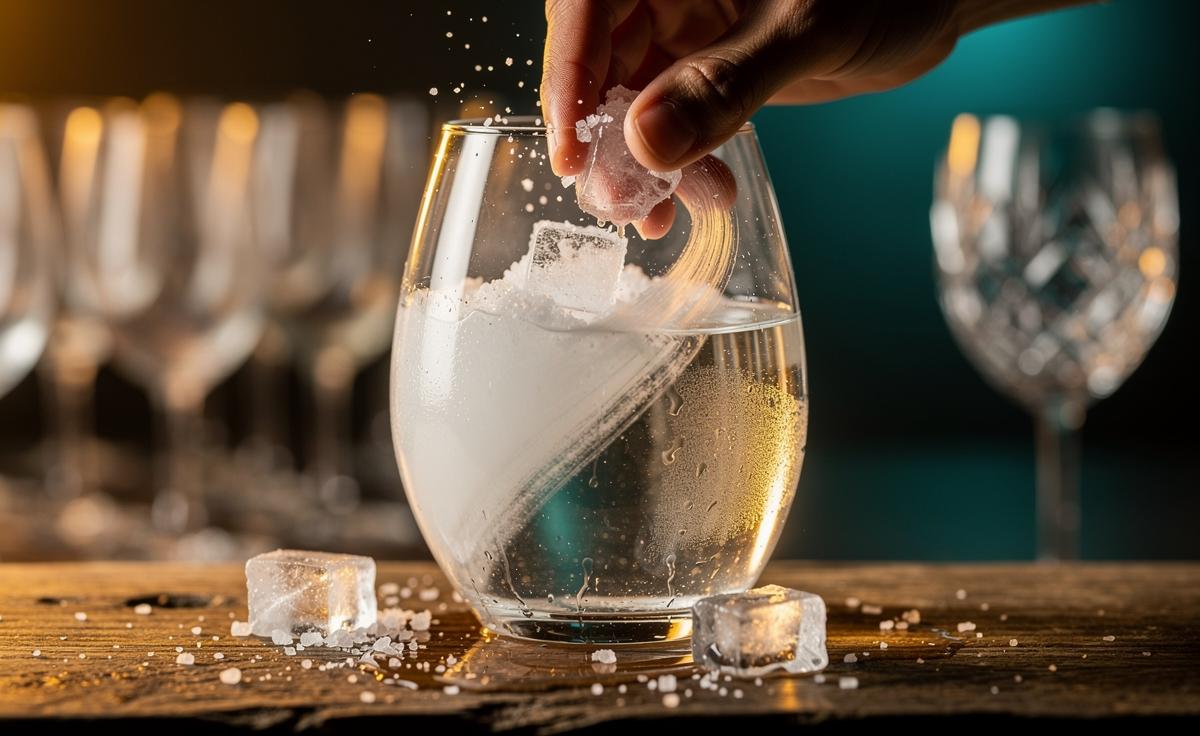
The method is delightfully low-tech. Take a clean but cloudy glass, add a handful of ice, and sprinkle in a teaspoon of coarse salt—sea salt or kosher-grade works best. Swirl the mix so crystals skate between ice and glass. The salt provides abrasive edges, while the ice cushions pressure, spreading force evenly along the bowl. Within 30–60 seconds, a salty slush forms, increasing contact points and boosting controlled friction. Rinse under warm water, finish with a splash of white vinegar if your water is very hard, and polish dry with a lint-free cloth.
Why it works: on a microscopic level, you’re performing a gentle tribological polish. Salt grains are hard enough to disrupt mineral deposits but—thanks to the ice buffer—too dispersed to gouge intact glass. As the ice melts, the brine lubricates movement while helping dissolve loosened carbonate particles. It’s a self-limiting system: as crystals round off, abrasiveness declines, reducing the risk of scratches. That’s a significant advantage over dry powders or aggressive pads, which maintain cutting power long after the deposit has thinned.
Technique matters. Support the bowl with your palm, not the stem, and keep sweeps broad and gentle; focus on the lower bowl where haze concentrates. Avoid thermal shock—don’t move straight from freezer-cold glass to hot water. For lead crystal or thin-lipped flutes, shorten the swirl to 20 seconds and inspect under bright light. A final neutral rinse prevents salt ghosts. The whole routine, start to finish, often beats a long acid soak on time—and spares any gilding.
Pros vs. Cons for Busy Kitchens and Bars
In service, the salt and ice polish earns points for speed, cost, and low environmental impact. There’s no specialised paste, no lingering odour, and no complex PPE beyond common-sense care. It’s especially useful for rotational maintenance—touching up fogged favourites between larger wash cycles. In a quick tally at a Deansgate cocktail bar, two staff cleared twenty cloudy coupes in under ten minutes with this method, returning crisp reflections without disrupting prep. Crucially, it keeps chemistry simple: salt, water, and cold do most of the work, which means fewer compatibility worries with vintage glass or delicate etching patterns on the surface.
The drawbacks are real, though manageable. It’s not a cure for etching, and heavy-handed swirling can mark very soft crystal. Stemware with tight angles (think cut-glass sherry) may trap crystals, demanding careful rinsing. There’s also the choreography problem: ice handling mid-service isn’t ideal in tiny prep spaces, and thermal shock remains a risk if hot rinse water meets a chilled bowl. For venues facing chronic haze from very hard water, upstream fixes—a softener, adjusted rinse aid, or dedicated glasswash cycles—deliver better consistency day to day.
| Pros | Cons |
|---|---|
| Fast, cheap, and chemical-light | Cannot fix irreversible etching |
| Gentle, self-limiting micro-abrasion | Potential scratching on soft crystal if overdone |
| Works mid-service with minimal kit | Ice logistics and thermal-shock caution |
Troubleshooting, Safety, and Better Alternatives
Begin with a patch test. Choose a small area near the base, swirl for 15 seconds, rinse, and inspect under a cool LED. If clarity returns in that spot, proceed. If the uniform haze persists, you’re likely dealing with etching. Stop there—further abrasion will not restore shine and may dull the surface. For stubborn scale, extend the swirl in short bursts, pausing to rinse and check; deposits often lift in layers. Always support thin stems from the bowl, not the foot, to avoid torsion.
Alternatives earn their place. A 30-minute soak in warm 5% white vinegar often clears light mineral bloom; citric acid (about 1 tablespoon per litre) is a stronger yet glass-friendly option for heavier scale. Oxalic-based cleaners can revive bowls remarkably but demand gloves and a meticulous rinse, especially with decorated rims. Why stronger acid isn’t always better: it can undercut metallic trims and accelerate wear on already etched glass. A final buff with a dry microfibre cloth removes water marks that mimic haze in harsh lighting.
Prevention pays dividends. Use a gentle, glass-specific detergent; lower dishwasher alkalinity where adjustable; and match rinse aid to local hardness (your water supplier’s site lists the grains per gallon or ppm). Hand-dry stemware to avoid spotting, and rotate pieces in the dishwasher to distribute heat exposure. For bars, a weekly audit—pull ten random glasses and perform the vinegar patch test—flags problems early. Keep a small “polish kit” at the sink: coarse salt, ice bucket, white vinegar, and a soft cloth. The best shine is the one you never have to restore.
There’s something quietly satisfying about rescuing cloudy glass with nothing more than salt, ice, and a confident swirl. It’s practical science in the palm, using friction and a touch of chemistry to return sparkle to everyday rituals—from weeknight pasta to a Saturday night martini. The method won’t reverse true etching, but it will keep hard-water ghosts at bay while you tighten up the washing routine behind the scenes. If you tried this today, which glass would you save first—and what would you toast once it gleams again?
Did you like it?4.6/5 (30)