In a nutshell
- ✨ Tea tree oil delivers antimicrobial power that disrupts biofilm, lifting greasy fingerprints; paired with isopropyl alcohol for fast-dry clarity and white vinegar for limescale control to keep mirrors truly streak-free.
- 🧪 Step-by-step recipe: 500 ml mix = 250 ml distilled water + 200 ml 70% isopropyl alcohol + 1 tbsp white vinegar + 3–4 drops tea tree oil (+ optional dish soap); spray the cloth, S-strokes, then microfiber buff.
- ⚖️ Pros vs. Cons: Pros—biofilm disruption, grease lift, fresh scent, quick evaporation; Cons—overdosing oil causes haze, potential sensitivities, not hospital-grade, and edge wetting risks desilvering.
- 📌 Smart technique and safety: ventilate, label and store safely, patch-test, keep liquid off mirror edges, and wash microfiber without softener; light daily refresh and weekly deep clean for best frequency.
- 🏙️ Field notes from a London flat: 3 drops hit the sweet spot, “spray the cloth” preserved edges, and a quick microfiber buff cut re-soiling, shrinking clean-up to seconds.
There’s a quiet revolution happening on British bathroom shelves, and it’s housed in a tiny amber bottle. The humble addition of tea tree oil to your glass-cleaning routine turns a dreaded chore into a quick, satisfying ritual. Beyond a pleasant, spa-like scent, its real power comes from antimicrobial action that tackles the unseen grime responsible for streaks and smears. Pair it with smart technique and the right diluents, and you’ll prevent haze, delay re-soiling, and keep limescale halos in check. Used properly, this hack delivers a spotless mirror and a healthier bathroom surface in one pass. Here’s how and why it works—plus what to avoid.
Why Antimicrobial Qualities Shine Through Glass Grime
Bathroom mirrors collect a blend of toothpaste spray, skin oil, soap residue, and microscopic biofilm. That biofilm is sticky, stubborn, and—crucially—alive. Tea tree oil (Melaleuca alternifolia) contains terpinen-4-ol and α-terpineol, compounds that disrupt microbial membranes. Break the biofilm and you break the cycle of streaks and rapid re-soiling. When microbes are suppressed, organic residues don’t anchor as tightly, so your next wipe-down is faster and clearer.
There’s chemistry at play, too. Because tea tree oil is lipophilic, it helps lift greasy fingerprints that water alone smears. Yet oil on glass can also smear—so you need a balanced formula. A light touch of isopropyl alcohol accelerates evaporation and de-greases, while a splash of white vinegar tackles mineral spots. The trio—tea tree for antimicrobial support, alcohol for flash-dry clarity, vinegar for limescale—delivers a mirror that looks professionally buffed rather than merely wiped.
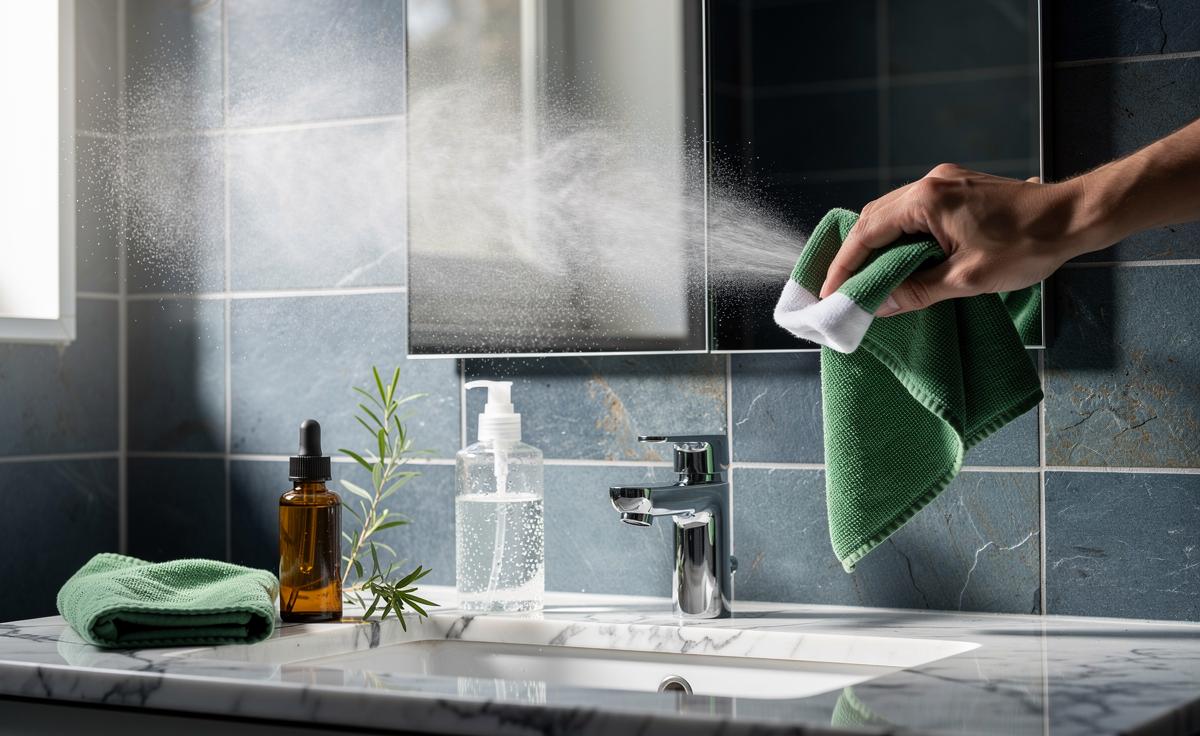
Technique matters. Spray the cloth, not the glass, to avoid liquid sneaking behind the mirror and threatening its silver backing. Finish with a microfiber buff to remove the last whisper of residue and to lay down a streak-free sheen.
A Step-by-Step Recipe That Respects Your Mirror
In a 500 ml spray bottle, combine:
- 250 ml distilled water (reduces spotting)
- 200 ml 70% isopropyl alcohol (fast evaporation)
- 1 tablespoon white vinegar (limescale control)
- 3–4 drops tea tree oil (antimicrobial boost)
- 1–2 drops mild dish soap (optional surfactant for heavy grime)
Shake before each use to disperse the essential oil—then spray the cloth, not the mirror. Wipe in overlapping S-strokes, top to bottom. Flip to a dry side and buff. For make-up smudges or hair product haze, pre-spot with a tiny dab of the solution, wait 15 seconds, then wipe and buff.
Safety and care tips:
- Ventilate. Essential oils are potent; avoid inhaling concentrated mist.
- Keep away from pets and children; store in a clearly labelled container.
- Patch-test near the mirror’s bottom edge. Avoid saturating edges to protect silvering.
- Skip the dish soap for daily maintenance; add only when tackling heavy build-up.
Frequency: Light daily spritz and buff for a 30-second refresh; deeper clean weekly. This cadence curbs biofilm before it becomes visible and slashes the time you spend on each session.
Pros and Cons: Why More Oil Isn’t Always Better
Like all hacks, this one works best when you respect its limits. Here’s the clear-eyed view:
- Pros
- Antimicrobial support helps disrupt biofilm that anchors grime.
- Lipophilic lift cuts through fingerprints without aggressive scrubbing.
- Fresher-smelling bathroom without synthetic floral fog.
- Pairs well with alcohol for fast-dry, streak-free clarity.
- Cons
- Overdosing oil causes smears; a drop too many shows up as haze.
- Some people are sensitive to essential oils; ventilation is essential.
- Not a hospital-grade disinfectant; don’t rely on it for clinical decontamination.
- Excess liquid at edges risks desilvering over time—apply to cloth, not glass.
Counterintuitively, “more natural oil” is not better here—less is clearer. Aim for micro-doses that keep antimicrobial benefits without leaving an oily film. If you notice streaks, cut the tea tree oil to 2 drops per 500 ml, skip dish soap, and increase buffing with a dry microfiber cloth. That tweak usually restores showroom shine while preserving the hygiene win.
Quick Reference: Ingredients, Roles, and Cautions
Use this at-a-glance table to adjust your mix with confidence.
| Component | Primary Role | When to Use | Caution |
|---|---|---|---|
| Tea tree oil | Antimicrobial, grease lift | Routine upkeep; biofilm-prone bathrooms | Use 2–4 drops per 500 ml; avoid overuse to prevent haze |
| Isopropyl alcohol | Fast evaporation, de-grease | When fingerprints or hair spray marks persist | Flammable; keep away from heat and flame |
| White vinegar | Mineral deposit control | Hard-water areas; limescale halos | Keep off mirror edges to protect silvering |
| Mild dish soap | Surfactant for heavy grime | Occasional deep cleans only | Rinse or buff thoroughly to avoid streaks |
| Microfiber cloth | Streak-free finish | Always | Wash without fabric softener to preserve absorbency |
Field Notes From a London Flat: What Changed After Four Weeks
Testing in a steamy, north-facing bathroom with hard water told the story. Week one started with the classic vinegar-and-water routine—clear at first, but faint diagonal swirls appeared by evening under low winter light. Switching to the tea tree blend reduced the return of smudges after showers, and the nightly “touch-up” shrank to a 20-second buff. The mirror stayed presentable between deeper cleans, suggesting the antimicrobial mix was cutting the film that usually regroups after each wash.
Practical lessons emerged. Spraying the cloth, not the mirror, preserved the edges and prevented little drip marks along the bevel. Three drops of tea tree oil in 500 ml hit the sweet spot; four worked, but needed a longer final buff. The scent dispersed quickly—a calm, clean note rather than a perfumey cloud. Crucially, no heavy scouring or paper towels were needed: one dedicated microfiber cloth and a consistent S-pattern delivered that magazine-gloss finish, day after day.
Used with care, tea tree oil elevates glass cleaning from a weekly battle to an easy habit that actually lasts. The secret is balance: a drop or two for antimicrobial support, alcohol for speed, vinegar for minerals, and technique to tie it all together. Respect the mirror’s edges, keep the dose light, and let the cloth do the talking. What’s your own mirror challenge—make-up haze, limescale halos, or post-shower smears—and which tweak will you try first in your mix?
Did you like it?4.6/5 (24)